• Home
  • About
    • About
    • Achievements
    • International Partners
    • Frequently asked questions
    • Media Enquiries
    • Contact
  • Campaigns
    • Petition: End Overbreeding of Racehorses
    • Nup to the Cup
    • Deathwatch
    • Jumps Racing
    • The Whip
    • Wastage
    • 1 % To Stop The Slaughter (Retirement Plan)
    • New Zealand Campaign
    • Two-year-old Racing
    • Racing in Extreme Heat
  • Issues
    • Racehorses Killed for Human Consumption
    • Racing NSW on horse slaughter
    • Bits
    • JIGGERS
    • Undercover Knackery Investigation
    • Tongue Ties
    • Drug Use
    • Industry Funded Studies
    • Confinement
    • Racing in the Heat
    • Other Health Issues
    • Life of a Racehorse
    • Greyhound Racing
  • Take Action
    • The National Horse Traceability Register has lost its way
    • End Jumps Racing in Victoria
    • Make Reporting of Racing Deaths Mandatory
    • Donate
    • Bequests
    • #ditchthewhip
    • Take The Pledge To Never Bet On Or Attend A Horse Race
    • Volunteer
    • Businesses That Sponsor Horse Abuse
    • Outreach Toolkit
    • Register Your Own Nup To The Cup!
    • Nup to the Cup at your Workplace
    • Your Nup to the Cup Support Kit
    • Stencil Your Car
    • Equinileaks
    • Subscribe to our mailing list
  • Resources
    • Videos
    • Music
    • Reports & submissions
    • Outreach Toolkit
    • Download a banner
    • Download a poster
    • Your Nup to the Cup Support Kit
    • Nup to the Cup at your Workplace
    • A guide to rescuing race horses
  • Store
    • Store
    • Basket
    • My Account
    • Checkout
  • News
    • CPR Media Releases: AU
    • CPR Media Releases: NZ
  • Events

Horse Racing Kills

Horse Racing Kills

Advocating for race horses

  • Home
  • About
    • About
    • Achievements
    • International Partners
    • Frequently asked questions
    • Media Enquiries
    • Contact
  • Campaigns
    • Petition: End Overbreeding of Racehorses
    • Nup to the Cup
    • Deathwatch
    • Jumps Racing
    • The Whip
    • Wastage
    • 1 % To Stop The Slaughter (Retirement Plan)
    • New Zealand Campaign
    • Two-year-old Racing
    • Racing in Extreme Heat
  • Issues
    • Racehorses Killed for Human Consumption
    • Racing NSW on horse slaughter
    • Bits
    • JIGGERS
    • Undercover Knackery Investigation
    • Tongue Ties
    • Drug Use
    • Industry Funded Studies
    • Confinement
    • Racing in the Heat
    • Other Health Issues
    • Life of a Racehorse
    • Greyhound Racing
  • Take Action
    • The National Horse Traceability Register has lost its way
    • End Jumps Racing in Victoria
    • Make Reporting of Racing Deaths Mandatory
    • Donate
    • Bequests
    • #ditchthewhip
    • Take The Pledge To Never Bet On Or Attend A Horse Race
    • Volunteer
    • Businesses That Sponsor Horse Abuse
    • Outreach Toolkit
    • Register Your Own Nup To The Cup!
    • Nup to the Cup at your Workplace
    • Your Nup to the Cup Support Kit
    • Stencil Your Car
    • Equinileaks
    • Subscribe to our mailing list
  • Resources
    • Videos
    • Music
    • Reports & submissions
    • Outreach Toolkit
    • Download a banner
    • Download a poster
    • Your Nup to the Cup Support Kit
    • Nup to the Cup at your Workplace
    • A guide to rescuing race horses
  • Store
    • Store
    • Basket
    • My Account
    • Checkout
  • News
    • CPR Media Releases: AU
    • CPR Media Releases: NZ
  • Events

TABCORP’S CLAIMS OF ZERO-TOLERANCE TO ANIMAL CRUELTY

February 26, 2021 by admincpr Leave a Comment

ABC’s 7:30 program ‘The Final Race’, exposing the systemic and brutal slaughter of racehorses, aired one week prior to Tabcorp’s 2019 AGM. The companies Chairman at the time, Paula Dwyer, said the following in her address:

“This brings me to the issue of animal welfare as highlighted on the ABC last week. Although Australian racing bodies have made progress in prioritising animal welfare, the vision of horses being mistreated at a Queensland abattoir was shocking and unacceptable to us. In response, we have resolved to use our industry leadership position and our voice to play a more meaningful role with our racing industry partners to ensure animal welfare is immediately prioritised and protection mechanisms strengthened and enforced. As a participant in the industry, we require a zero tolerance approach to animal cruelty.” Full address available here.

In June the following year, the company also released a position statement on animal welfare, once again reinforcing their zero-tolerance stance to cruelty to animals in racing and in society in general. This outlined 11 requirements Tabcorp placed on the industry – available here.

The industry is systemically failing in all eleven areas outlined in the statement, yet Tabcorp of course continues to support, endorse, facilitate and profit from the industry. CPR raised this with Tabcorp in a meeting in July 2020. The statement now appears to have been removed from the Tabcorp website, intentionally or inadvertenly we cannot say.

Uncategorized

The murky waters of Racing NSW kill ban just got murkier

February 25, 2021 by admincpr 1 Comment

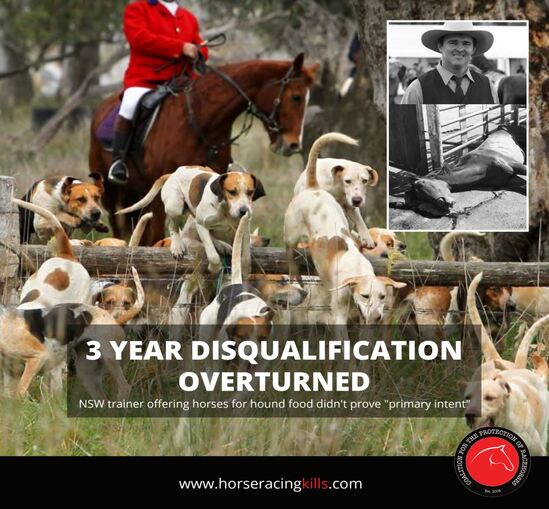
Trevor Sutherland’s 3-year disqualification has been overturned on appeal.

The NSW trainer pleaded guilty last year to sending two of his horses, 6-year-old Redfu and 4-year-old Rozzi to Irish huntsman Donnchadh Brown where they were killed and fed to his hounds.

At the time, this was found to be in breach of Racing NSW LR114(5)(e) which states a horse “is not to be, directly or indirectly, sent to an abattoir, knackery or similarly disposed of”.

Mr Brown is the manager of the Sydney Fox Hunting Club, known to Sutherland (according to Brown) for feeding horses to the hounds he so cruelly uses in barbaric fox hunts.

Evidence provided by a Racing NSW Welfare Officer, after speaking with Brown, claimed that Sutherland “rehomes the majority of his horses, however the ones he couldn’t find a home for, he gave to Mr Brown for pet food.”

When Sutherland was questioned as to whether he knew the horses would be fed to Brown’s dogs he said:

“I thought he was taking them to jump. He’s always said, “if you’ve got anything that can jump, I’ll take it and try it for jumping and, as I said, both of them were big, tall, rangy horses and he could jump with them.”

During the course of his interview, however, Sutherland was confronted with a text that he had sent to Mr Brown
TS: “If you need some hound food probly got 2 maybe 3 down the back paddock.”
DB: “Super, when do you want them gone?”
TS: “When ever suits talk to a bloke Tommo about I’ve got running with them probley get him as well.”

Hangin’ With Willy had won almost $200,000 in prize money for Sutherland


According to a stable foreman, when Sutherland gave two further horses to Brown, Hangin’ With Willy and Witchblade, Brown stated those horses would be given “every opportunity” in his “business”. They were also killed. It is important to note, these horses were given to Brown several months after Rozzi and Redfu had already been killed. Did Sutherland not think to ask how they were going? If he was aware they had been killed why did he give Brown two further horses? According to the appeal transcripts, this line of questioning never occurred and the fact that Hangin’ With Willy and Witchblade were also killed does not appear to have been considered by the panel at all, for reasons we are unaware.

In addition to all of the above, Sutherland was also found guilty last year for lodging a false stable return which claimed that another horse, Bless You Toby was spelling, when he was actually aware the 3-year-old gelding was “found to be deceased” the week prior.

Even with all of this evidence, making it crystal clear to our mind that Sutherland was knowingly sending his horses to be shot and fed to Brown’s poor dogs, or at best, knowing this was their outcome if they didn’t work out as horses helping in Brown’s disgustingly cruel fox hunts, his suspension was overturned and he is now able to return as an official Racing NSW industry participant – the appeals panel finding even though the horses being killed was a risk that he knew could eventuate, this was not his “primary intent” for them.

Apparently Racing NSW’s local rule 114, which they claim is designed to prevent horses being killed when no longer wanted, does not capture circumstances of intent if it is decided it was not the “primary intent” of the person sending them to be killed.

Read the full appeal transcript here.

News

AJRA provides blatant misinformation to media

February 22, 2021 by admincpr Leave a Comment

The 2021 jumps season trials commenced last week in Victoria, so what better time to highlight how the jumps fraternity is twisting research results to mislead both the media and the general public.

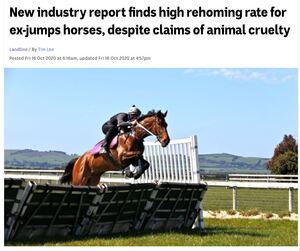
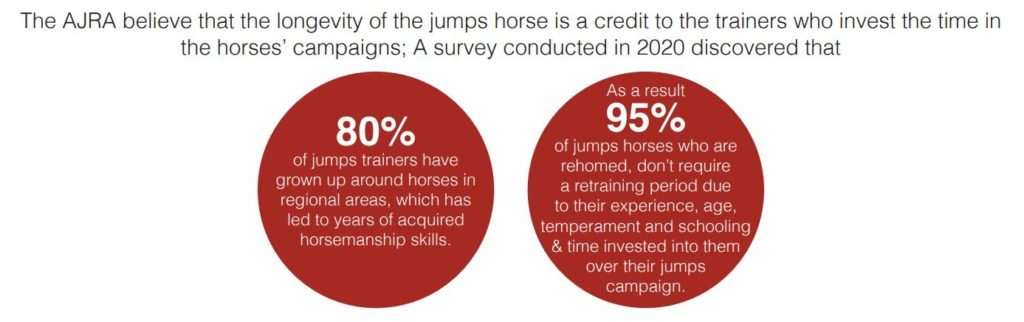
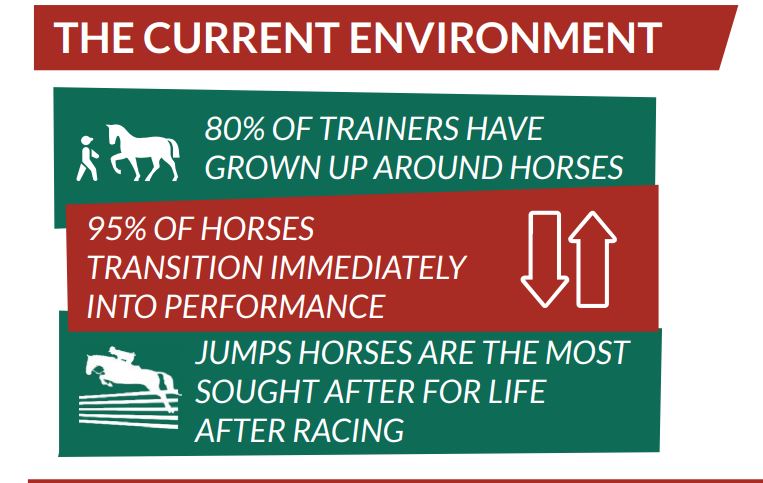
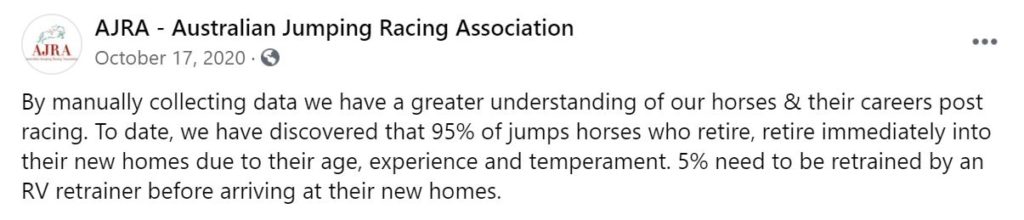
In a story which aired on ABC’s Landline in October last year, when speaking of horses used in jumps races, the host stated “A just released 2-year study shows that 95% are rehomed”.

We found this statement quite unbelievable so contacted Racing Victoria who confirmed:
1. that the media got it wrong and the report (available here) actually stated “95% of horses WHO ARE REHOMED out of jumps racing do not require a retraining period”

Taken from the AJRA ‘Life After Jumps Racing’ 2020 Report

2. that they were aware of this inaccurate statement before the program aired.

We immediately asked Racing Victoria why the program was not corrected before going to air, to which we were told, they did not see it as necessary.
This is a pretty large mistake for the ABC program to make. So, we took a look at the industry’s own reporting of their findings, to realise the ABC could almost be forgiven for the inaccuracy, given this is exactly how the findings have been twisted in the Australian Jumps Racing Association (AJRA) media kit, and other reports and posts

Taken from AJRA Media Kit
Taken from AJRA Framework Document
AJRA Facebook Post

Having said this, the ABC doing their own research rather than believing the very industry who has a vested interest in lying about these figures would be nice.

A quick read of what really is not a study, but a survey of the very people who profit from jumps racing, shows it does not cover how many horses were taken out of jumps racing over the two year period, how many were injured and subsequently killed both on and away from the racetrack, nor does it even give a figure of the number of horses who were successfully rehomed over the period and still survive today.

What is stated is that the AJRA will release an “even more demonstrative report at the end of 2021”. Well, that wouldn’t be hard. But will it actually include what people really want to know, or will it just be another promotional piece attempt to sell jumps racing back to a general public and even racing industry participants themselves who have long turned their backs on the barbaric business?

News

The Death of Cliff’s Dream

February 17, 2021 by admincpr 8 Comments

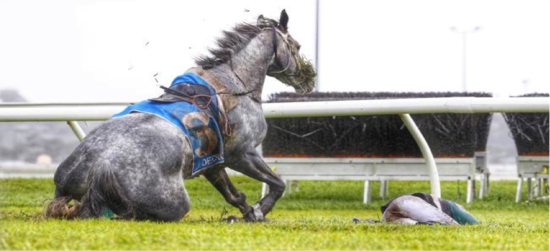
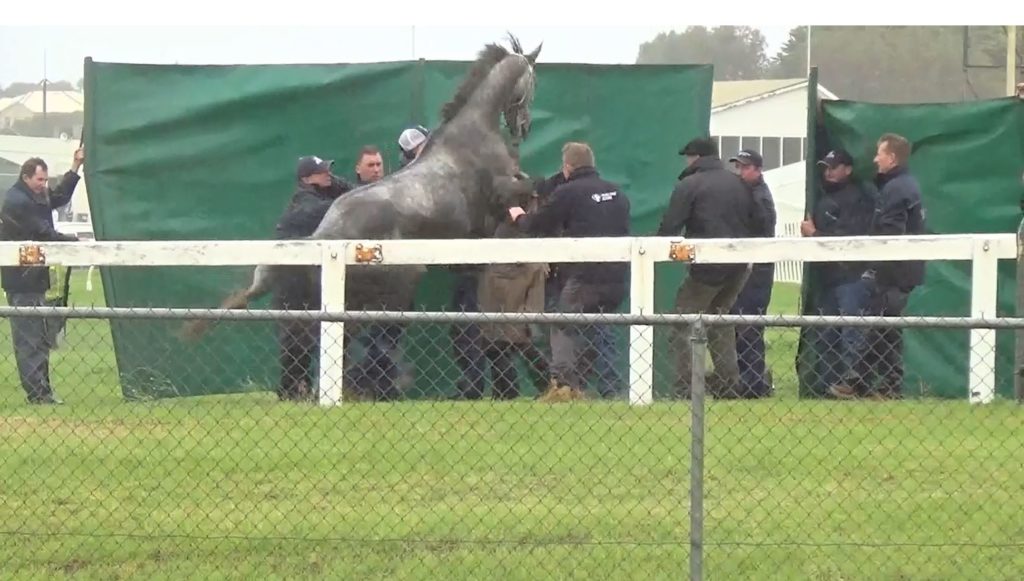
Cliff’s Dream fell in a jumps race in 2016 at the Warrnambool Racetrack in Victoria. CPR investigators recently reviewed the fall and found his subsequent treatment to be of great concern. We reached out to Racing Victoria and also to a former racing industry veterinarian for answers.

Watch the video below….

Below are both parties statements in full.

Racing Victoria Statement: 8 December 2020

  • The horse was standing on 3 legs and had its left front limb held off the ground.  This is normal practice for a horse with an injured limb to prevent further injury to the limb, any additional injuries or making the pre-existing injury worse.
  • This horse was particularly uncooperative – which is unusual in most situations when dealing with an injured horse but makes the above more difficult.
  • The horse was not forced to the ground at any stage during the video.
  • The horse never had any pressure exerted on its forelimbs during the video.
  • The video has been captured before any sedation and pain relief administered to Cliff’s Dream had time to take effect.

    Jennifer Hughes
    General Manager – Equine Welfare
    Racing Victoria


Dr Peter Kerkenezov BM statement: 2 January 2021

After viewing an email reply to Coalition for the Protection of Racehorses
from Ms Jennifer Hughes, General Manager – Animal Welfare, Racing
Victoria, dated 8th December 2020, and the video record as per the link:
https://youtu.be/ZtYWZZHa0os, I make the following observations:

  1. The horse in the video is believed to be ‘Cliff’s Dream’. The horse has
    acquired a left forelimb injury and is being handled by several men at
    the racetrack. It is unknown what drugs have been administered to
    induce chemical restraint to this horse however the horse does seem to
    be in a state of calm, enough to go down on the front legs and with
    the head close or touching the ground.
  2. The horse appears heavily sedated and being forced to the ground on
    three occasions by male attendants. Despite being sedated the horse
    rears twice and this is not considered an unusual response for any
    conscious horse in this situation when being forced to do something he
    doesn’t want to do. The attendants appear to be trying to rotate the
    horse’s head to the left in-order to roll the horse on his right side. It is not
    deemed normal practice to attempt this course of action in a sedated,
    conscious horse.
  3. At least one handler appears to be applying his body weight to the
    head and neck of ‘Cliff’s Dream’ before a green screen is pulled
    across to block the video recorder’s view.
    To conclude, if this horse had acquired a catastrophic injury requiring
    euthanasia then what was the purpose to manhandle this horse to the
    ground in the manner exhibited in this video recording? In this type of setting, horses requiring euthanasia are normally catheterised and administered the necessary drugs, at the correct dose rate, by intravenous injection while standing. An injected horse should smoothly drop safely to the ground, unconscious without pain and suffering. Death quickly follows. Any deviation from this normal practice, as demonstrated in this video, requires explanation.
    If it was deemed the drugs administered had not taken effect then why was the horse being prematurely handled in the stressful manner observed?

    Dr Peter Kerkenezov BM
    Equine Veterinary Surgeon
    02nd January 2021

An article published at the time also reveals the industry edited the race replay footage to hide the fall and death of Cliff’s Dream. Something we have found to be an increasingly common occurrence as scutiny and oppostition towards horse racing increases.

News, Uncategorized

Regal Chamber – the life of a breeding mare

February 16, 2021 by admincpr 2 Comments

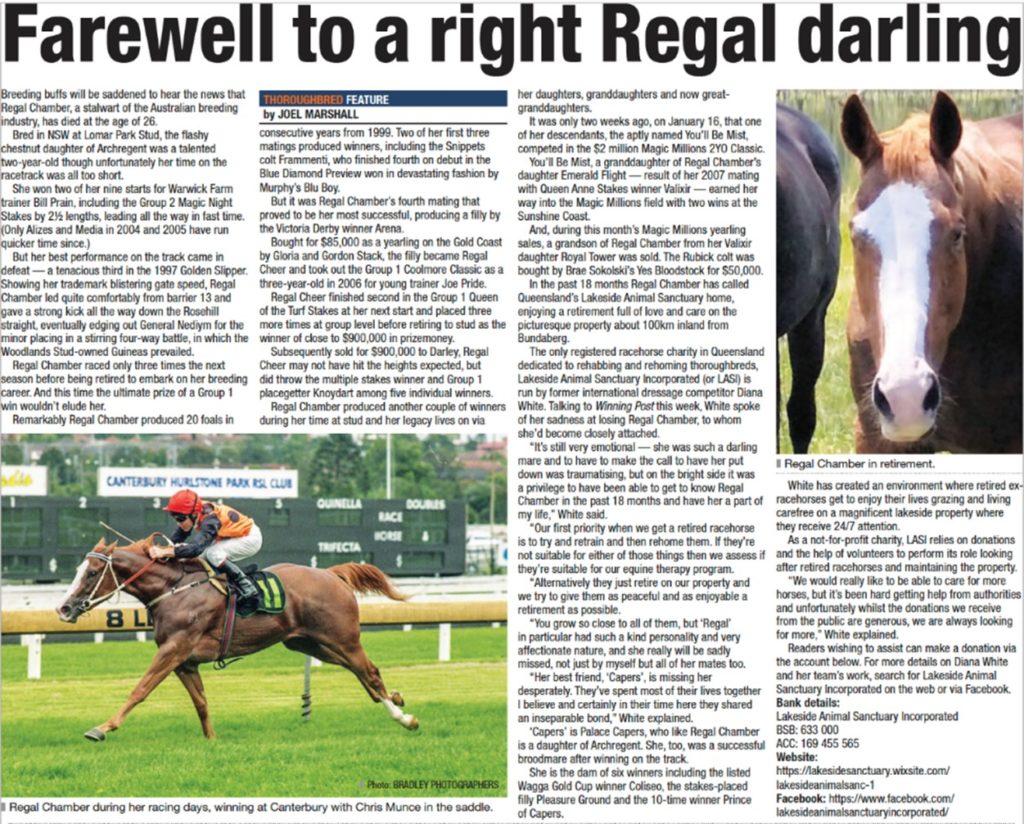
Regal Chamber was a mare born into the racing industry in 1994. According to the Australian Stud Book, she raced nine times, winning two of her races. The best result for her owners was a 3rd in the 1997 Golden Slipper.

She was raced only another three times before being used as a breeding mare at the age of four years old. She had not even reached maturity.

Regal Chamber produced 19 foals in 20 years, spending more than 90% of her life after racing pregnant. Every year she was forcibly mated with a stallion while at the same time having a foal at foot. Somewhere between 3-6 months of age, her foal would be taken away from her, just like she was taken away from her mother at the same age, to be trained and then raced, exploited and then discarded.

Regal Chamber is an example of what the racing industry values in a horse. She even got a considerable write up in the Winning Post. She was valued firstly for her ability on the racetrack, but more importantly, for her ability to produce progeny year after year, some of whom were very lucrative for the industry in racing and/or breeding, overall resulting in millions of dollars in prizemoney and horse sales.

The Winning Post article 29.1.21 about Regal Chamber celebrates her success as a breeding machine but fails to recognise her as a gentle loving horse who was exploited and discarded by the racing industry even after earning millions of dollars for her owner
 

She was a money making machine.

After her 19th foal was born, and at 24 years of age, she was ‘retired’ from breeding, though a much more accurate description would be she was  ‘discarded’. The owners from the stud where Regal Chamber came from had four such mares needing to be re-homed. If it wasn’t for Dianna White from Lakeside Animal Sanctuary Inc. (LASI) who received these horses in poor condition, they would have been killed.

Regal Chamber lived to a considerable age for a horse but especially for a racehorse. The reason why is because she was of financial benefit to her owners.

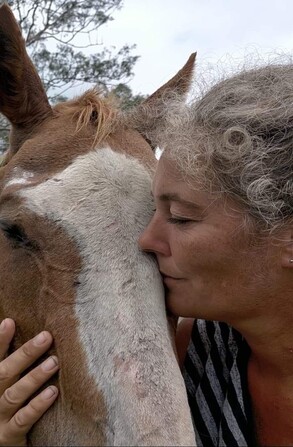
In the 18 months that she spent at LASI, her new foster mother, Dianna White, loved and cared for her like a best friend. Regal Chamber came to her with all sorts of problems including a partial prolapsed uterus, blood infection, kidney and liver failure, chronic diarrhoea resulting in weight loss, fractured teeth with infected abysses and other health issues. In her time at LASI, her veterinary costs and health care totalled in excess of $40,000. Her previous owners paid her a surrender fee of just $1000. 

Diana contacted Racing Qld for assistance, however, they said because she was a NSW racehorse she was out of their jurisdiction and they couldn’t help.

Being a NSW breeding mare, Diana then contacted Racing NSW for assistance, however, at that time, said they couldn’t help because she was now in Qld. 
In the end, Regal Chamber was abandoned by everyone except Diana, who gave her the best 18 months of her life, even if she was struggling with her health. On January 12, 2021, Diana had to make the traumatising decision to relieve her. Regal Chamber was euthanised with her heartbroken carer by her side.


This is as much a tribute to all the animal rescue groups like LASI as it is to Regal Chamber, who, despite being exploited for the majority of her life, found the love and care she deserved through Diana White. Without these organisations, many thousands more horses and other animals would end up at the knackery or slaughterhouse.

CPR is now lobbying the industry to fund rescue organisations like Lakeside Animal Sanctuary Incorporated who desperately need support. Though it should never be their responsibility, so long as the racing industry breeds horses only to later discard of them, those cleaning up their mess at the very least deserve support. They are only there to serve the horse and try to give back to them what they always deserved- a decent life.

Learn more about LASI here


News

A Racehorse Gallops Into A Children’s Playground

February 15, 2021 by admincpr Leave a Comment

A racehorse gallops into a children’s playground. It sounds like the set-up of a joke right? But there was absolutely nothing humorous about what took place at the Taranaki Cup on February 6th.
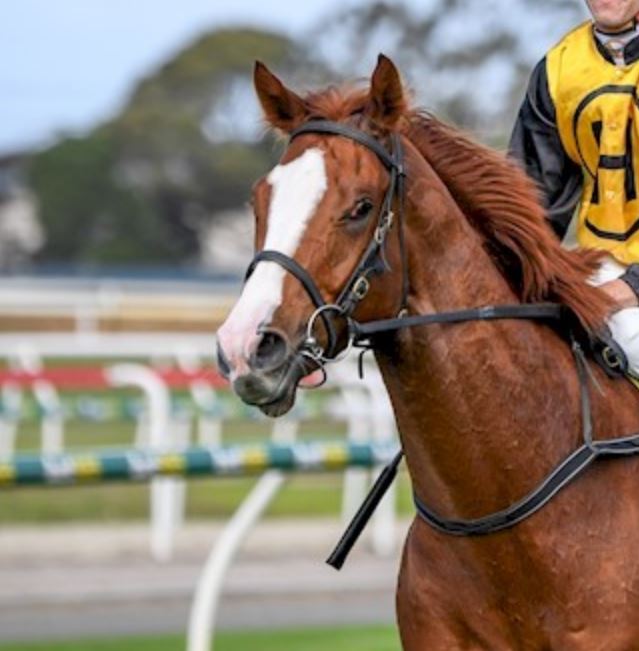

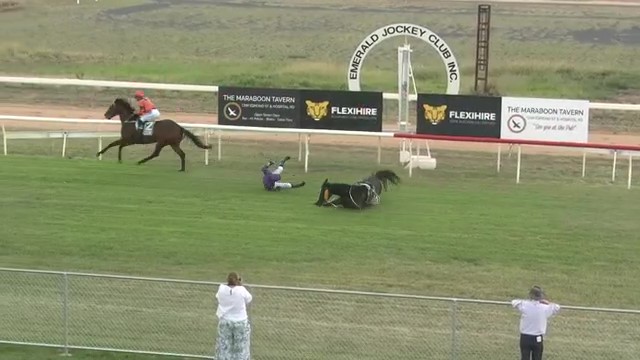
Concert Hall, touted as one of New Zealand’s best racehorses, took fright while being loaded into the starting gates. After dislodging her rider the mare cantered away from the track, ultimately sliding into a perimeter fence, flipping over it and landing on her back. The distressed mare then galloped through a nearby playground, across a busy road and into a park.

Those unfamiliar with horseracing may be surprised to hear that a racehorse considered a ‘superstar’ and ‘hot favourite’ would take flight before the race even began. However, horses being unwilling to enter the starting gates is a surprisingly common occurrence. During the Taranaki Cup alone, there were two other documented instances of horses being ‘fractious in the barrier’, industry terminology for this issue. In fact, it is so common that New Zealand Thoroughbred Racing’s policy manual includes detailed guidelines around how many attempts may be made to load a distressed or unruly horse into the starting gate, and how long may be spent on such attempts.

While many supporters of horse racing claim that the horses involved actually enjoy racing, the prevalence of this issue clearly proves otherwise. Horses routinely resist being forced into the confined space of a starting gate, as this is something that goes against all their natural instincts. There are numerous documented instances of racehorses suffering injuries while attempting to escape this artificial restraint. So unwilling are many horses, that it is not uncommon for a ‘buggy whip’ to be used on them. For some horses, deeply traumatised by past experiences with such a whip, the mere sight of one being brandished near them will be enough for them to become more manageable. While those involved in the industry will call this ‘training’, what it really is, is the use of force to such an extent that an animal will go against its natural instincts out of fear of violence being used against them. Interestingly, within NZTR’s Starters and Barrier Management Manual there is a policy that explicitly states Trackside shall not show “close up shots of use of the Buggy Whip or of the loading area of the Starting Gates whilst the Buggy Whip is in use.”

Which leads to the obvious question, what is it they don’t want the general public to witness?

When talking to the media after the event, the trainers of Concert Hall emphasised how lucky they were. Concert Hall only sustained mild injuries, suffering bruising and grazed skin off her legs. One of the trainers, Roger James, remarked “It could have been so much worse. The road she crossed had she taken a different turn she would have ended up in the centre of the city and I hate to think what would have happened.”

What reporters neglected to mention in the article, was the fact that this elite racehorse was just as likely to have died on the track that day, participating in the race, as she was off-track in some freak accident. The slightest injury during racing can mean immediate euthanasia for a horse. Only 6 weeks into 2021 there have already been two on-track euthanasias at New Zealand races, last year 12 were recorded, while 2019 saw 19.

Given the incredible stress, both physical and mental, that racehorses are forced to endure, it’s perhaps little wonder that Concert Hall felt compelled to take the action she did. Unfortunately for her, Concert Hall is expected to be returned to racing in a few weeks.

Media coverage on the incident here.

News

Racing Pumps Money Into Welfare Studies Only To Ignore Findings

January 11, 2021 by admincpr 7 Comments

On January 8, the racing industry could not resist gushing over the 100th race of 10-year-old gelding Our Dexter. An industry article spoke of what a ‘tough’ horse he is and racing.com dedicated several tweets to talking up the big occasion at the Stawell track.

In an industry where the average number of times a horse is raced before being killed or retired for being too slow or injured (to most likely be killed) is just 10 times (1), and where only 8% of horses have been found to survive its regime for more than four years, reaching 100 races is most certainly a rare achievement.  

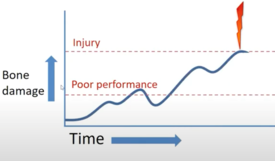
Whilst the industry bragged about such a triumph, they failed to mention the many studies that have proven bone fatigue is the leading cause of fatal injury in thoroughbreds.

In a 2013 study (2) funded by RIRDC, the Australian Government and Racing Victoria themselves, it was stated “Up to 70% of Thoroughbred racehorses have bone bruising, or joint surface collapse of the cannon bone and condylar fractures which propagate from this joint surface are the most common cause of fatal breakdown injuries. These injuries are due to bone fatigue, damage that accumulates due to repeated high loading produced by high speed galloping.” The study examined “subchondral bone turnover in the fetlock joint of racehorses both when in full race training and when resting from training” with the aim of “providing information on how to better manage horses to prevent a common injury”. THE most common FATAL injury.

Among other things, the study found:
“prolonged training periods are undesirable for Thoroughbred racehorses as fatigue damage accumulates faster than it can be repaired increasing the risk of joint injury and fracture. Therefore, these horses should be regularly rested from training to allow bone repair.”

and recommended:
“Trainers should be educated to understand that bone within the lower limb joints has a limited fatigue life and that regular rest periods are required to allow repair.”

A later study in 2017 (3), funded by the same three bodies, backed up the findings. More here.

In the 12 months leading up to the Stawell event, Our Dexter had been forced to race a gruelling 19 times. He survived the race, running 10th of 14.

5-year-old thoroughbred Opposite, was not quite so lucky. Raced 20 times over the 2020 period, he was killed on Boxing Day after suffering “an injury to its near-fore fetlock”

One might ask why the Australian Government, and more recently the Victorian Government, is using tax-payer dollars to fund studies only for the findings and recommendations to be ignored by an industry that seems hell-bent on not only racing horses to death, but also celebrating the process of their demise. If they are going to ignore their own studies, perhaps their funds would be better spent on a retirement program for the 10,000 plus horses vanishing from the industry each year.

1) Profiling the careers of thoroughbred horses in Australia between 2000 – 2010 – Velie, Wade & Hamilton, University of Sydney 2012

2) Bone repair in Thoroughbred racehorses. The effect of training and rest – Whitton, Holmes, Mirams & Mackie, University of Melbourne Equine Centre 2013

3) Prevalence of subchondral bone pathological changes in the distal metacarpi/metatarsi of racing Thoroughbred horses – Hassan, Mirams, Mackie & Whitton, University of Melbourne Equine Centre 2017 

RIP Opposite


News

Racing Victoria Backs Down on Whip-free Race Trials

December 24, 2020 by admincpr 4 Comments

On December 14 it was reported Racing Victoria would conduct a series of whip-free races over the summer period – article here. By December 15 they had pulled the pin after pressure from jockeys’, trainers’ and owners’ – article here.

Racing Victoria claims whip reform is essential to the long-term sustainability of racing, acknowledging the vision of beating horses with a whip is out of step with community expectations. However, they still refuse to admit the obvious, that whips cause the horse pain, even with studies to back this up.

Jockeys, on the other hand, are determined to be able to continue to beat up horses as hard as they can, using safety as an excuse, even though the whip-free races proposed allow them to hold and use the whip for reasons of safety only.

Though we are not opposed to horse racing slowly but surely causing its own demise, the continuation of beating horses with a whip means there will be many years to come where horses will be subjected to additional pain and fear and where injuries from being pushed well beyond their limits will continue to be prevalent and contribute to the high numbers of deaths on track.

Whilst it is unclear who is running the show at Racing Victoria and whether they will succeed in their mission to introduce whip-free races, one thing is certain – the younger generation are seeing horse racing for what it is, blatant animal abuse, and they simply won’t stand for it, as this comment in the racenet article from an old punter makes abundantly clear.

“Problem is rusted on punters like us who have been around and seen most things do not really think twice about it but the next generation, well that is another story. Took my niece to the races a few years ago when she was 13 as she is horse mad but she will not go again because the horses got whipped. Not only that I copped a lecture from he mum about cruelty to animals. That is what racing is looking at from the future generation….We have already seen jumps racing forced out of the Metro area and pretty much out of sight out of mind for a lot of people…….RV are under massive pressure to be seen to be doing something about deaths in the MC when in reality it is most likely plain back luck in the majority of cases. I doubt very much Admire Ratki broke his leg because of the hard track but that is not seen by those on the outside.
At the end of the day racing dies a slow death if the next generation can not warm to it. Harness racing have watered down their whip use to only a wrist flicking motion whilst still holding the reign. No use of the elbow or shoulder and their rules actually state no excessive force to be used.
This is something that will happen even if us old race fans do not seem to have an issue with reasonable whip use.”

News

The Deaths That Don’t Make Headlines

November 17, 2020 by admincpr 3 Comments

You know things are bad on Australian racetracks when you can’t decide whether to highlight that:
1. THREE horses were killed on Queensland tracks in just THREE days
2. THREE horses were killed in just ONE day across Australia’s tracks
3. SIX horses were killed in just THREE days across the country.

Last week in just 3 days of horse racing:

Thurs 12 November: Gatton QLD
Darci’s Money suffered a shoulder injury whilst being raced and was killed. He was old for this industry – age 12 – and had been moved around much of the country to race 76 times since age 2. Three embargoes had been placed on him in recent months then lifted – no details available. His death was supported by race sponsor ‘Agricultural Requirements.’

Darci’s Money

Friday 13 November: Emerald QLD
5-year-old Tadween suffered a catastrophic injury to both fore legs and was killed. His death was sponsored by Woods Tyre Services – Emerald QLD

Tadween

Friday 13 November: Canterbury NSW
4-year-old Alrillo was killed after suffering an injury to his near foreleg. An embargo had been lifted just two months prior for being lame in the same leg. His death was sponsored by Cyren Bar & Grill – Harbourside, Sydney

Friday 13 November: Moonee Valley VIC
At just 3-years-old, Fender Bender sustained a “serious racing injury” and was killed on the track. His death was sponsored by The Leighoak Club in Oakleigh, Vic

Fender Bender

Saturday 14 November: Home Hill QLD
5-year-old Quezmar was killed as they tried to lead him to the track. He “became fractious prior to entering the parade yard and as result sustained a fracture to the near hind leg“. He had been galloped on during a race earlier this year.

Saturday 14 November: Bathurst NSW
7-year old Turcotte was killed after a leg injury during his barrier trial. Turcotte was previously retired and later an embargo was placed on him pending a vet certificate and successful trial. The vet certificate embargo was lifted the day before the trial which caused his death.

All of these horses valued their lives as much as Anthony Van Dyck but none of them were killed in the Melbourne Cup so their deaths were ignored.

Send a message to racing sponsors that you will no longer support their business so long as they support the abuse, exploitation and killing of these beautiful horses here.

News

Racing Tasmania Admits Racehorses Are Routinely Shot In The Head

November 16, 2020 by admincpr 4 Comments

The killing of unwanted racehorses in Australian knackeries and slaughterhouses has now become common knowledge, largely due to the work of brave activists and journalists. However, it is not often, actually it’s unheard of, that industry representatives themselves will admit it takes place, even though they are now scrambling to put measures in place to at least seem to be addressing the issue.

Last week, Tasmania’s General Manager of the Office of Racing Integrity and Director of Racing John King, admitted on ABC Morning Radio that a “significant” number of two, three and four year old racehorses are shot in the head due to simply not being fast enough – referring to the issue as “an unfortunate truth”. Listen to the full interview here.

Could it be that some in the racing industry are finally recognising that blatantly lying about the issue of ‘wastage’ is no longer an option, now that the average person is well aware of what really goes on? As devastating as the truth is, honesty regarding this is a refreshing change.

However, when pressed for details on how large this issue is, Mr King claimed 59 thoroughbreds were killed last year due to “illness and injury”. Is he suddenly trying to make out those who were killed were actually killed on compassionate grounds, in total contradiction to the admission he made just moments earlier? Or, were 59 thoroughbreds indeed killed due to illness and injury, and he is overlooking all the other horses who vanish from Tasmanian Racing each year?

A quick number crunch from the Racing Australia Fact Book stats shows that over the past seven years, on average, 299 horses have vanished from Tasmania’s thoroughbred racing industry every year (or 30.5% of their registered to race horses)  – see table 1 below, baring in mind Tasmanian Thoroughbred Racing is one of the smallest of the states and territories.

Mr King himself acknowledged that rehoming racehorses is no easy task stating “the physical realities of rehoming become more difficult with horses to greyhounds” and that although they are working towards a system that encourages participants to make “all reasonable efforts” to rehome the horses they breed into the world, there was no racing or legal requirement for them to do so.

The true numbers of racehorses vanishing from Tasmania Racing every year being overlooked is one issue, but the claim made by Mr King also raises another important question. If 59 Tasmanian thoroughbreds were actually killed due to injury and illness last year, and not simply because they were not fast enough, it is safe to assume the majority of those injuries were caused by racing and/or training. However, as our Deathwatch Report demonstrates, not one horse was recorded as killed on a Tasmanian racetrack from injuries sustained from racing over the past racing year. The racing year prior, only one horse was recorded as killed on track in the Tasmanian stewards’ reports. This reaffirms our assertion that injured horses are being removed from the racetrack and killed behind the scenes, therefore avoiding being recorded as a Deathwatch statistic. Whether intentional or not, we cannot say. What we can say is, as we have long claimed, our findings and commonly cited statistics that one horse is killed from racing related injuries every three days is grossly understated. Our short video demonstrating how easy it is for the industry to cover up deaths from injuries in racing can be viewed here.


News

Whips Hurt! The Proof. Now Action Is Needed

November 12, 2020 by admincpr 1 Comment

It took a scientific study to prove an obvious fact that the racing industry has always denied. There is now scientific evidence that whips cause horses pain – available here.

The landmark paper, published yesterday found  “Humans and horses have the equivalent basic anatomic structures to detect pain in the skin.”

The report’s author, Professor Paul McGreevy, stated “We’re saying that although horse skin is thicker overall than human skin, the part of the skin that is thicker does not insulate horses from pain that is generated during a whip strike”. Read the full ABC article on the report here.

In response, The Conversation has published an article outlining a compelling 10 Reasons To Stop Whipping Racehorses.

In 2015, whilst denying whips hurt horses, former Racing Australia CEO Peter McGauran stated that the Australian Racing Board would consider abolishing the whip if science proved it hurt horses. The word ‘consider’ is telling as to whether the industry actually cares if horses suffer pain or not, but in any case, will the ARB now acknowledge the scientific evidence and support an immediate phase out of whips?

Perhaps the most devastating section of the study is the following:

“The role of pain in horse sports is part of the growing debate about what constitutes ethical equitation. In a flight animal, such as the horse, being unable to resolve aversive cutaneous stimulation causes distress. Horses have evolved to run away from such stimuli since the most likely natural cause of such stimulation is contact from a predator. Repeated strikes of the whip in horses that are fatigued as they end a race are likely to be distressing and cause suffering. The horses’ loss of agency is described in the literature as helplessness and repeated, inescapable, treatment of this sort is thought to lead to learned helplessness.”

Beating horses with a whip is just the tip of the iceberg in this cruel and ruthless industry. So long as horse racing persists, banning the whip is the absolute least they can do.

News

Was Extreme Suffering Prolonged To Avoid Bad PR For Melbourne Cup?

November 6, 2020 by admincpr 7 Comments

A former industry veterinarian supports activist calls for an immediate inquiry into the handling of Anthony Van Dyck after fatal Melbourne Cup incident.

The Coalition for the Protection of Racehorses (CPR), along with several animal activist groups and the Animal Justice Party, are calling for an immediate independent investigation into the handling of Anthony Van Dyck after his fetlock snapped in the Melbourne Cup on Tuesday. It is also calling for an independent necropsy report that will be made public, unlike necropsy reports currently conducted by the industry.

Former racing industry veterinarian of 50 years Dr Peter Kerkenezov is highly concerned about the treatment of Anthony Van Dyck, stating yesterday to CPR:

“It is apparent Anthony Van Dyck suffered a race induced catastrophic skeletal injury associated with extreme pain and suffering.  The usual humane response would have been to euthanise the stallion, there and then, on the track, without inflicting any further pain transporting him to a new location.  It is alleged this was not done despite the stallion being “unfit to load”.  It is claimed Anthony Van Dyck was loaded and transported.  The ethical nature of this decision needs investigating as a possible violation of animal welfare”  

Dr Peter Kerkenezov BM
Equine Veterinarian (1971 – 2020)
Wednesday 4th November 2020

Dr Kerkenezov has offered to carry out the independent investigation. His full statement can be read here.

The footage of the race, available here, shows the fetlock bone fracture as is evidenced by the way the hoof flaps in the opposite direction to the normal movement of the hoof.

CPR Campaign Director Elio Celotto said “In instances like this catastrophic injury, the only humane option is to immediately euthanase the horse. The question is, why was the horse loaded onto a float and removed from the racetrack when the prognosis was clearly evident?”

Stewards vision of the race is missing from the industry website and the regular vision has been edited to zoom in on the winning horses, cutting out the shocking vision of Anthony Van Dyck that those watching live saw.

For a close-up on the kind of suffering Anthony Van Dyck would have experienced as his death was delayed, we can look to footage captured of Australian horse, Pure Luck/Voyage King, lasy year in Hong Kong whose hoof was also flapping in the opposite direction.

“The racing industry has again shown they simply cannot be trusted, and it must now explain why Anthony Van Dyck was taken off the racecourse instead of being immediately euthanased” he said

Mr Celotto added “Anthony Van Dyck would have been in excruciating pain. To not euthanase him on the racetrack is just another example of the racing industry seeking to avoid the grim site of a green screen being pulled to hide the death of yet another horse on Melbourne Cup day.”

“This is a trend we are seeing more and more, as horses who are taken off the racetrack to be killed do not need their death recorded in the stewards’ reports, thereby reducing the on-track death statistics. The death of Anthony Van Dyck was reported simply because the eyes of the world were watching and the news could not be hidden, despite attempts to do so” Mr Celotto said. 

Vet-statement-on-Anthony-Van-DyckDownload

News

  • « Previous Page
  • 1
  • …
  • 18
  • 19
  • 20
  • 21
  • 22
  • …
  • 25
  • Next Page »

Contact Us

The Coalition For The Protection Of Racehorses
P.O Box 163, South Melbourne
Victoria 3205

Phone: 0412 039 788
Email Us

Join Our Mailing List

Sign-up to our mailing list to keep up to date. Text alerts are available for breaking news and urgent actions if you are in Australia.

Sign-up now

Find us on Social Media

© Copyright 2016 - 2026 All Rights Reserved by Coalititon for the Protection of Racehorses.

Privacy Policy