• Home
  • About
    • About
    • Achievements
    • International Partners
    • Frequently asked questions
    • Media Enquiries
    • Contact
  • Campaigns
    • Petition: End Overbreeding of Racehorses
    • Nup to the Cup
    • Deathwatch
    • Jumps Racing
    • The Whip
    • Wastage
    • 1 % To Stop The Slaughter (Retirement Plan)
    • New Zealand Campaign
    • Two-year-old Racing
    • Racing in Extreme Heat
  • Issues
    • Racehorses Killed for Human Consumption
    • Racing NSW on horse slaughter
    • Bits
    • JIGGERS
    • Undercover Knackery Investigation
    • Tongue Ties
    • Drug Use
    • Industry Funded Studies
    • Confinement
    • Racing in the Heat
    • Other Health Issues
    • Life of a Racehorse
    • Greyhound Racing
  • Take Action
    • The National Horse Traceability Register has lost its way
    • End Jumps Racing in Victoria
    • Make Reporting of Racing Deaths Mandatory
    • Donate
    • Bequests
    • #ditchthewhip
    • Take The Pledge To Never Bet On Or Attend A Horse Race
    • Volunteer
    • Businesses That Sponsor Horse Abuse
    • Outreach Toolkit
    • Register Your Own Nup To The Cup!
    • Nup to the Cup at your Workplace
    • Your Nup to the Cup Support Kit
    • Stencil Your Car
    • Equinileaks
    • Subscribe to our mailing list
  • Resources
    • Videos
    • Music
    • Reports & submissions
    • Outreach Toolkit
    • Download a banner
    • Download a poster
    • Your Nup to the Cup Support Kit
    • Nup to the Cup at your Workplace
    • A guide to rescuing race horses
  • Store
    • Store
    • Basket
    • My Account
    • Checkout
  • News
    • CPR Media Releases: AU
    • CPR Media Releases: NZ
  • Events

Horse Racing Kills

Horse Racing Kills

Advocating for race horses

  • Home
  • About
    • About
    • Achievements
    • International Partners
    • Frequently asked questions
    • Media Enquiries
    • Contact
  • Campaigns
    • Petition: End Overbreeding of Racehorses
    • Nup to the Cup
    • Deathwatch
    • Jumps Racing
    • The Whip
    • Wastage
    • 1 % To Stop The Slaughter (Retirement Plan)
    • New Zealand Campaign
    • Two-year-old Racing
    • Racing in Extreme Heat
  • Issues
    • Racehorses Killed for Human Consumption
    • Racing NSW on horse slaughter
    • Bits
    • JIGGERS
    • Undercover Knackery Investigation
    • Tongue Ties
    • Drug Use
    • Industry Funded Studies
    • Confinement
    • Racing in the Heat
    • Other Health Issues
    • Life of a Racehorse
    • Greyhound Racing
  • Take Action
    • The National Horse Traceability Register has lost its way
    • End Jumps Racing in Victoria
    • Make Reporting of Racing Deaths Mandatory
    • Donate
    • Bequests
    • #ditchthewhip
    • Take The Pledge To Never Bet On Or Attend A Horse Race
    • Volunteer
    • Businesses That Sponsor Horse Abuse
    • Outreach Toolkit
    • Register Your Own Nup To The Cup!
    • Nup to the Cup at your Workplace
    • Your Nup to the Cup Support Kit
    • Stencil Your Car
    • Equinileaks
    • Subscribe to our mailing list
  • Resources
    • Videos
    • Music
    • Reports & submissions
    • Outreach Toolkit
    • Download a banner
    • Download a poster
    • Your Nup to the Cup Support Kit
    • Nup to the Cup at your Workplace
    • A guide to rescuing race horses
  • Store
    • Store
    • Basket
    • My Account
    • Checkout
  • News
    • CPR Media Releases: AU
    • CPR Media Releases: NZ
  • Events

New Zealand ‘Wastage’ Estimates

May 19, 2020 by admincpr 4 Comments

The total number of horses exiting racing each year, and those bred for racing who never make it to the track are not reported by the New Zealand racing industry.

The purpose of this report is to estimate, as accurately as possible, the number of horses discarded or vanished each year from the New Zealand Thoroughbred Racing (NZTR) industry. This is commonly referred to as ‘wastage.’ Official industry reports are very limited in the information they provide, particularly in terms of data regarding the movement and registration of horses. Reporting on the number of horses imported and exported each year has been very limited in the past and is non-existent in recent years reporting, as are details on where horses go, once they exit the industry.

There are also many inconsistencies between the various New Zealand reports and even larger inconsistencies between New Zealand reported statistics and those from other countries. Therefore, we have had to rely on the limited data provided by the NZTR Fact Book (not produced since 2010) and NZTR Annual Reports, along with statistics from various other sources such as official industry reports from other countries where relevant to New Zealand. It was necessary to obtain data and statistics from several other sources to fill the gaps on information unavailable in the NZTR reports, specifically the NZ Fact Books and Annual Reports. Other resources used include, the New Zealand Studbook, the Australian Racing Fact Book, the International Federation of Horseracing Authorities (IFHA) and figures provided by various other international racing authorities. For example: we took the number of foals bred each year from the NZTR Fact Books and Annual Reports from 2007 – 2019, except for 2016 when we had to take this figure from the IFHA.

Below is the Coalition for the Protection of Racehorses’ best conservative estimate on the number of horses who go unaccounted for by New Zealand Thoroughbred Racing each year. We welcome any further evidence that can possibly be provided on the numbers and whereabouts of these horses.

We consider:
1. The number of individual horses who are used to race each year
plus
2. The number of foals born into the industry each year
plus
3. The number of horses imported each year
minus
4. The number of horses exported each year
minus
5. The number of individual horses who race the following year

The discrepancy found is the number of horses who remain unaccounted for each year, otherwise known as ‘wastage’.

Over 11 years, from the 2007/2008 racing year to the 2017/18 racing year, our research indicates the number of horses unaccounted for each year has been anywhere between 2,459 (2007/08) to 4,165 (2008/09). Overall, the approximate number of New Zealand thoroughbred horses unaccounted for over the 11-year period is 35,105 – averaging 3,191 horses per year.
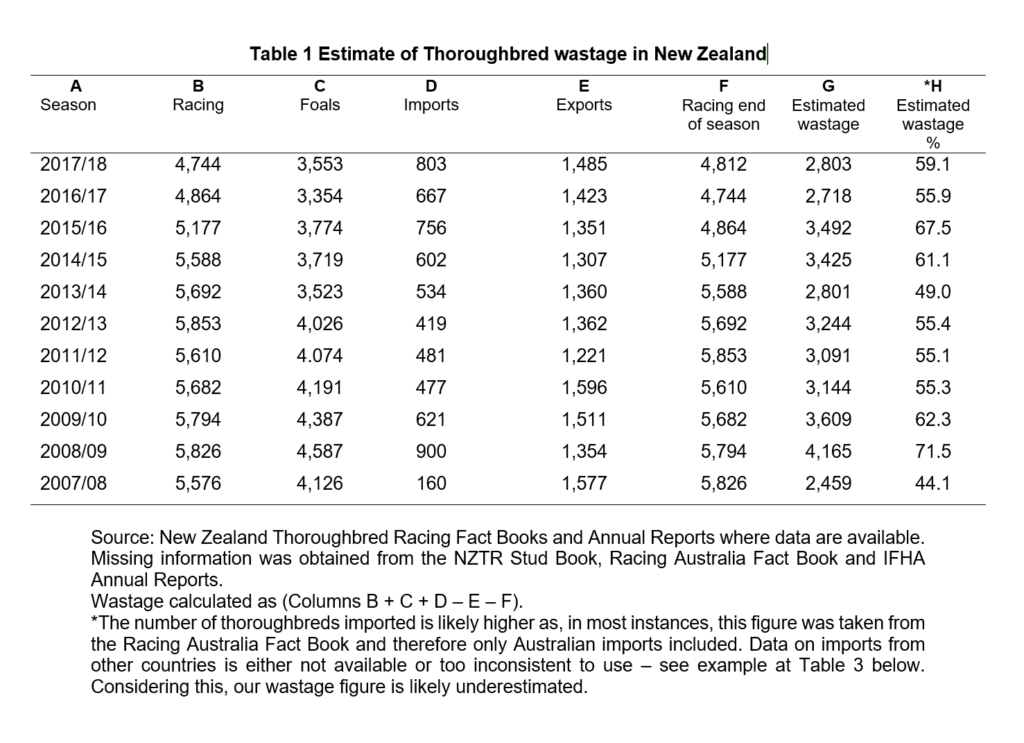

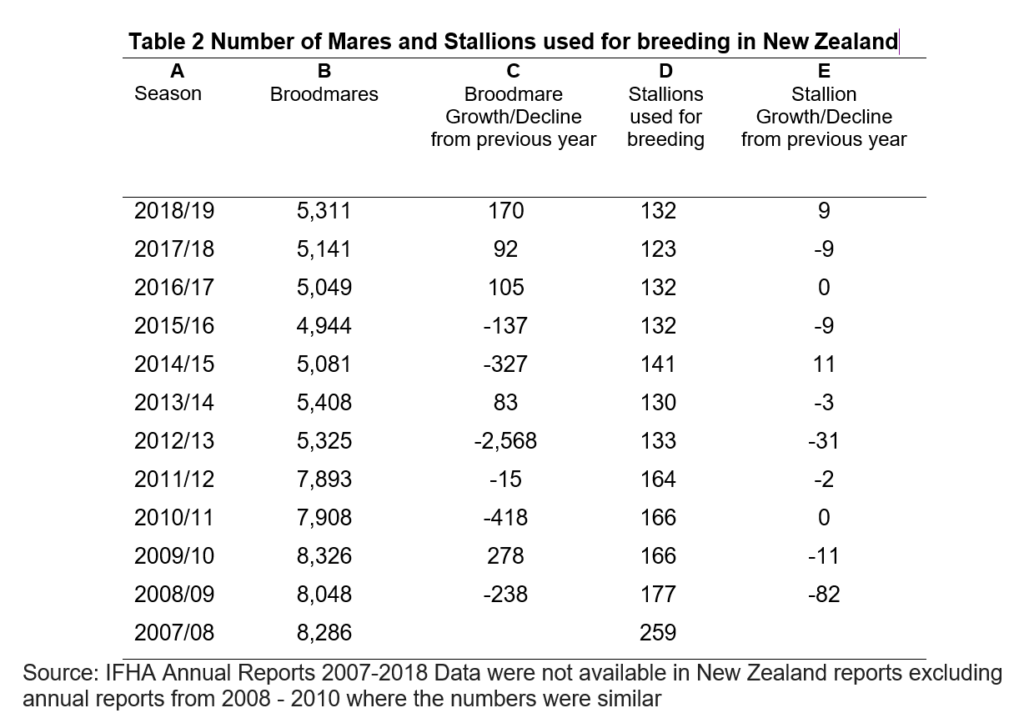
In playing devils’ advocate, one argument against the accuracy of these estimates could be that many of the horses we list as unaccounted for have gone into breeding. There is no doubt some racehorses are sent into the breeding cycle once they are no longer used for racing, however that does not necessarily mean those numbers should be deducted from our wastage figures. As Table 2 below demonstrates, the numbers of NZ racehorses in breeding programs has remained reasonably consistent since 2012/13, meaning that for every mare or stallion added, at least one must have been removed and has therefore become one of the many horses who remain unaccounted for. If anything, to consider the number of racehorses used in breeding when calculating the number of horses who remain unaccounted for by the industry each year, would demonstrate an even higher annual wastage figure as the number of broodmares dropped dramatically between 2007 – 2012 from approximately 8,000 to approximately 5,000. The number of stallions used for breeding dropped from approximately 170 to 130 over the same period.
Another argument against these wastage estimates could be that there are many horses in training but not actually racing at any given time. If we used the number of horses in training at the start and end of the season as opposed to the number of horses who were used in races, the outcome would be roughly the same as we would be starting with a higher figure and also deducting a higher figure. We chose to use the number of individual horses who started a race as these figures are reported consistently by the IFHA. Figures regarding the number of horses in training are rarely made available.

Finally, a claim often made by the industry is that thoroughbred horses are sold/re-homed to pleasure and equestrian pursuits. It is of course possible some of these horses are, however, we do not believe this would be the likely outcome for the majority due to the many behavioural issues and injuries that come from being used as a racehorse, that often require dedicated long-term rehabilitation. Furthermore, such issues increase the likelihood of the horse changing hands many times in a short space of time and ending up at a knackery to be killed for pet food. When asking NZTR on the number of ex-racing horses they believe are re-homed they simply did not know.

Below we have included several additional tables that summarise the statistics provided from various industry reports, to highlight the vast inconsistencies in data published between countries and authorities. On reviewing all of the information, it is clear the various countries, including New Zealand, are not effectively tracking the horses they are responsible for at all.

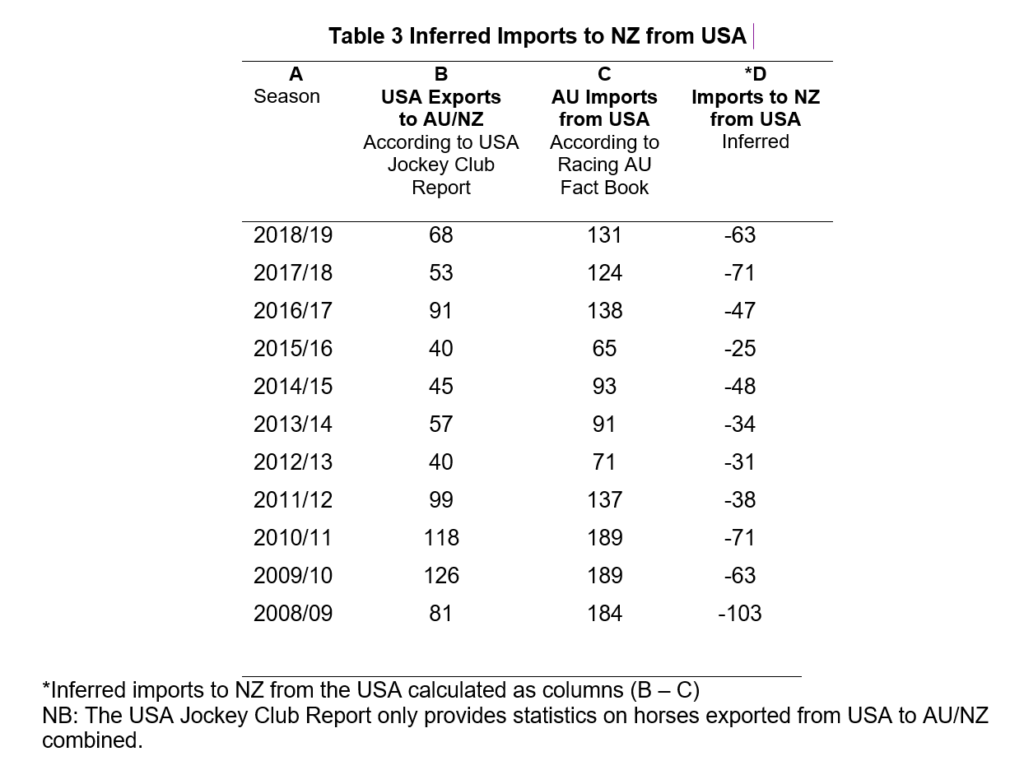
Table 3 shows for example, that for every year, the reported exports from the USA to Australia/NZ combined, exceeded the number of imports reported by Australian authorities alone. 

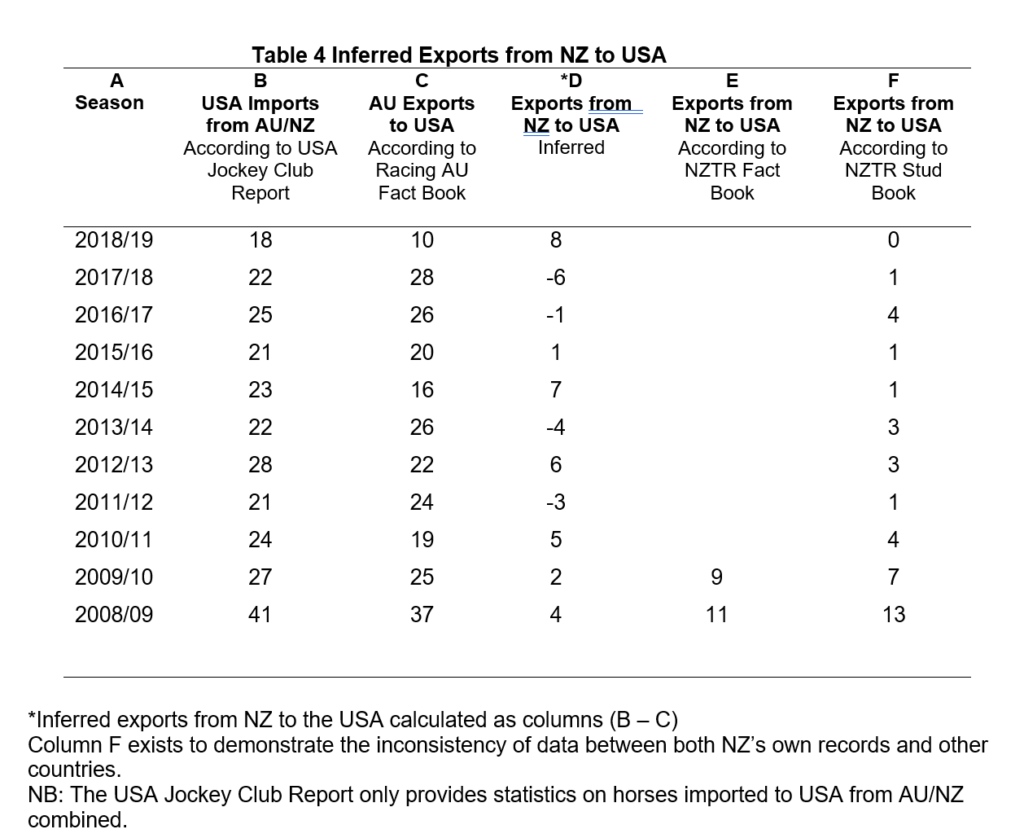
Table 4 shows inaccuracies in the reporting of exports to the USA. For example, in 2018/19 the USA reported 18 imports from Australia/NZ (Col B). Deducting the 10 exports from Australia to the USA (Col C) should leave 8 exports from NZ (Col D), but the NZ Stud book reported no exports (Col F).

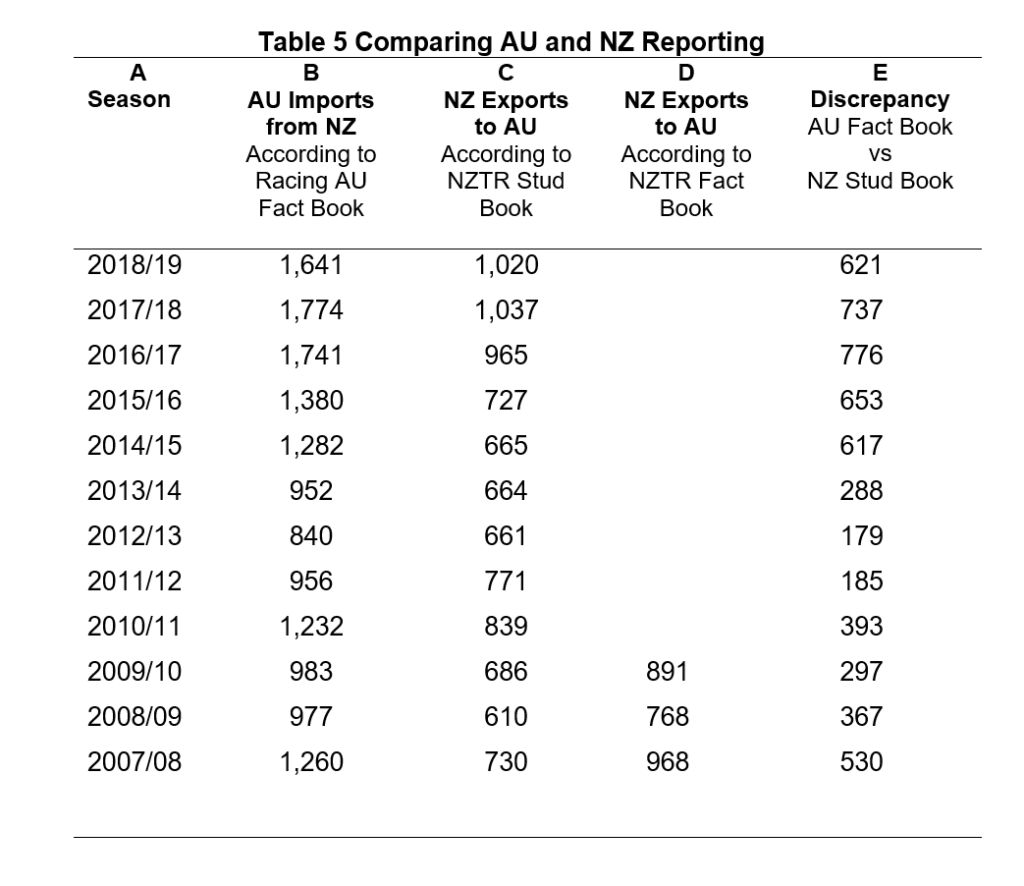
Table 5 shows a discrepancy of 621 horses for the 2018/19 year. The Australian Racing Fact Book reported 1,641 imports from NZ, but the NZ Studbook reported only 1,020 exports to Australia.
Conclusion
Similarly to Australia, the number of horses bred into the New Zealand Thoroughbred Racing industry each year is the approximate number of horses who vanish from the industry each year without a trace.

The New Zealand Thoroughbred Racing website states:

Individual thoroughbreds can be easily identified by their brands and microchips listed in the New Zealand Studbook.  However, it is difficult for New Zealand Thoroughbred Racing to maintain reliable information on the location and ownership of horses that have been retired and re-homed with unlicensed owners, given unlicensed owners are not subject to NZTR regulatory oversight.  Attaining ‘whole-of-life traceability’ for the New Zealand thoroughbred population is an objective which faces practical limitations

(Source https://loveracing.nz/welfare/population-traceability)

Approximately 3,500 foals are purposefully bred specifically for the New Zealand Thoroughbred Racing industry each year. On average, 3,191 thoroughbred horses are exiting the industry each year, with no data provided as to where these horses are going. The average lifespan of a horse is 25-30 years. The average time a horse is used for racing is 3 years. It is simply unacceptable for the industry to wipe their hands of their responsibility to these individuals once they are no longer of use to them and is yet another example of how bringing living beings into the world for the sole purpose of making profits will in most cases lead to unethical outcomes once those profits can no longer be made. 

Horse racing supporters must consider what the likely outcomes are for over 3,000 unwanted horses each year and assess whether they want to continue to support an industry that not only forces these horses into years of isolation, being pushed well beyond their limits and using implements such as whips, bits, spurs and tongue-ties, but also routinely discards the very horses their industry could not exist without.


References

New Zealand Thoroughbred Racing Fact Book 2008, 2009, 2010
https://loveracing.nz/nztr/info-and-comms/nztr-publications

New Zealand Thoroughbred Racing Annual Report 2007-08, 2008-09, 2009-10, 2010-11, 2011-12, 2012-13, 2013-14, 2014-15, 2015-16, 2016-17, 2017-18, 2018-19
https://loveracing.nz/nztr/info-and-comms/nztr-publications

New Zealand Thoroughbred Racing Studbook
https://loveracing.nz/stud-book/search

International Federation of Horse Racing Authorities Annual Report 2007, 2008, 2009, 2010, 2011, 2012, 2013, 2014, 2015, 2016, 2017, 2018
https://www.ifhaonline.org/default.asp?section=Resources&area=2

Racing Australia Fact Book 2008-09, 2009-10, 2010-11, 2011-12, 2012-13, 2013-14, 2014-15, 2015-16, 2016-17, 2017-18, 2018-19
https://www.racingaustralia.horse/Aboutus/FactBook.aspx

The Jockey Club, Thoroughbred Import/Export Trends 2009 – 2019
http://www.jockeyclub.com/default.asp?section=FB&area=5

News

Our Achievements To Date

March 10, 2020 by admincpr 1 Comment

Since 2008, CPR has been working hard to expose the reality of horse racing and in turn apply pressure to the industry to make changes for the horses involved. Through investigations, public awareness campaigning, lobbying and protests the following achievements have been made. There is still much work to be done but we are proud of these achievements and are 100% committed to achieving much more in the coming years.

Demise of the Oakbank Jumps Carnival
The once infamous Easter Oakbank Jumps Carnival held over 2 days, attracted a crowd of 120,000 people 10 years ago. Since CPR has been in attendance at the Carnival, and exposing the high death toll in jumps racing, the numbers have dwindled to less than 30,000. The SA public have voted with their feet by not attending and as a result, the carnival has been losing money for several years.


Oakbank 2019
Oakbank 2019

The rise of “Nup to the Cup” events
CPR held its inaugural “Nup to the Cup” event back in 2010 on Melbourne Cup day. It was attended by 40 supporters who were bravely defiant against an Australian institution- The Melbourne Cup. Today, “Nup to the Cup” events aka “F#ck the Cup” events are being held around the country in protest of the animal cruelty perpetrated on not only racehorses, but all animals. It’s now a day that true animal lovers use to raise money for their favorite animal charities while snubbing the Melbourne Cup.

The fall in attendance figures at the Melbourne Cup Carnival
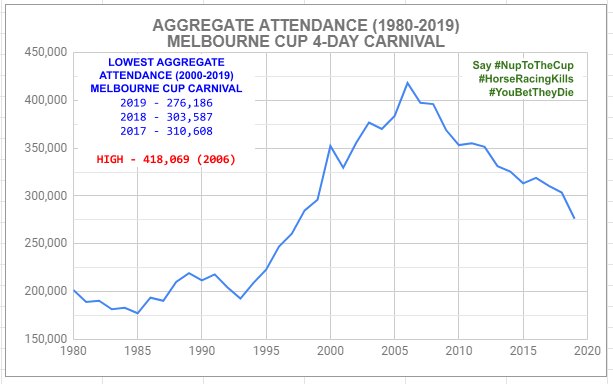
In the last 13 years attendance figures to the iconic racing carnival have plummeted from 418,069 in 2006 to 276,186 in 2019. A drop of 34%[i] during a time of very high population growth in Melbourne’s history. The main cause seems to be a growing awareness of the cruel reality of horse racing.

Fall in breeding numbers
Breeding numbers peaked in 2006 when 18,758 horses were bred for racing. Since then, there has been a steady decline with 12,898 horses bred in 2018. Many former racing industry participants, including several trainers, have contacted CPR and advised they were turning their back on racing after being forced to face the reality of their industry. This indicates growing awareness has definitely played a significant role in this decline.

Implementation of a retirement form and industry funded retirement programs in Vic and NSW
A step in the right direction however there is still much work to be done.

The slaughter of racehorses exposed
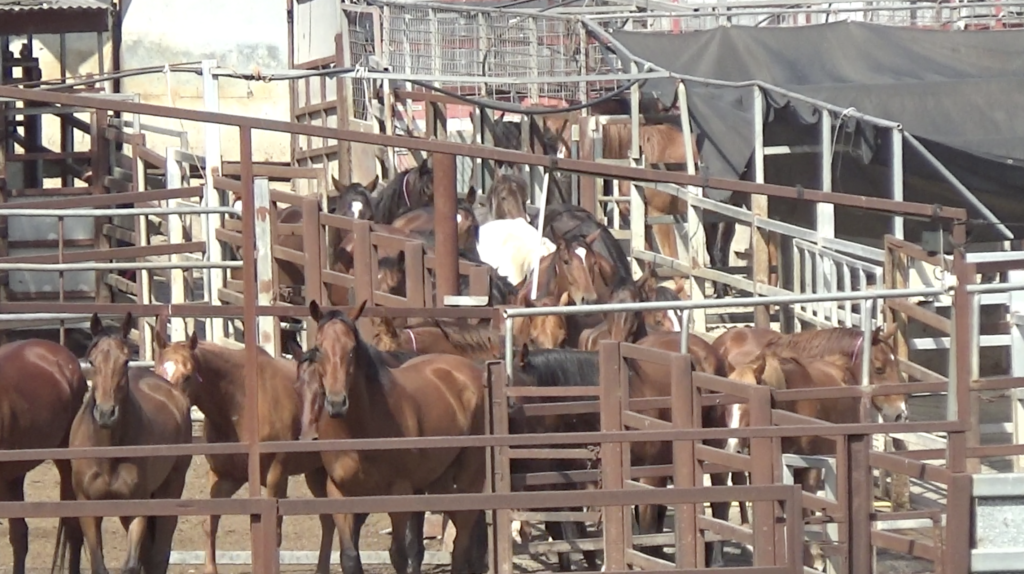
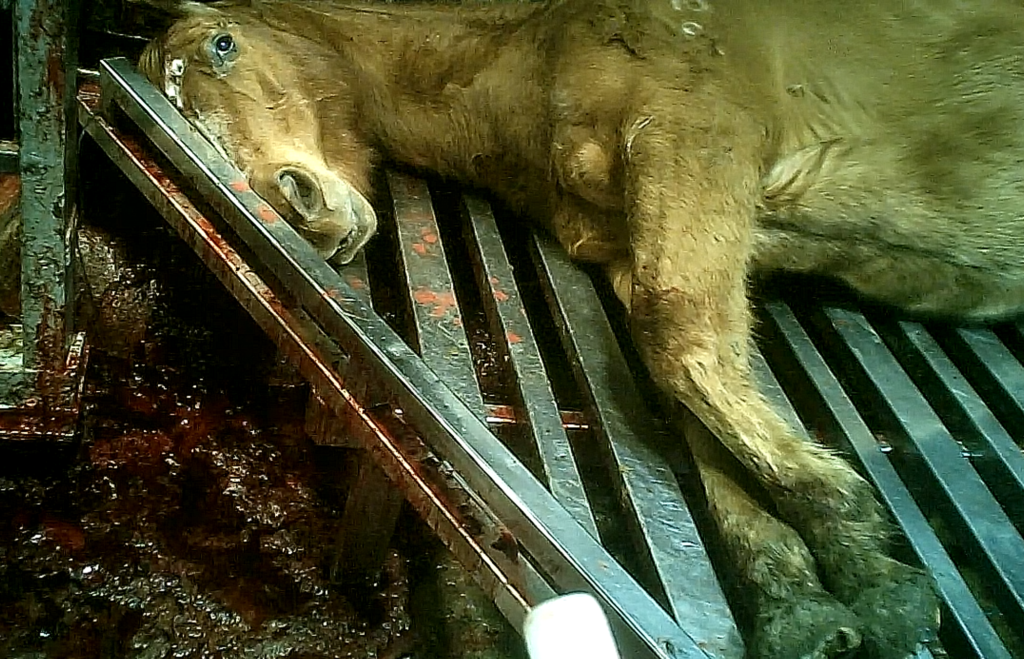
The routine slaughter of racehorses was once a well-kept secret. CPR investigators have for years been making the racing industry accountable by exposing the ruthless killing of racehorses for pet meat and even human consumption (known as ‘Wastage’). The industry categorically denied this practice for many years, until now. In October 2019, with the help of CPR investigators, ABC’s 7:30 exposed the brutal routine slaughter of approximately 4,000 thoroughbred horses in one slaughterhouse alone. Watch here. Meramist Abattoir in Caboolture QLD was the subject of a 2 year-long investigation and its findings not only sent shock waves across the Australian public, throwing the racing industry into turmoil just days before the Spring Carnival, it also resulted in a government Inquiry into animal cruelty in the management of retired thoroughbred and standardbred horses in Queensland. The resulting 94-page document unsurprisingly revealed damning evidence of an industry and government at both the state and national level that is failing both horses used by the racing industry and animal welfare in general miserably. 55 recommendations were made, all of which have been accepted by the QLD state government in full, in part, or in principal. The challenge now will be ensuring the QLD and other authorities live up to their commitments. Read our summary and response to the inquiry here.


CPR’s investigative work over the years has ensured it is now common knowledge that the majority of racehorses are sent to slaughter when not wanted. The term ‘wastage’ has become a household word by repeatedly highlighting that the only sure bet is horseracingkills!

CPR in New Zealand
CPR is now active in New Zealand with satellites in Auckland, Wellington and Whangunui. Racetrack demonstrations are frequent and have been successful in achieving local media, drawing much needed attention to the issues of horse racing in New Zealand. We are in communication with New Zealand Thoroughbred Racing administrators drawing attention to the serious welfare concerns we have and making them accountable.

Whip rule changes
Made in both 2009 and 2015, with the industry citing this as a response to our campaign and ‘public concern’ for the welfare of animals. This is not enough. The whip is a tool designed to inflict pain and scare the horse into running faster. We are currently working on a plan to have the whip banned from racing altogether. With growing concern about the image of horseracing, it is inevitable that the whip will be banned in the not to distant future.

A huge shift in public perception
The racing industry once enjoyed a very enviable reputation for being glamorous – attracting celebrities and society ‘elites’. Today many celebrities are choosing to not associate themselves with horse racing for both their careers sake but also for ethical reasons. Some celebrities are even very publicly speaking out against horse racing. The 2019 Spring Carnival saw Taylor Swift, Megan Gale and Lana Condor all cancel their engagements with the event.

Whistleblowers speaking out
Racing industry participants are starting to speak out and echo the same calls for reform that CPR have been making for years. We are contacted on a regular basis and are now seen as the voice whistleblowers can turn to when racing administrators and stewards fail to take action. For more information, go to our whistleblower page here.

National Equine Traceability Register
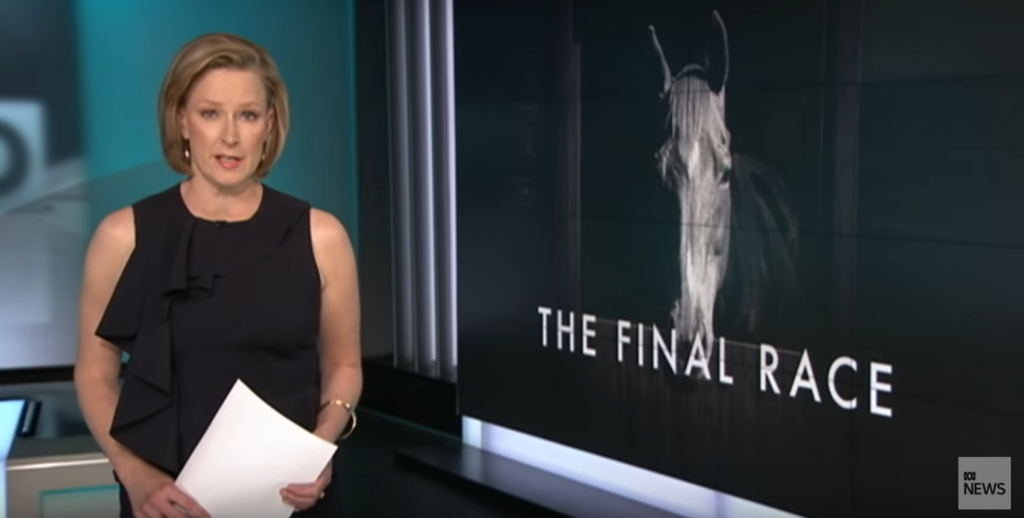
An essential part of ensuring horses are properly protected is by making their whereabouts known and their owners accountable. In 2019 Greens Senator Mehreen Faruqui set up a Senate Inquiry that recommended a register be established to protect not only racehorses, but all horses. CPR were actively involved in this process, making a submission and attending parliament to give evidence to the committee. You can read CPR’s submission here. In February 2020 the federal government announced the recommendations would be implemented (see all related documents here.) There’s no doubt that the 7.30 story, “The Final Race” (watch here) played a huge role by exposing the mistreatment of racehorses. The Traceability Register means that every racehorse will be traceable at any time meaning that every owner will be made accountable. More here.

Stewards attending horse sales
In Victoria, where CPR is based, Racing Victoria now has stewards attending major horse sales including the Echuca sales, the biggest horse sale in the country. Where once it was routine that thoroughbreds and standardbreds would be bought by a kill buyer for just a few hundred dollars, many horses are now being saved. In the last 10 years many rescue groups have also been formed who are basically cleaning up the racing industry’s mess. Though they are doing great work and saving the lives of many horses who would otherwise be killed, it is ultimately the racing industry’s responsibility and they need to be made accountable.

The Future
Though we are very proud of our achievements to date, there is still so much work to be done. In fact we’ve only just got going. And we have the racing industry that will always fight back.  Their multi-million dollar budgets allow them to cleverly re-brand themselves and find new ways to attract people to the races.  It is our job to make sure the other side of the story is told and the truth continues to be exposed.  We will continue to fight for these horses until justice prevails.


[i] Flemington.com.au/racing/track-records-and-attendances

News

National Horse Traceability Register to become a reality

February 25, 2020 by admincpr 3 Comments

Many thanks to the hard work of many activists and caring individuals, the National Horse Traceability Register is set to become a reality.  Last year, Greens Senator Mehreen Faruqui set up a Senate Inquiry that recommended a register be established to protect not only racehorses, but all horses. While CPR’s focus is horse racing, we know that a win for thoroughbreds is a win for all horses.

The committee called for submissions and 70 were received. All but 2 submissions were in favour of the scheme. CPR were actively involved in this process, making a submission and attending parliament to give evidence to the committee. You can read CPR’s submission here.

On November 27 last year, the Senate Standing Committees on Rural and Regional Affairs and Transport released their report which was overwhelmingly in support of the scheme. Yesterday the federal government announced the recommendations would be implemented (see all related documents here.

There’s no doubt that the 7.30 story, “The Final Race” (watch here) played a huge role by exposing the mistreatment of racehorses. Its timely release which aired while the inquiry was being held, placed even more impetus on the need for a national register.

The Traceability register means that every racehorse will be traceable at any time meaning that every owner will be made accountable. Every horse’s history will be available to new owners and proper records will be kept of the history of every horse from birth to death. This means that we will now have accurate data about the numbers sent to slaughter and the racing industry will have nowhere to hide.

There’s still a lot of work to be done by CPR and others behind the scenes to ensure that the register and associated legislation, that will be introduced to accompany the implementation of the register, makes Australia a much better place for all horses.

A huge thank you to Mehreen Faruqi for making this inquiry happen, Australian Equine Unification Scheme  (AEUS) for their tireless efforts in bringing the mistreatment of horses out in the public domain and to two remarkable individuals, Juliana and Mark Waugh for their years of lobbying the federal government for this scheme. To everyone who made a submission to the inquiry, we thank you. Finally, a huge thanks to 7.30 for running the expose, “The Final Race” and exposing the reality behind what is fundamentally a cruel and exploitative industry.

Now let’s look forward to better outcomes especially for our racehorses that for too long have been considered a ‘waste’ product of the racing industry.

News

QLD inquiry into racehorse cruelty reveals damning evidence

February 24, 2020 by admincpr 2 Comments

“The Final Race brutally educated the public that, on a large scale, retired racing horses are being treated as disposable commodities.” Terry Martin SC

The shocking revelations of the routine slaughter of racehorses exposed by the ABC’s 7:30 program ‘The Final Race’ on October 17 2019 led to an Inquiry into animal cruelty in the management of retired thoroughbred and standardbred horses in Queensland by the Queensland Governments Racing Integrity Commission

The inquiry, conducted by retired district court judge Terry Martin with the support of equine veterinary surgeon and Australian Veterinary Association representative Dr Peter Reid, was made into the regulatory and oversight arrangements for:

1. the operations of abattoirs and other facilities accepting horses for slaughter

2. the management of retired racehorses (thoroughbred and standardbred) in Queensland, including of horses moved from interstate.

The resulting 94-page document unsurprisingly reveals damning evidence of an industry and government at both the state and national level that is failing both horses used by the racing industry and animal welfare in general miserably.

The inquiry made 55 recommendations, all of which have been accepted by the QLD state government in full, in part, or in principal.

Perhaps the most damning comment from the inquiry….

The grim reality is that, even with the introduction of a Queensland racing industry rehoming program to complement the current and hugely commendable rehoming work of individuals and organisations from within the racing community and the broader community, a significant number of healthy retired racing horses will have an early death. The only options then are euthanasia or the slaughter establishments. Whilst on-farm euthanasia is an ideal end of life outcome, the number of horses, currently, are too high, the size of Queensland too vast, the number of veterinarians too few and the cost of euthanasia and burial too great, to expect that it would be the total answer.

When on-farm euthanasia (note: killing a healthy horse is not euthanasia) is considered an “ideal outcome” and a trip to the slaughterhouse considered realistically inevitable for many, one really must ask how this industry can be allowed to continue at all?

In reading these findings and recommendations, it is important to be aware of two things:
1.  The greyhound live baiting Macsporran Inquiry Report recommendations have taken 5 years and still have not been fully implemented. Many of the recommendations from this Martin Inquiry Report rely on the federal government or Racing Australia and other agencies, which likely make it even more complex and time consuming to implement. Even if the recommendations are eventually implemented, enforcement will be difficult.
2. Just days before the QLD government publicly announced they will adopt all 55 recommendations from the Martin Inquiry in full, in part or in principal, they also passed new laws to harshly penalise those who are most often responsible for such horrific animal abuses coming to light in the first place. The Queensland Parliament passed the Agriculture and Other Legislation Amendment Bill, increasing fines and jail time for activists seeking to expose animal cruelty. The Minister ignored advice from the Queensland Law Society, the Queensland Human Rights Commission, as well as Animal Liberation Qld, Farm Animal Rescue, Animal Justice Party Queensland, and Animal Defenders Office. The new laws now in effect include an increase of maximum penalty from $2,669 to $66,725 and 1 year in jail for breaching biosecurity, expanding unlawful assembly offences, and new offences for unlawful entry to just about any land where animals are kept. These increases in penalties specific to animal abuse enterprises (otherwise known as ag-gag) have one goal only – to silence whistle blowers who expose the abuse that is inherent to slaughterhouses and animal rearing facilities.

Findings & Comments

Below are just some of the comments and key findings coming from the inquiry that we feel must be highlighted, along with some responses where we feel necessary. The full inquiry can be read here and QLD governments response here.

*The breeding of horses for racing is indiscriminate.

* The breeding of horses for racing in Australia is largely unregulated and undertaken with little regard for the size of the problem being created at the end of their careers.

*The racing industry in Australia, in general, has fundamentally failed to intervene at industry level to effectively protect retired racing horses.
CPR: For many decades, the racing industry has been operating with zero concern or requirement for concern as to the wellbeing and outcomes for horses once they leave the industry. When you consider a horse lives for twenty-five to thirty years, and the average time they are used for racing is three years, and that they are brought into to this world solely to make a profit, it should come as no surprise to learn that neglect and/or slaughter are the most common outcome for these horses.
 
* The current Code lacks standards for the design of horse-specific slaughter establishments to make the slaughter of horses humane
CPR: Whilst CPR acknowledges slaughter can be done in ways that reduces suffering, slaughter can never be made “humane”.

* Poor compliance with requirements to notify control bodies of the retirement or death of racing horses undermines all attempts to calculate the number of racing horses retiring each year that require aftercare and the true destination of those horses.

* The management of racing horses as a disposable commodity is plainly unethical and not aligned with the expectations of the community upon whose acceptance, the social licence of racing depends,
then later
*The racing industry cannot reasonably or practically be held accountable for the lifelong welfare of retired racing horse once they are no longer owned by a licensed or registered industry participant.
CPR: This conflict highlights the very crux of the issue for an industry that uses living beings who are brought into the world for the sole purpose of making money.

* The use of slaughter establishments as an end of life option for retired racing horses must be a last resort. Amendments to the rules of racing to require the owner of a horse to rehome that horse upon retirement should be pursued to ensure this is the case. Even when a horse is found to be unsuitable for rehoming, preference should be given to on-farm euthanasia, conducted by, or under the supervision of, a qualified veterinary professional.
CPR: We believe all horses are suitable for rehoming if given the proper attention, rehabilitation and care through a patient process. The industry participant should be required to fund such a process and if they cannot afford to, the racing authorities should, and the participant should not be accepted as a participant in future. Killing them should never be an option. Even so, if this scenario must persist, backyard ‘euthanasia’ should be essential, not a ‘preference’.

* The Model Code of Practice for the Welfare of Animals: Livestock at Slaughtering Establishments is voluntary and outdated, but most importantly, it fails to provide for appropriate establishment design to achieve humane slaughter of horses.

* Poor design of slaughter establishments, inappropriate handling of horses such as using loud noises to move horses, allowing horses to see and hear other horses being stunned or shot and smell blood immediately before slaughter, are all factors that lead to poor welfare outcomes for horses and are not prevented under current legislation.

* Electric prodders are not appropriate for use on horses. Queensland animal welfare legislation should be consistent with the standards set in the Terrestrial Animal Health Code which rejects the use of electric goads and prods on horses and the EU Council Regulation that prohibits the use of prods or other implements with pointed ends on all animals.

* The Australian Meat Standard is outdated and has limited specific welfare provisions for horses.

* Given this is an environment which poses significant risks to the welfare of horses, and the animal welfare problem at Meramist is cultural, a Biosecurity Queensland Inspector should be present during unloading and slaughter of horses.

CPR: Studies show a slaughterhouse worker must detach from their natural inclinations of empathy to do such work. From what CPR has witnessed, this “culture” is inherent to the framework of the majority of slaughterhouses. 

*The importance of animal welfare within Biosecurity Queensland needs to be elevated to demonstrate the Queensland Government’s commitment to not only the welfare of horses at establishments but also the welfare of all animals in Queensland.

* Biosecurity Inspectors who work within the animal biosecurity and welfare program have a dual role, which can create a conflict or a perceived conflict of interest between the welfare of animals and the interests of persons whose livelihoods are dependent on animals.
CPR: The conflict of interest of Biosecurity and their inability to effectively carry out their duties in animal welfare have been long highlighted by Animal Liberation QLD. View here. Their failings are substantial and have led to prolonged pain and suffering of countless animals. So long as such industries exist, an Independent Animal Protection Agency and a federal Animal Rights Commission as advocated by the Animal Justice Party, whose primary purpose is to ensure the well-being of all animals is what is required.

* Awaiting the completion of the national review of the Code of Practice for the Welfare of Animals: Livestock at Slaughtering Establishments, rather than moving forward with recommendation 10.2.1, will mean that many thousands more horses will be unnecessarily slaughtered inhumanely.
CPR: We find this absolutely unacceptable. Meramist should have been immediately shutdown and should remain so.

* While some jurisdictions are currently developing plans for the welfare and rehoming of retired racing horses, only New South Wales and the Australian Capital Territory, pursuant to Local Rule 114, has specific regulation for the welfare of retired racing horses.
CPR: As ABC’s 7:30 exposed, these regulations are not being policed and therefore not enforced. Furthermore, not a single prosecution has taken place since the implementation of the new regulations.

Recommendations

Below are just some of the recommendations coming from the inquiry that we feel must be highlighted, along with some comments where we feel necessary:

* …introduce a welfare levy to be added to the current foal birth notification and stallion return fees. The size of this levy be sufficient to act as a deterrent to indiscriminate and poor quality breeding
CPR: We have long proposed a foal levy. This will help to discourage indiscriminate breeding which results in high numbers of horses existing who are unable to be cared for. Ultimately such a levy will result in less horses being born to suffer both the life of being used as a racehorse and the impacts of being discarded or neglected.

* Industry participants have a continuing obligation to notify the national bodies of the retired horse’s ultimate retirement destination from the care of the racing industry participant. Participants also be required to provide notification of the fact and cause of death of the retired racing horse while in their care.
CPR: There is still no requirement for an industry participant to remain responsible for keeping track of a horse beyond the initial rehoming location. There is also no requirement for a registered veterinarian to confirm the cause of death of a retired horse while in their care or after, meaning a horse could easily be taken down the back of a paddock and shot without any traceability or accountability. Anecdotal evidence from industry employees suggests this is not uncommon.

* The Department of Agriculture and Fisheries takes steps to amend the Racing Integrity Act 2016 to extend the QRIC’s animal welfare jurisdiction to a horse retired from racing, but still in the care of a registered or licensed person under the Australian Rules of Racing or Australian Harness Rules of Racing.

* Amendments to clarify that Biosecurity Queensland and the RSPCA remain responsible for the welfare of retired racing horses not in the care of a licensed or registered industry participant.
CPR: This would be welcome news if we felt Biosecurity QLD were capable and motivated enough to make animal welfare a priority. Their track record proves otherwise due to conflict of interest and poor animal welfare and investigative knowledge (as noted above by the inquiry). We acknowledge the inquiry makes recommendations to address this issue but ultimately, what is required here is what is proposed by the Animal Justice Party, a well-resourced state-based Independent Animal Protection Agency and a federal Animal Rights Commission whose primary purpose is to ensure the well-being of all animals.

* The QRIC commits more resources to the active enforcement of retirement notifications including the auditing of ‘high-risk’ categories such as racing horses that have been ‘spelling’ for more than 12 months and horses that are still registered but have not had a race start in the last 12 months.
CPR: This is welcome news.Records show countless horses who have been spelling for years. The industry currently has no idea where any of these horses are. If enforced this could help towards more horses being accounted for.

*The QRIC develops a penalty standard for the failure to provide timely retirement and death notifications that reflects the critical role they play in monitoring the welfare of retired racing horses.
CPR: Welcome news. To date the completion of this form has been labelled as compulsory however no penalties have applied for non compliance , therefore making it completely ineffective.

* Racing Queensland establishes and governs a retraining/rehoming program for Thoroughbred and Standardbred horses, bred for the racing industry, and domiciled in Queensland at the time of their retirement.

*(The Off The Track program)…. contain provision for horses that are bred for racing but never make it to the track. Although these horses are not ‘retired racing horses’ and do not therefore fall within the official scope of the Inquiry, they have been identified as the first point of potential ‘wastage’ for the industry and it would be careless of the Inquiry not to take the opportunity to promote their interests. Further, it would be indefensible for the industry not to do something to ensure they are given the opportunity of a long and healthy life.

CPR: We welcome that the inquiry has recognised the many horses who vanish every year before ever making it to the track.

* Racing Queensland advocates for Racing Australia and Harness Racing Australia to adopt national rules of racing requiring the owner of a horse to rehome it upon retirement.
and later
* The owner must make two genuine attempts to rehome a horse before the owner is permitted to submit it to Queensland’s official Off the Track program.

CPR: An owner has never been required to rehome a racehorse before so this is very welcome news. However, there is no requirement for the new owner to care for the horse by racing industry regulations and therefore the horse can still be sent to slaughter.  

* An owner is exempt from rehoming obligations if the horse is unsuitable for rehoming whether because of age, injury, sickness or temperament.
CPR: Temperament concerns and lameness are a common occurrence for horses coming out of the racing industry. So long as they are not suffering in a way that cannot be addressed, rehabilitation and rehoming should be a compulsory requirement.

* in the event the horse is not accepted into Queensland’s official Off the Track program, the owner may euthanase the horse or send it to a slaughter establishment, with slaughter being the option of last resort.
CPR: It is unclear what would make a horse not qualify for the OTT program. Again, slaughter should never be an option.

* The QRIC publishes annual injury, death, euthanasia, slaughter and retirement data for racing and retired Thoroughbreds and Standardbreds on its website.
* Biosecurity Queensland publishes annual data on its website detailing the number of animal welfare complaints and investigations (by type) it manages and the investigation outcomes achieved.
* Racing Queensland publishes data on its website of the number of horses accepted, retrained, rehomed, euthanased or sent to slaughter through the Off the Track program.
CPR: We very much welcomes this transparency for all three above recommendations however would like to see the relevant bodies regularly audited to ensure the data being published is accurate.

* The Department of Agriculture and Fisheries (Queensland) takes steps to amend the ACPA to provide that establishment management store for at least 30 days the CCTV footage recorded at all critical animal welfare points and make available the recorded footage to Biosecurity Queensland upon request on 48 hours’ notice.
CPR: We believe slaughterhouse CCTV should also be publicly available so that the public can make a decision as to whether they still want to support the industry or not.

Breeding

The inquiry also acknowledged the discarding of foals who never make it to the track and the many other issues associated with breeding. Some of particular note:

Foals born but never declared, foals that never make it into training and unnamed horses sold through yearling sales and online auctions were all highlighted as at high-risk of poor welfare outcomes because they are unwanted. They also represent another gap in the racing industry’s knowledge of where the horses they breed end up. It is apparent that better traceability and welfare controls for horses not yet registered to race is another issue the racing industry should be giving particular attention to.

It is submitted that the breeding of horses for racing in Australia is a ‘numbers game’ driven by a preoccupation with quantity rather than quality. The result, it is said, is more horses being bred than will ever make it to racing and many more than could ever be appropriately rehomed.

There do not appear to be fees associated with registration as a breeder, any checks on the suitability or competency of the applicant as a breeder, or limits placed on the number of foals produced in a year
… And later… Importantly, no actual assessment is made of a breeder’s competency or ability either.

It was also noted that none of the authorities have a position on the number of foals that should be born each year to maintain the industry but not create wastage and issues with rehoming. It is abundantly clear that the current state of play across the country is to breed as many foals as possible, to increase the chances of producing the next big winner. This is without any concern for the many others who are born into the industry but don’t have the desirable attributes and serve no purpose.
Further…

Racing Queensland suggests that this data supports a view that any restrictions on breeding would not enhance animal welfare outcomes. The Inquiry does not agree.

Further…

…it remains that the number of horses entering the industry will ultimately determine the number requiring a decent retirement outcome in the future. The Inquiry has found very little evidence that this has been taken into account in establishing breeding frameworks and incentive programs.

The Inquiry notes that the numbers of horses bred each year approximately matches the number of horses retired and needing to be rehomed.  The Queensland racing industry contributes approximately 2000 horses of the national number of 13000 who require rehoming every year. Yet the racing industry continues to claim they do not have an over-breeding problem. We are thankful the inquiry has noted that they most certainly do. 

Breeders have no licensing requirements whilst so many others in the industry do. The Inquiry noted: In interview, representatives from Thoroughbred Breeders Australia argued that breeders should be subject to an industry quality assurance scheme rather than regulation. However, it is the Inquiry’s view that the rigour of licensing is necessary.

Also of note…

Under the existing retirement and death notification requirements, a racing horse could be officially retired into a socially desirable retirement category, remain in the care of a licensed or registered person, and then be euthanased or sent, promptly or eventually, to an abattoir without this fact ever appearing in the official figures of the racing industry.

The written submission provided by Meramist Pty Ltd advises that the abattoir processes approximately 10 000 horses a year.
Together, these figures indicate that the 4000-5000 figure suggested by 7.30 may be reasonable.

We are thankful to the Queensland Government for holding this inquiry and for raising the many issues that hopefully will lead to better outcomes not only for racehorses but for all horses. We look forward to seeing the many recommendations being implemented and enforced and the racing industry being made accountable for the horses they profit from before, during and after racing.

News

Randwick City Councillor Joins Calls To Withdraw All Support Of Horse Racing

November 25, 2019 by admincpr 12 Comments

Randwick City Councillor Philipa Veitch will on Tuesday 26 November put forward a strong motion to condemn the Australian racing industry and withdraw all future support of Randwick racecourse related events.

Just weeks after a passionate debate unfolded in the City of Melbourne Future Melbourne meeting regarding the ethics of horse racing and its inherent cruelty, Randwick City Council will now too debate the topic and vote on the City’s ongoing support of the industry.

Randwick City Councillors need to hear from you!

Please email the following councillors immediately (all in one email is fine) and express your strong support of the motion which can be read below.

Email Now

[email protected];  [email protected];  [email protected];  [email protected];  [email protected];  [email protected];  [email protected];  [email protected];  [email protected];  [email protected];  [email protected];  [email protected];  [email protected];  [email protected];  [email protected]

The Motion

That council:

  1. Notes the shocking footage of the cruel treatment and slaughter of racehorses on 7.30 Report on October 17, and its allegations that thousands of racehorses are being sent to slaughterhouses despite public commitments from the Racing Industry to rehome them after they have been retired; 
  • Condemns the systemic cruelty and ‘wastage’ produced by the horse racing industry;
  • Write to the CEO of Racing NSW, Peter V’landys and the Premier of NSW, The Hon Gladys Berejiklian:
  • Expressing our strong condemnation of these and other practices that inflict suffering and cause the premature death of racehorses;
  • Calling for immediate action to protect the welfare of all current and retired racehorses in NSW;
  • Write to the CEO of The Royal Randwick Racecourse, notifying them of this motion, and of council’s intention to cease further involvement in Racing events at the Royal Randwick Racecourse.

Background

Around 15,000 thoroughbred foals are bred each year in Australia, with approximately 31,000 thoroughbreds and a similar number of Standardbreds ‘in training’ or racing at any one time. There are no mandatory welfare standards for racehorses. Therefore, legal protection is limited to the minimal requirements under State based animal welfare legislation. During their short careers, race horses are subject to many practices that inflict unnecessary pain and suffering.

The RSPCA is opposed to the use of whips due to their potential to inflict pain and injury and believes that the use of whips cannot be justified given that performance is influenced more by genetics, preparation and rider skill. 

Two other types of equipment used on racehorses are tongue ties and spurs. A tongue tie is a piece of nylon or elastic that is wrapped tightly around the tongue and tied to the lower jaw to keep the tongue in place during a race. Restricting the movement of the tongue in this way causes discomfort and can lead to permanent injury. Spurs, which are made of metal and are attached to the back of riding boots, exert sharp pressure when the jockey squeezes or kicks the horse in the flank area.

Despite their adverse impacts, the use of whips, tongue-ties and spurs is officially endorsed by racing authorities. One specific type of equipment which has been outlawed is an electric shock device known as a jigger. A jigger is a battery-powered device which delivers an electric shock when applied to the horse’s skin, causing significant pain and long-term distress when associated with other cues. Possession or use of a jigger is a breach of the rules of racing and is an act of cruelty under animal welfare legislation. Despite their clear illegality, some trainers and jockeys still choose to use these devices to coerce horses in a desperate attempt to win races.

The vast majority of thoroughbreds and standardbred horses fail to run fast enough or become injured and are just ‘discarded’ by the racing industry.

Some horses considered unwanted (‘wastage’) by the racing industry will be sold on for riding, eventing or other uses, but the majority will not be wanted and are likely to be sent for slaughter, either directly through auctions or ‘eventually’ when they have no further use. 

A study conducted by researchers at the University of Sydney by Hayek AR, Jones B, Evans DL, Thomson PC and McGreevy PD attempted to track ex-racing horses. Similar to other studies they found almost 40% of racehorses leave the industry each year due to poor performance, illness or injury or behavioural or other problems.

Many failed or older racehorses will be destined for slaughter, and may go to local knackeries — to be used for pet meat, for example — or be purchased for slaughter at the two horse abattoirs in Australia (Peterborough in SA and Caboolture in QLD). Approximately 2,000 tonnes of horse meat is exported from Australia for human consumption in Japan and Europe annually (ABS figures). Over 25,000 horses per year are killed in this way in Australia. 

The dark side of Australia’s horse racing industry | 7.30

Submitted by:

Cr Philipa Veitch

News

What Happened On Cup Day Where The World Wasn’t Watching

November 12, 2019 by admincpr 9 Comments

Melbourne Cup Day at Flemington has come under intense scrutiny for causing six horse deaths in as many years. This was further exacerbated by recent investigations exposing the systemic slaughter of healthy thoroughbreds by the thousands each year.

In response, stewards and other racing officials were pulling out all stops to try to ensure no one died at Flemington this Cup Day. Pre-race CT scanning was vigorously stepped up and two horses were forced to withdraw from the big race.

According to The Age, officials also sent out text messages to Melbourne Cup jockeys before the race warning of heavy penalties for ‘excessive’ whip use.

“Given the magnitude of this race we know the spotlight is on us.” Racing Victoria chief steward Robert Cram said.

Meanwhile across Australia, where the eyes of the world were NOT watching, it was business as usual.

Including Flemington, there were 40 race meets held across the country on Cup Day. Between them they tallied up 51 breaches to the whip rules, mostly over-whipping (as though whipping a limited number of times isn’t bad enough). Nine bleeds were reported (all likely caused from bleeding in the lungs)*, and one horse was killed (that we know of).

Whip Rule Breaches

Of the 51 breaches to whip rules, just 7 fines were issued. A very public 6 day suspension and a $10,000 fine went to Melbourne Cup runner up jockey Michael Walker – out of his $50,000 winnings for abusing a horse. The remaining 6 fines totalled just $1050 between them. 9th place Melbourne Cup runner Brett Prebble beat his horse Steel Prince with a whip 10 times before the 100m (just two times less than Walker) and received a 5 day suspension and no fine at all. It seems punishments for breaching whip rules, in the Melbourne Cup at least, come down to how much your whipping may have impacted the result and the public’s perception rather than how much it impacted the horse.

The total number of jockeys issued with suspensions from racing for breaching whip rules were 8, the shortest given just 1 day, the longest 11 days. Of the 8 suspensions handed out 6 of them were in Victoria.

27 of the 51 breaches to how many times and in what fashion you can beat up on a horse were carried out in NSW and virtually nothing was done about it.

Barrier ‘Behaviour’

There were also well over 50 incidents at the gates in this one day; what stewards refer to as “difficult to load”, “unable to load”, “fractious in barriers”, “became cast in barriers”, “broke through the gates”, “dislodged rider”, “leg stuck in gates”, “reared at the gates”. Horses expressions of defiance happen all day at any given racetrack. Most don’t get a mention.

Just some examples. Words taken directly from stewards reports:

Worrigee Star – The mare which escaped from its attendant behind the barriers and galloped a considerable distance before jumping a perimeter fence was declared a late scratching by order of the Stewards at 12.35pm.

Highton – Trainer G Hickman was advised that a warning would be recorded against the gelding which proved reluctant to proceed to the barriers and caused a delay to the start. 

Daunting Warrior – The filly was declared a late scratching by order of the Stewards at 2:28pm after it shied en route to the barriers and broke through the running rail, dislodging rider J. Grob in the process.

Daredevil – After being loaded into the barriers, became fractious, reared and became cast over its nearside barrier partition.

Lilly Pilly – After being loaded into the barriers, the filly became fractious, reared and sat down behind.

Red Hot – The filly, which was in the stall adjoining Lilly Pilly which had become fractious and was removed from its barrier, then reared and struck its head.

Deaths

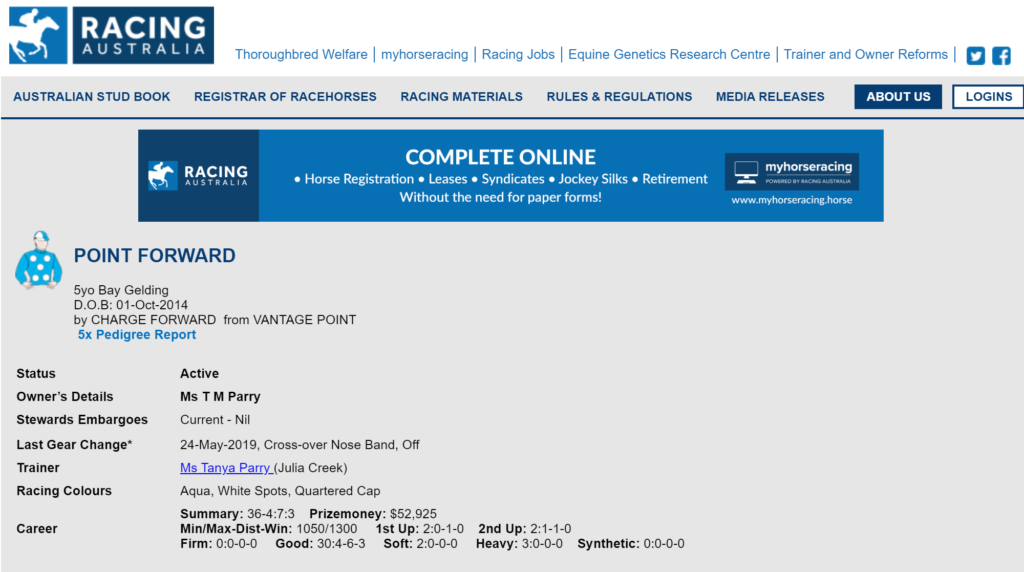
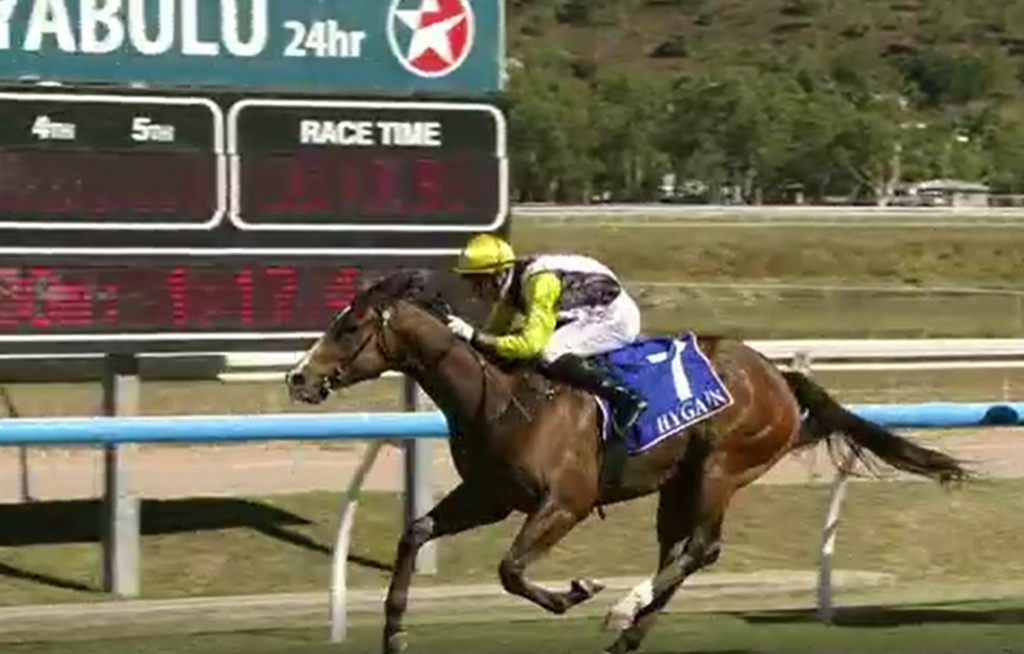
But of course, most tragic of all is whilst we all waited anxiously to learn the fate of Rostropovich whose pelvis was fractured by being forced to race in the Melbourne Cup, in the small country town of Richmond in the North West of Queensland, 5-year-old Point Forward sustained a serious injury and was killed and no one even noticed.

Not even Racing Australia it seems, where at the time of writing (one week after his death) the gelding is still listed as Active.

The Richmond Racecourse Facebook page has official and visitor posts praising what a great Cup Day they had. No mention of Point Forward anywhere. No acknowledgement of his life or his death. To the industry he is just another dead horse; one of those killed every three days. Must be tough work for this $9 billion industry to keep up.

Plenty more horses were injured on Melbourne Cup Day, many of whom we will never hear of again.

RIP Point Forward. We are sorry.

It was impossible to find a still image anywhere online of Point Forward. We welcome anyone who has one to please send it through.

*Studies show 90% of horses bleed from the lungs whilst racing. This mostly goes undetected. More information here.

To learn more about the frequency and causes of deaths on track read our Deathwatch reports here.

News

Lowest Melbourne Cup Carnival Attendance since 1997

November 10, 2019 by admincpr 2 Comments

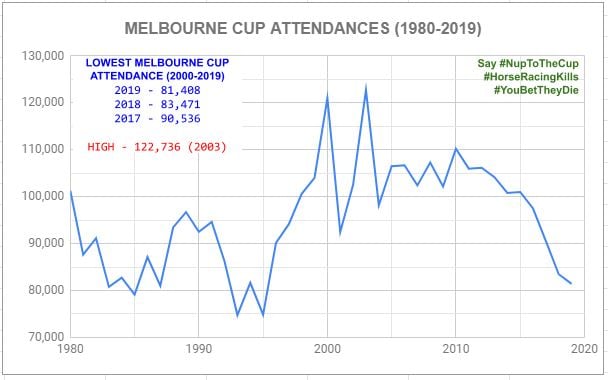
Horse racing is facing a downturn. The figures speak for themselves. Although this year has seen a larger drop than usual (the greatest ever in fact), the trend has been reasonably steady for the past 13 years.

This year we saw the lowest overall Cup Carnival attendance since 1997.

Many would shout that the poor turnout was all due to bad weather, conveniently forgetting that Cup Day was glorious yet the numbers were still down; the lowest they’ve been since 1995.

Here is the annual change in attendances for the full 4-day Melbourne Cup Carnival; attendances peaked at 418,000 in 2006 and are now down to 276,000:

2005-2009: +3.56%, +8.20%, -5.20%, -0.35%, -7.35%

2010-2014: -4.46%, +0.54%, -1.06%, -6.09%, -1.74%

2015-2019: -3.92%, +1.76%, -2.65%, -2.31%, -7.81%

Stakes Day saw its lowest attendance since 2004 and Oaks Day its lowest since 1994.

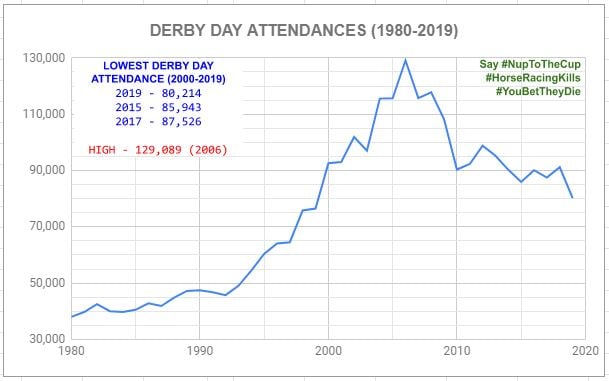
Derby Day saw its lowest attendance since 1999.

We suspect there may be a few reasons why attendance has been in steady decline but there is absolutely no doubt that concern for the treatment of horses is a huge contributing factor along with the growing understanding that animals are simply not objects for our entertainment.

In 2018 $128 million was spent on a new members grandstand at the Flemington racecourse. The industry’s most prominent event on the racing calendar, the 4 day Cup Carnival, averaged a venue capacity of just 58%. $128 million spent on a building they cannot fill whilst well over 10,000 horses every year, many of whom have been viewed and cheered from the luxurious platforms, are being sent to be killed because the industry will not afford them a retirement plan.

We suspect this downward spiral will continue into the future. Not only because the country is now well aware that thousands of these exploited horses are being sent to a brutal and terrifying death each year, but because horse racing is inherently cruel. The horse racing industry has indeed lost its social license. Token amounts of money thrown at the issues can not change that. Time’s up!

It is now that we must campaign harder than ever before. There is much work to be done.

News

Councillor’s Motion To Withdraw All Support Of Horse Racing

November 7, 2019 by admincpr 21 Comments

It is very welcome news to learn a City of Melbourne Councillor will be putting forward a motion at the upcoming Melbourne City Council meeting to withdraw current support, and make ineligible any future applications for support of horse racing events or celebrations.

TAKE ACTION and email your support of the motion now! Contacts at the end of this article.

At the 12 November 2019 Melbourne City Council (Future Melbourne Committee) meeting, Cr Leppert to move — 

If voted in by the councillors

That the Future Melbourne Committee:

1. Condemns the systemic cruelty and ‘wastage’ produced by the horse racing industry.

2. Directs management to amend and republish forthwith the City of Melbourne’s Event Partnership Program guidelines and Triennial Sponsorship Program guidelines with an additional class of events added to the list of ‘ineligible applications’ being “Events that celebrate or involve horse racing.”

If voted in, this would ensure an end to the annual Melbourne Cup Eve Parade which is nothing more than a glorification of gambling and animal abuse.

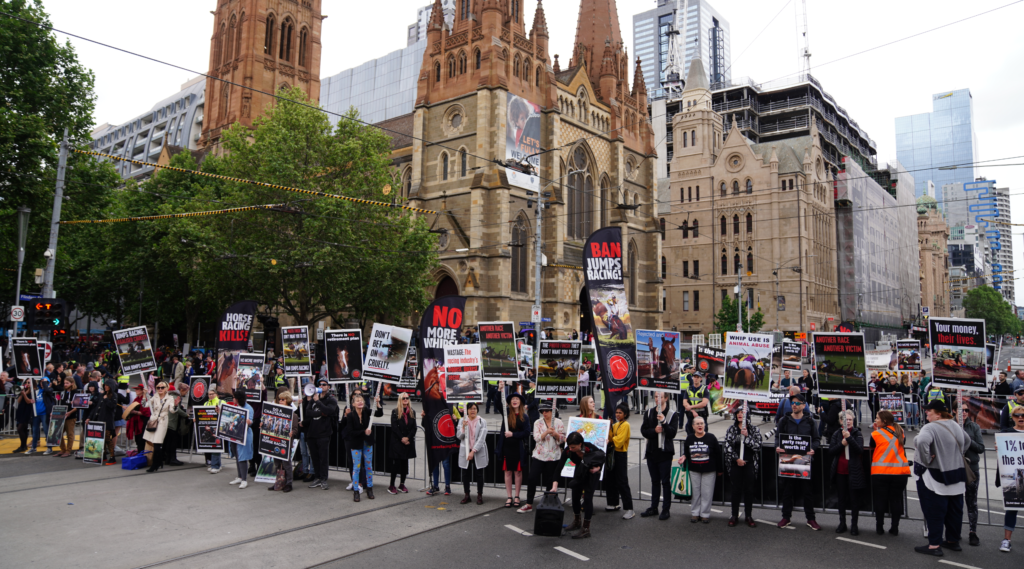
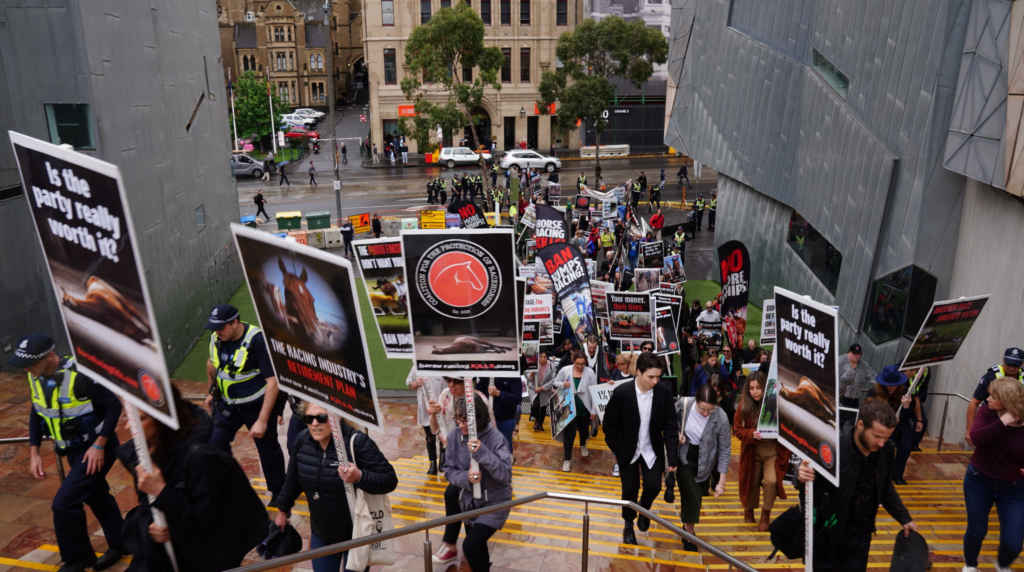
The parade is becoming a dismal affair, with the number of supporters dropping each year as the number of protesters grows. And it all comes at a huge cost to City of Melbourne ratepayers who fork out an “undisclosed” but no doubt huge amount towards an already multi-billion dollar industry.

The City of Melbourne likes to refer to itself as a progressive city, but when it comes to animals it repeatedly fails to live up to this position. The elected Councillors need to hear from you and know that you expect them to do what is right and support Councillor Leppert’s motion to condemn the horse racing industry and withdraw all future support.

A majority vote of 6 of the 11 Councillors is needed.

Email the Lord Mayor now and CC all the Councillors. Make your email polite and respectful. You can also make an official submission in support of the motion here.

Lord Mayor Sally Capp
[email protected]

Deputy Lord Mayor Aron Wood
[email protected]

Nicolas Frances Gilley
[email protected]

Philip Leliu
[email protected]

Rohan Leppert
[email protected]

Kevin Louey
[email protected]

Cathy Oke
[email protected]

Beverly Pinder
[email protected]

Nicholas Reece
[email protected]

Susan Riley
[email protected]

Jackie Watts
[email protected]

Read more here.

Images: Animal Liberation Photography

News

10 Ways You Can Help Horses This Spring Carnival

November 1, 2019 by admincpr 10 Comments

Say #NupToTheCup

1.  Say a big Nup to the Cup, hang out with a group of like-minded people and raise money for the animals, all whilst having a ball! There are events happening across Australia, all you have to do is turn up and join in the fun. Hash tag it all over social.

See all Nup To The Cup Event listings here.

Watch & Share

2. Knowledge is power. By sharing the ABCs ground-breaking story exposing the dark side of the Australian horse racing industry you can empower others around you to take action and end this cruelty for good. Help others see beyond the industry rhetoric and expose the truth to the world.

Watch and share here.

Take the CPR Pledge

3. Pledge to never bet on or attend the races ever again. When you sign the CPR pledge an email will be sent on your behalf to all racing authorities and government ministers, showing them the decline in support for the industry in real time.

Take the CPR pledge here.

Wear It!

4. Be a walking billboard and advocate for the horses! Show the world you’re saying Nup to the Cup with one of our ethically traded, sustainably manufactured t-shirts. Stickers, hats, keep cups and heaps more awesome merchandise items are also available at our online store. Sales go towards funding our ongoing campaigns.

Visit our online store here.

Protest

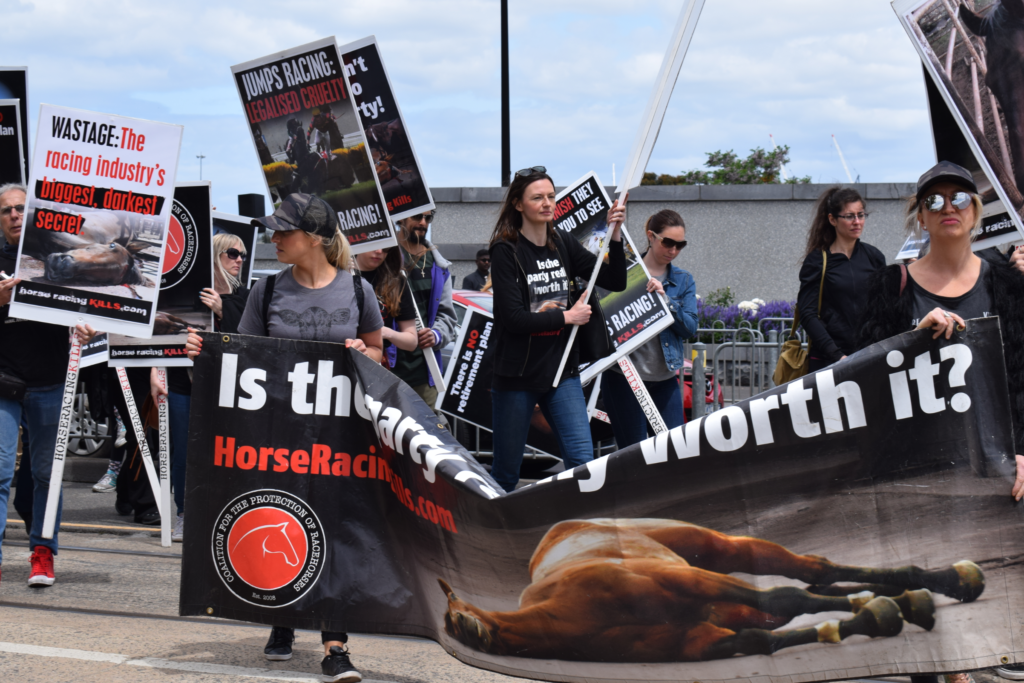
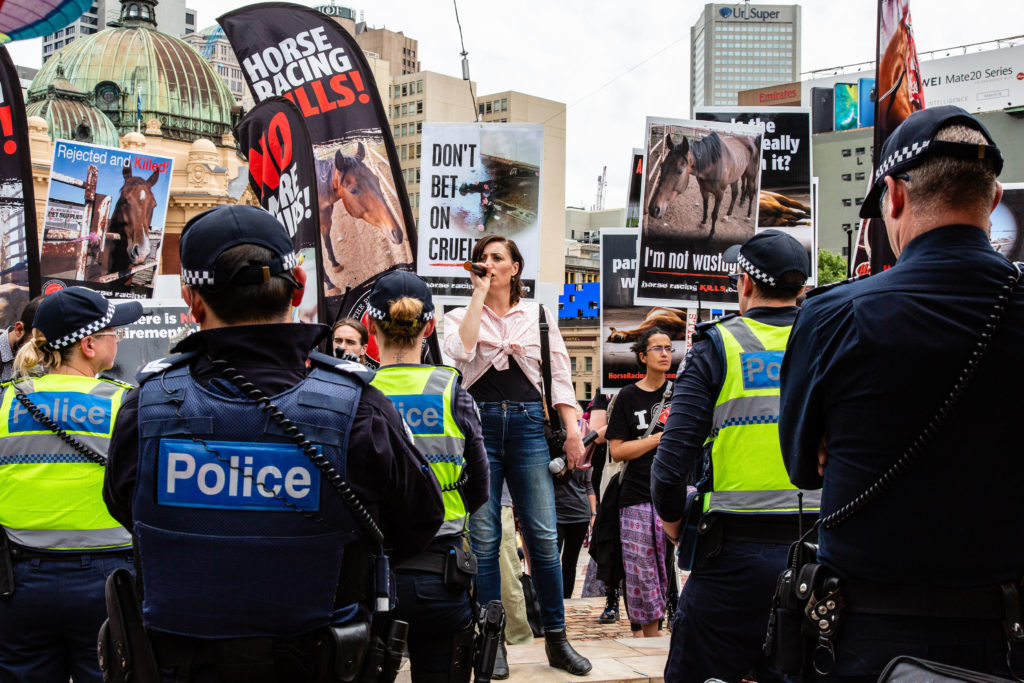
5. It isn’t all about the Fashuns on the Field though. Attend a rally or protest in your state to send a loud message to the racing industry from the track side. We have multiple events listed all across Australia; come along, be seen and most importantly be heard!

See our full list of protests here.

Pressure Sponsors

6. If you can’t make a protest or a Nup to the Cup event (or even if you can!) head to our TAKE ACTION page, where you can easily contact the sponsors of the Spring Racing Carnival to voi ce your concerns in just a few seconds. An important part of the horse racing industry’s survival is sponsorship, Help us show the sponsors that the community says NO to animal cruelty.

Call on sponsors to STOP supporting animal abuse here.

Drive It!

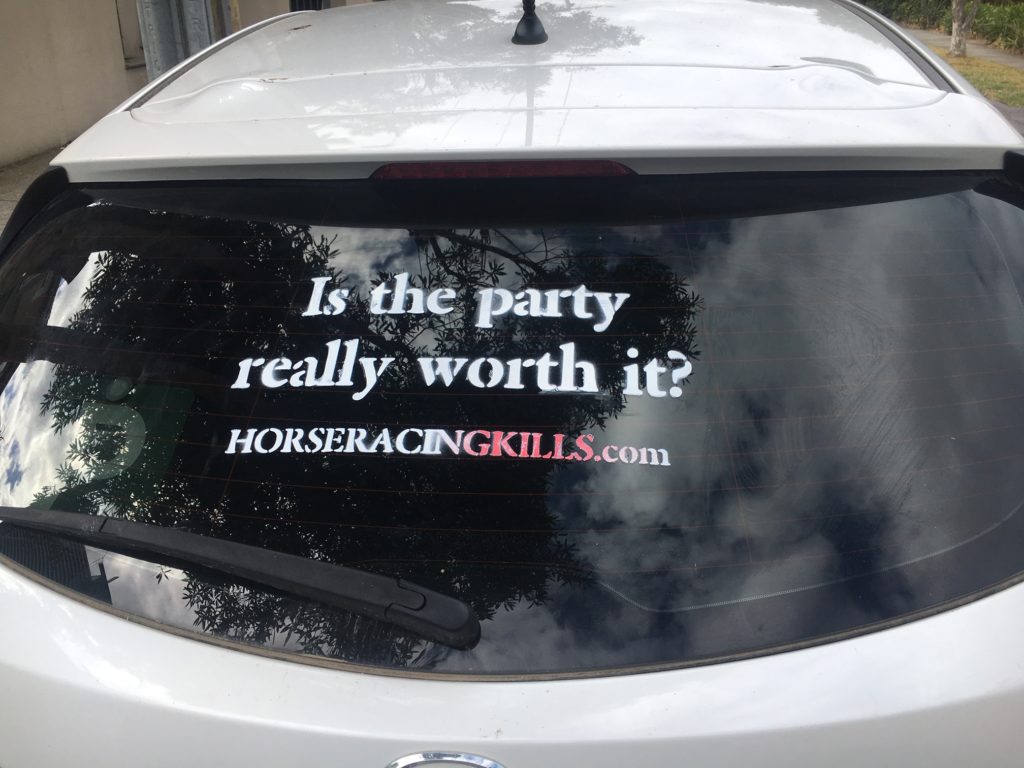
7. You’re walking the walk in your awesome new Nup to the Cup t-shirt, why not also drive the talk! Just as t-shirts are an effective means of advocacy so too are our vehicles. Order a stencil for your car, watch the tutorial in the link below and make your car into a moving billboard just like you!

See how to stencil your car here.

Donate

8. Donate to one of the many reputable rescues rehabilitating horses in Australia, or to CPR so we can continue our ongoing campaigns, lobbying and investigations. You can make a one off donation or monthly contributions; everything is helpful!

Donate here.

Volunteer

9. Or consider donating your time. The racing industry is massive, and we need as many of you volunteering with us to ensure the interests of racehorses are effectively represented and the industry is held to account. There are a variety of roles and tasks that are suited to everyone!

Complete our volunteer application form here.

Never Be Silent

10. Speak up, speak out and be heard. Every conversation is an opportunity to change hearts and minds. Visit our website for all the stats and facts, and become an informed advocate for the animals.

News

Call on Spring Carnival Sponsors to STOP Supporting Animal Abuse!

October 24, 2019 by admincpr 15 Comments

Spring Carnival sponsors need to hear from you! Take action here.

This is why.

Just two weeks prior to the 7:30 investigation exposing the horrific slaughter of thousands of racehorses that sent shock-waves through most Australians, CPR had been in contact with several companies and organisations in regards to their sponsorship of/affiliation with the Melbourne Spring Carnival. In expressing our concerns over this we highlighted the Corporate Social Responsibility (CSR) these companies and organisations professed to embrace.  Sadly, in many instances, horse racing flies in the face of these responsibilities. It is as if they have conveniently deviated from their CSR for the almighty dollar and the brand exposure to be gotten from associating with horse racing. 

However, it’s not just animal cruelty that makes a mockery of their CSR commitments. Despite these commitments having an underlying theme of making the world a better place and helping to create stronger communities, it appears that this is conveniently ignored too, considering gambling (that, along with animal cruelty, horse racing is predicated on) has serious consequences for the community. 

There are many companies and organisations involved with the Melbourne Spring Carnival and we didn’t have the time to contact all of them.  Also, getting in contact with the relevant people proved to be harder than anticipated, thanks to hierarchical structures and lack of information regarding contact details on homepages and when making telephone contact. 

We did, however, manage to contact twelve, including some of the major sponsors.  In some cases we were ignored so a follow up e-mail was sent but we continued to be ignored in some of these cases. 

The responses we did receive were disappointing but not surprising.  In fact, some were nothing but industry spin, the usual rhetoric.

Lion (of which Furphy is a brand), after much chasing up, responded claiming the following:

  • A focus on the welfare of thoroughbreds before, during and after racing is a priority for the Victoria Racing Club (VRC), the Victorian racing industry and Lion as a Major Partner and Sponsor.
  • The Club works closely with all sectors of the industry, as there is a clear need to continue the increased focus into horse safety and welfare.
  • The VRC is confident that those involved in racing at Flemington hold the welfare of horses as paramount and works closely with the racing industry body, Racing Victoria, to understand and address these areas.
  • Equine welfare is one of the Club’s main priorities and the Club is currently looking at ways to optimise facilities on course for horses to train, race and recover.
  • Racing Victoria and the racing industry as a whole are committed to the welfare of horses and have a long-term strategic plan which includes ongoing consultation with industry stakeholders and animal care and protection groups.

You couldn’t make this stuff up!

Asahi (of which Schweppes is a brand) responded with something in the same vein, stating that Racing Victoria and the racing industry as a whole are committed to the welfare of horses and have a long term strategic plan which includes ongoing consultation with industry stakeholders and animal care and protection groups.

Kennedy Luxury Group, after much chasing up, came back with a response that very much blew us off.  They said that such issues are a matter for the sports governing body and to this end they recommend we direct our enquiry to Racing Victoria Limited (RVL) or the Victoria Racing Club (VRC), a fine example of passing the buck and not taking responsibility for their own complicity.

Sofitel Melbourne on Collins stated they acknowledge our concerns and appreciate the explanations we gave. They also said they regularly review their various sponsorship agreements and take many factors in to consideration and will take our “views” in to consideration during their next review.

A follow up e-mail asking when their next review will be has been met with silence. 

We also approached a few NPOs involved with the Melbourne Spring Carnival including DrinkWise, whose primary focus is to help bring about a healthier and safer drinking culture in Australia, and Very Special Kids, an organisation assisting families with children with life-threatening conditions.

DrinkWise promptly responded and we decided not to pursue this further as it may come off as irresponsible when they are encouraging responsible drinking. 

Very Special Kids required a second e-mail to garner a response.  They eventually responded by saying the opportunity to be a Victoria Racing Club 2019 charity partner is providing them with an amazing opportunity to raise much-needed funds for their vital work, especially as they are 80 per cent self-funded. They said they take their corporate partnerships very seriously and factor in all aspects when making these decisions. 

They also claimed they know that the Club works closely with all sectors of the industry as there is a clear need to continue the increased focus into horse safety and welfare. They said they were pleased to see that the Victorian thoroughbred racing industry continues to lead the way in equine welfare with $350 million spent annually on the training, care and welfare of racehorses in Victoria, equating to more than $40,000 per horse per annum. 

They ended their message by stating Victoria’s race day fatality rate is among the lowest in world racing.

Bumble, who originally responded with something completely unrelated demonstrating they had not even bothered to consider the contents of our email, have since (according to the SMH) donated $130k to Racing Victoria’s Off the Track program. Horse racing is an industry that generates $19 billion in betting turnover alone. It must be asked, why Bumble are donating large sums to an industry built on horse exploitation and suffering when there are countless not-for-profit organisations across Australia in desperate need for funds to actually end animal abuse and address other important social justice issues?

Unfortunately the City of Melbourne are also official supporters of the Melbourne Cup. Each year you will even see the Lord Mayor join the Cup Eve parade. We have only just sent emails to each councilor and we look forward to their response. Randwick (NSW) Councillor Philipa Veitch will be putting forward a motion for the Randwick Council to express their strong condemnation to cruel horse racing practices and to cease all further involvement in racing events at Royal Randwick racecourse. We would like and expect the City of Melbourne to follow suit, including the Lord Mayor Sally Capp withdrawing from the Cup Eve parade.

Lexus, Myer, Seppelt, and Pallion (ABC Refinery, who makes the Melbourne Cup trophy, is the refining division of Pallion) have not taken the courtesy of responding despite two attempts at reaching them. Grinders Coffee responded after the 7:30 investigation aired expressing interest in talking to us. We look forward to speaking with them.

As you can see, these companies need to hear from you so that they are made aware that you do not accept their support of this animal abuse industry. Please head on over to our TAKE ACTION page, where in just a few seconds you can easily get in touch with these companies and express your concern. 

Note: It is important to reiterate that our emails detailing the inherent cruelty and systemic slaughter of horses in the racing industry were sent out to these companies and organisations prior to the damning 7:30 investigation. The Sydney Morning Herald has since reported ‘Major Sponsors Pressure Horse Racing Bodies Over Horrific Footage’ (read here). Sadly, they are still refusing to withdraw their support. They need to hear from you. Take action here!

News

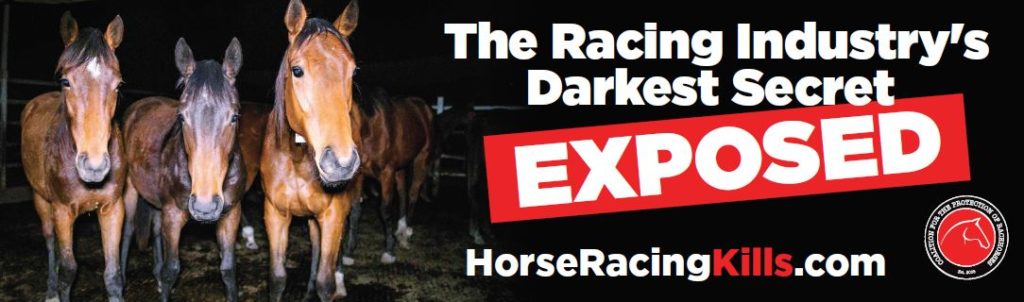
The Racing Industry’s Darkest Secret EXPOSED

October 17, 2019 by admincpr 159 Comments

ABC’s 7:30 has shown Australian’s and the world that horse racing has unequivocally lost its social license.

Watch the breaking episode here.

ABC’s 7:30 has revealed in graphic detail the appalling treatment of racehorses after they finish racing. Despite repeated claims made by the racing industry that they love and care for the horses they use and less than 0.5% are being sent to slaughter, finally the evidence of large numbers of racehorses being killed for pet food and human consumption has been exposed.

CPR has been exposing and educating the public about the brutal reality of horse racing for more than 10 years. What we saw on 7:30 was only part of the story. Stay tuned as CPR vows to continue its fight for justice for racehorses.

Take Action!

This Spring Carnival we would like as many people as possible to be a voice for racehorses and get involved with CPR’s actions.

You can:

Take our pledge below to never bet on or attend a horse race again. Your pledge will be sent to all state racing organisations and the governing body, Racing Australia.

Pledge

They Need Your Help!

DONATE TO OUR BILLBOARD CAMPAIGN

Help us to ensure the truth reaches the masses by donating to our billboard campaign at https://chuffed.org/project/cpr

Follow us on social media Facebook, Instagram, Twitter

Attend our demonstrations being held around Australia this Spring carnival: information here or on Facebook

Attend one of many Nup to the Cup! events being held around Australia

Become a supporter and donate here.

Stencil your car.

Visit our on-line shop and buy yourself some CPR merchandise

And please share the ABC’s explosive investigation far and wide.

“IF YOU CARE ABOUT ANIMALS, YOU SHOULDN’T BE GOING TO THE RACES”

News

Our Submission to the Inquiry into the Feasibility of a National Horse Traceability Register

October 6, 2019 by admincpr 1 Comment

In February 2019, the Australian government Rural and Regional Affairs and Transport References Committee launched an Inquiry into the Feasibility of a National Horse Register.

The inquiry takes particular reference to:

  1. the existence and adequacy of state or industry-based registers;
  2. the benefits of a national register, including for animal welfare, biosecurity safety (including for the prevention and management of Emergency Animal Diseases, such as equine influenza and African Horse Sickness), backyard breeding and the integrity of trade in horses;
  3. overseas models of national tracking systems for horses;
  4. funding, enforcement and penalty implications; and
  5. any related matters.

CPR made a submission to the inquiry which can be read here.

The Committee invited us to provide evidence at a public hearing, in relation to the committee’s inquiry at Parliament House in Canberra in September 2019 which we gladly accepted.

We will report back as soon as we receive information as to the inquiry outcome.

News

  • « Previous Page
  • 1
  • …
  • 20
  • 21
  • 22
  • 23
  • 24
  • 25
  • Next Page »

Contact Us

The Coalition For The Protection Of Racehorses
P.O Box 163, South Melbourne
Victoria 3205

Phone: 0412 039 788
Email Us

Join Our Mailing List

Sign-up to our mailing list to keep up to date. Text alerts are available for breaking news and urgent actions if you are in Australia.

Sign-up now

Find us on Social Media

© Copyright 2016 - 2026 All Rights Reserved by Coalititon for the Protection of Racehorses.

Privacy Policy