• Home
  • About
    • About
    • Achievements
    • International Partners
    • Frequently asked questions
    • Media Enquiries
    • Contact
  • Campaigns
    • Petition: End Overbreeding of Racehorses
    • Nup to the Cup
    • Deathwatch
    • Jumps Racing
    • The Whip
    • Wastage
    • 1 % To Stop The Slaughter (Retirement Plan)
    • New Zealand Campaign
    • Two-year-old Racing
    • Racing in Extreme Heat
  • Issues
    • Racehorses Killed for Human Consumption
    • Racing NSW on horse slaughter
    • Bits
    • JIGGERS
    • Undercover Knackery Investigation
    • Tongue Ties
    • Drug Use
    • Industry Funded Studies
    • Confinement
    • Racing in the Heat
    • Other Health Issues
    • Life of a Racehorse
    • Greyhound Racing
  • Take Action
    • The National Horse Traceability Register has lost its way
    • End Jumps Racing in Victoria
    • Make Reporting of Racing Deaths Mandatory
    • Donate
    • Bequests
    • #ditchthewhip
    • Take The Pledge To Never Bet On Or Attend A Horse Race
    • Volunteer
    • Businesses That Sponsor Horse Abuse
    • Outreach Toolkit
    • Register Your Own Nup To The Cup!
    • Nup to the Cup at your Workplace
    • Your Nup to the Cup Support Kit
    • Stencil Your Car
    • Equinileaks
    • Subscribe to our mailing list
  • Resources
    • Videos
    • Music
    • Reports & submissions
    • Outreach Toolkit
    • Download a banner
    • Download a poster
    • Your Nup to the Cup Support Kit
    • Nup to the Cup at your Workplace
    • A guide to rescuing race horses
  • Store
    • Store
    • Basket
    • My Account
    • Checkout
  • News
    • CPR Media Releases: AU
    • CPR Media Releases: NZ
  • Events

Horse Racing Kills

Horse Racing Kills

Advocating for race horses

  • Home
  • About
    • About
    • Achievements
    • International Partners
    • Frequently asked questions
    • Media Enquiries
    • Contact
  • Campaigns
    • Petition: End Overbreeding of Racehorses
    • Nup to the Cup
    • Deathwatch
    • Jumps Racing
    • The Whip
    • Wastage
    • 1 % To Stop The Slaughter (Retirement Plan)
    • New Zealand Campaign
    • Two-year-old Racing
    • Racing in Extreme Heat
  • Issues
    • Racehorses Killed for Human Consumption
    • Racing NSW on horse slaughter
    • Bits
    • JIGGERS
    • Undercover Knackery Investigation
    • Tongue Ties
    • Drug Use
    • Industry Funded Studies
    • Confinement
    • Racing in the Heat
    • Other Health Issues
    • Life of a Racehorse
    • Greyhound Racing
  • Take Action
    • The National Horse Traceability Register has lost its way
    • End Jumps Racing in Victoria
    • Make Reporting of Racing Deaths Mandatory
    • Donate
    • Bequests
    • #ditchthewhip
    • Take The Pledge To Never Bet On Or Attend A Horse Race
    • Volunteer
    • Businesses That Sponsor Horse Abuse
    • Outreach Toolkit
    • Register Your Own Nup To The Cup!
    • Nup to the Cup at your Workplace
    • Your Nup to the Cup Support Kit
    • Stencil Your Car
    • Equinileaks
    • Subscribe to our mailing list
  • Resources
    • Videos
    • Music
    • Reports & submissions
    • Outreach Toolkit
    • Download a banner
    • Download a poster
    • Your Nup to the Cup Support Kit
    • Nup to the Cup at your Workplace
    • A guide to rescuing race horses
  • Store
    • Store
    • Basket
    • My Account
    • Checkout
  • News
    • CPR Media Releases: AU
    • CPR Media Releases: NZ
  • Events

CPR Ask Kelly Rowland to #PullASwifty

October 2, 2019 by admincpr 5 Comments

SIGN & SHARE THE PETITION HERE

Like Taylor Swift, Kelly Rowland appears to be completely unaware of the shocking abuse and deaths horses suffer in the racing industry. We need to inform her of the cruelty she will be endorsing and ask her to #PullASwifty. 

It was recently announced the megastar has agreed to perform at Australia’s deadliest racetrack, Royal Randwick, as part of ‘The Everest’. The Everest has been specifically designed to lure the younger generation who are turning their back on horse racing cruelty to the track and towards gambling habits. The booking of Kelly Rowland is also specifically designed to do the same thing. 

Kelly Rowland is a powerful woman, a fierce feminist, a symbol of strength and a dedicated philathropist for many social justice causes. She encourages equality and those who have the ability to speak up for others in need to do so, whilst also encouraging self-empowerment. We now need to speak up to her to ensure she knows her support of The Everest promotes the oppression, suffering and murder of thousands of vulnerable horses every year. 

Taylor Swift backed out of the Melbourne Cup once fans made her aware of the cruelty she was endorsing. We like to think Kelly Rowland will stand up and do the same.

Some things Kelly may not know:
1) Last year our Deathwatch report exposed more horses were killed at Royal Randwick than any other track in Australia – read here.
2) The Everest offers $14 million in prize money which helps ensure horses will be pushed so hard that 90% will bleed from the lungs as studies have shown. With the stakes so high, they will be beaten hard with the whip and pushed well beyond their limits.
3) 1 horse is killed on Australian racetracks every 3 days (that we know of – the real numbers would be much higher)
4) When no longer wanted, thousands of horses are sent to one of our thirty-three knackeries to be turned into dog food, or one of two slaughterhouses to be killed for human consumption where they endure horrific deaths. These slaughterhouses depend on a steady supply of young horse flesh from the racing industry.
5) When in training, the life of a horse used for racing is one of isolation and confinement. They cannot socialise and express their natural behaviours. They cannot graze. They are fed a concentrated diet that leads to 90% of horses suffering painful stomach ulcers. Painful instruments of domination and control are used on them including bits, whips, spurs, tongue-ties and jiggers (electric shock devices).
6) Approximately 45% of the horses bred for racing never make it to the track and most vanish without a trace.
6) Mares used for breeding the next big winner are tied down to be mated, often  against their will, by a stallion who is trucked around the country ‘servicing’ them. Her foals are taken from her early for training or to be killed if they do not show the desired attributes. Read more here.

These do not sound like the kind of practices someone who supports justice and equality should be endorsing. 

Kelly Rowland should #PullASwifty and cancel her gig at The Everest!
News

The Distress is Undeniable

July 9, 2019 by admincpr 12 Comments

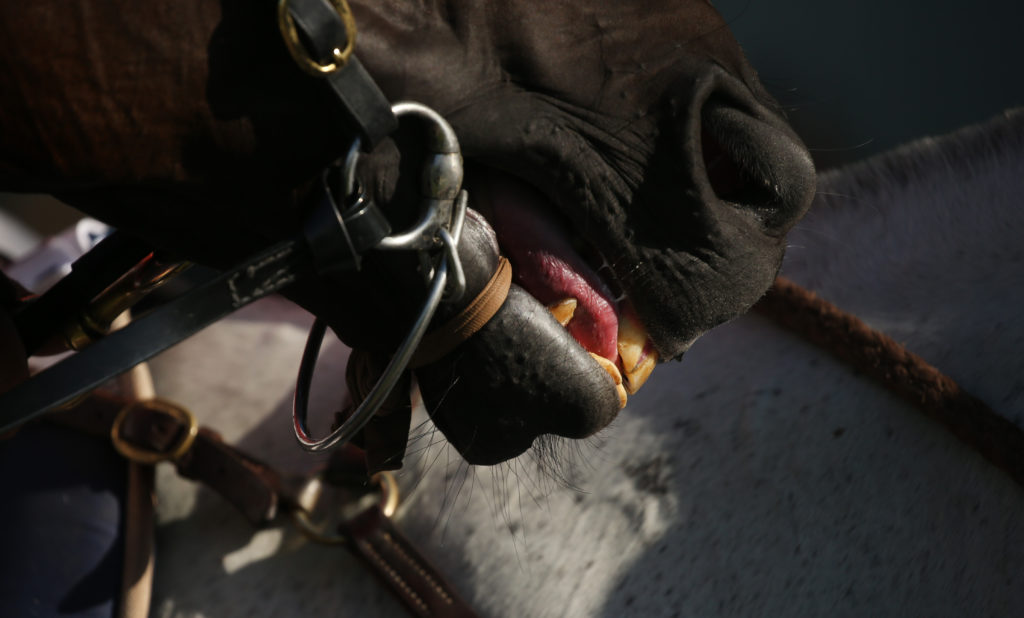
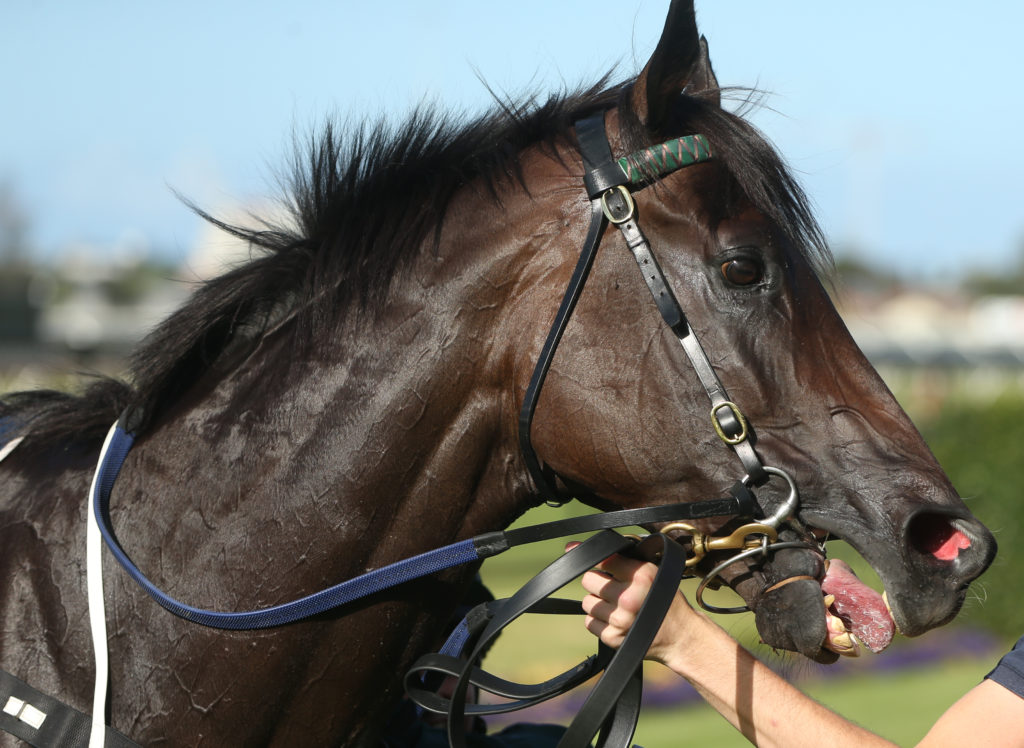
Bands are used by the racing industry to tie down the tongues of horses. They are spruiked as being for the horses’ benefit to assist in breathing. There is no clear evidence to support claims that breathing is improved yet 72% of thoroughbred trainers and 85% of standardbred (harness racing) trainers use them.

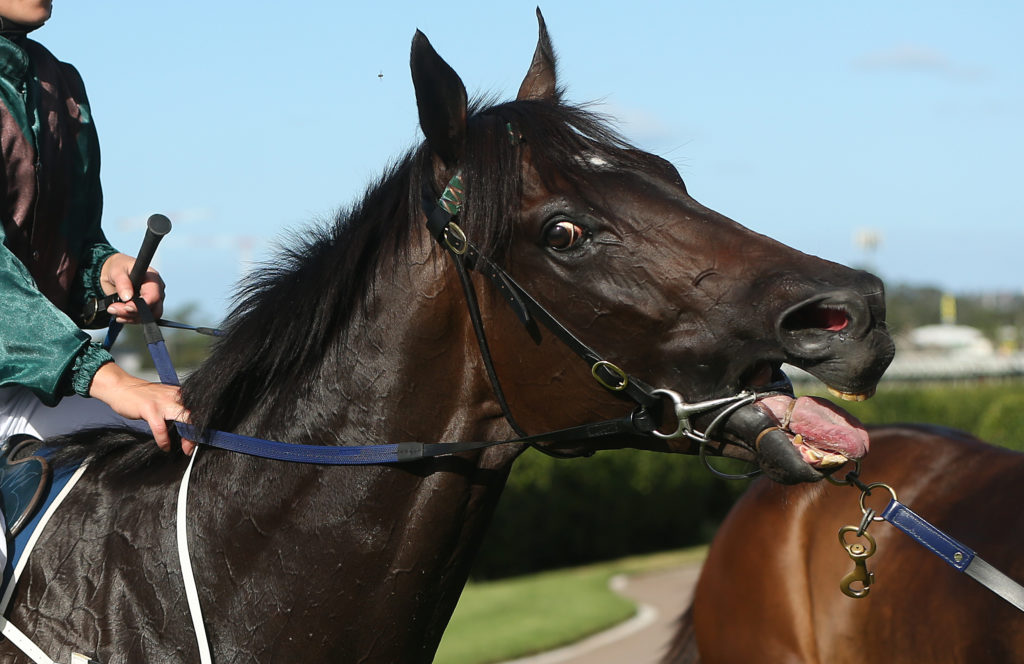
We do however know that those having their tongues tied show significantly more frequent stress behaviours such as gaping, ears back and head tossing with many sustaining injuries such as lacerations, swelling, bruising, head shyness, difficulty swallowing, anxiety, ‘blue tongue’ and permanent tissue damage. Of course, this is not surprising. Their tongues are tied! Read more here.

Trainers who claim they use tongue ties due to horses tongues pushing over the bit and causing possible airway obstruction are ignoring the human-caused reasons the horse does so in the first place such as too much unrelenting and meaningless pressure maintained on the tongue via the bit.

Let’s face it, tongue ties (like most other instruments used in horse racing) are used to instill fear, dominance and control over a horse as a means of forcing them into subjugation and pushing them beyond their limits. Any evidence of improved respiratory function would still make their use unnecessary if they weren’t being pushed so hard. Tongue ties are not for the benefit of the horse. Like horse racing itself, they exist to benefit the human at the expense of the horses mental and physical wellbeing.

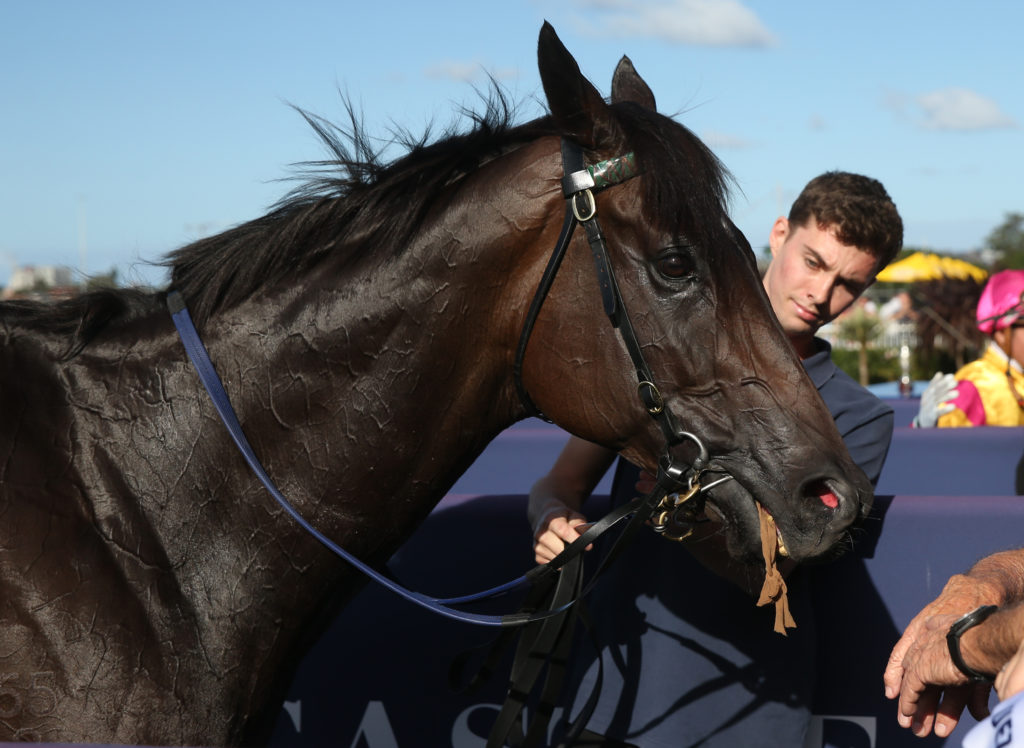
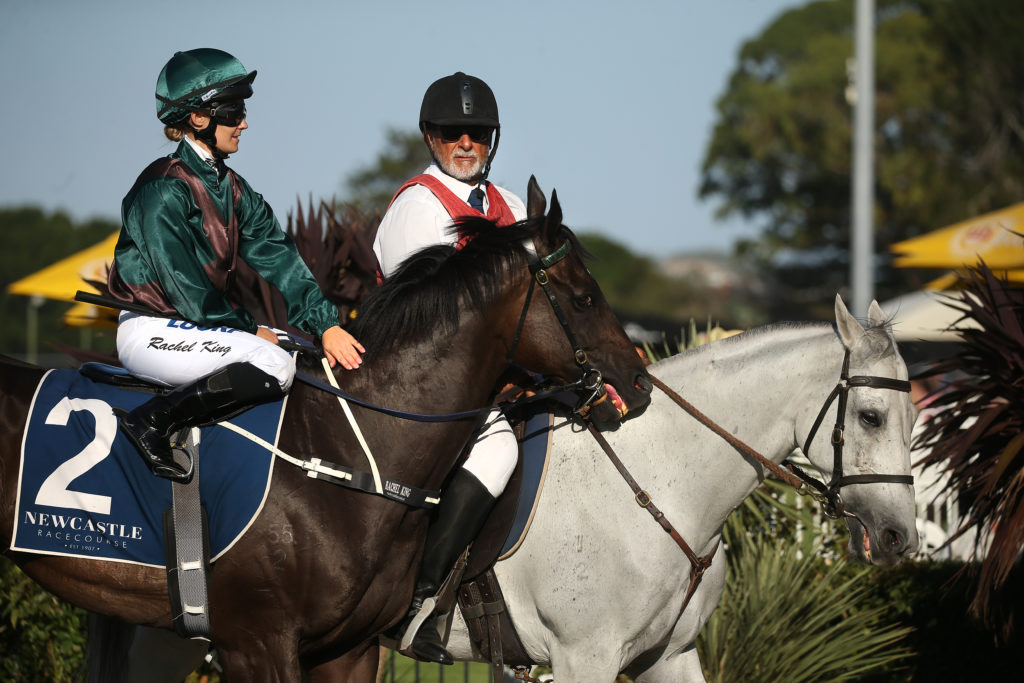
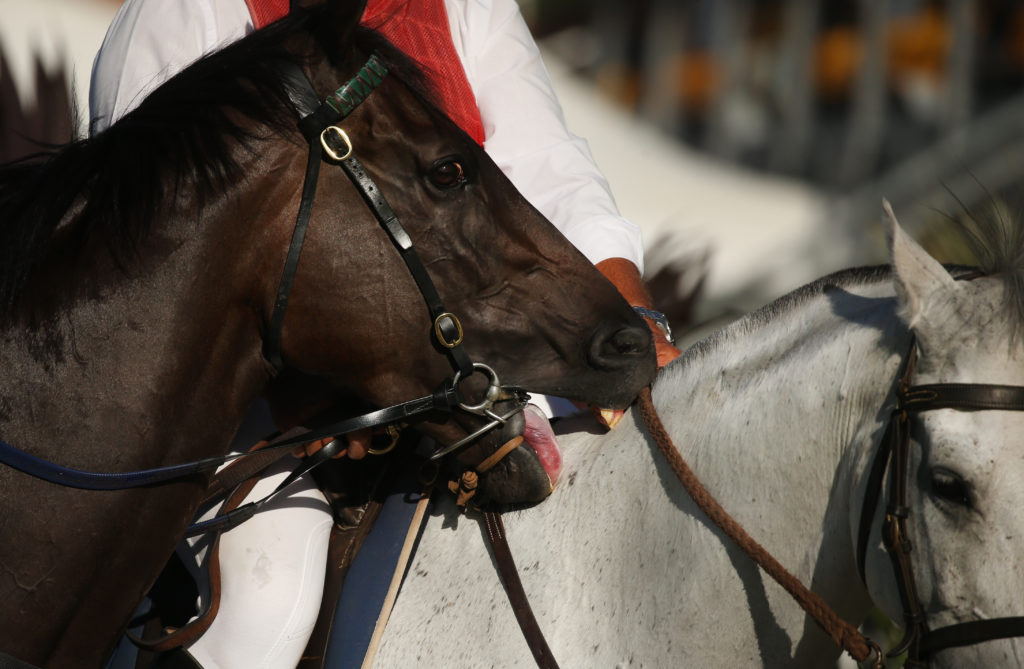
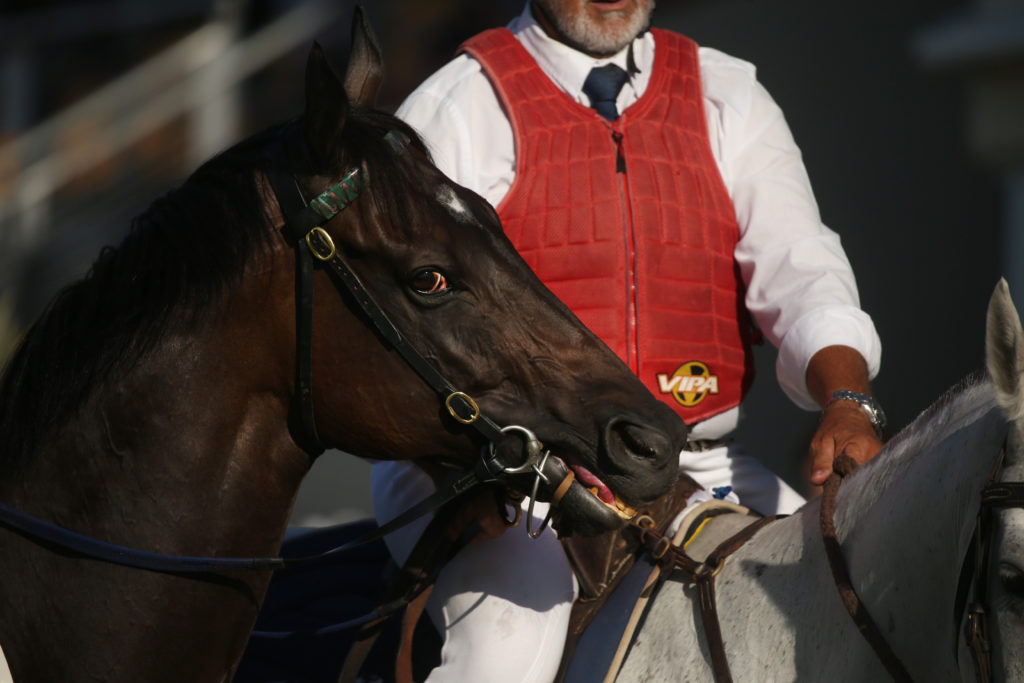
The below images feature Lanciato at the Newcastle track in 2018 and in 2019. His visible distress is undeniable, requiring him to be escorted to the gates.

  • Lanciato 2018
  • Lanciato 2018
  • Lanciato 2018
  • Lanciato 2019
  • Lanciato 2019
  • Lanciato 2019

News

Racing NSW Ignores the Suffering and Deaths Caused by Track Conditions

July 4, 2019 by admincpr Leave a Comment

There is little doubt that the changing weather is going to have an increasing impact on the ground surfaces of racetracks around Australia and for the capacity of surfaces to dry out and increase in firmness during any race-day.

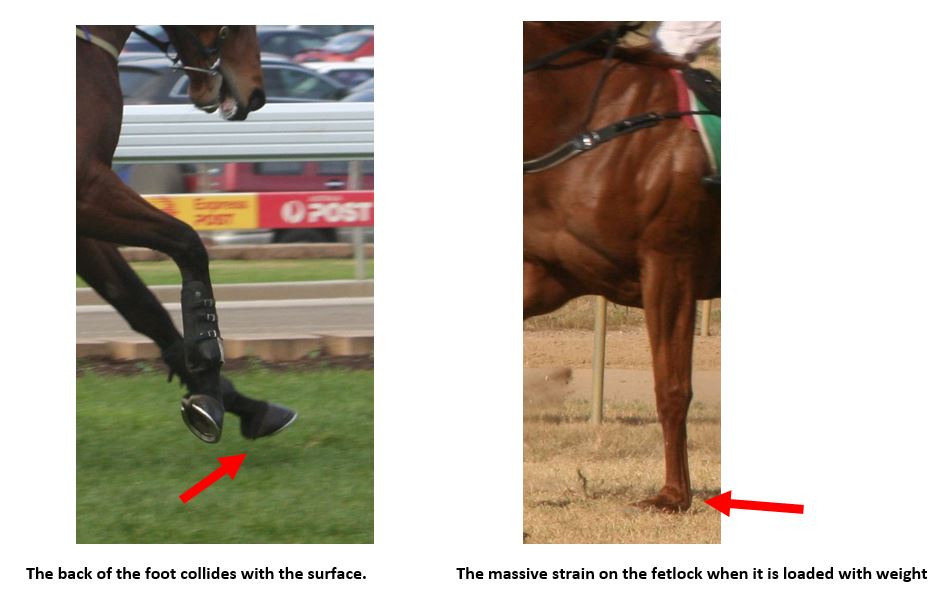
Tracks rated Good 3 or worse have been identified as a significant risk factor for catastrophic limb injuries to racehorses that result in euthanasia of the horse.  The magnitude of ground reaction forces when the foot collides with the surface increases with hard tracks which may increase injuries to bone. 

See video demonstrating the testing of a racetrack in the USA with a penetrometer here.

Racing Victoria has been criticised by both Michelle Payne and Darren Weir over the suffering hard tracks inflict on horses. Coming from a trainer who was found guilty of electrically shocking horses and a jockey who was also potentially complicit we don’t assume their concern is for the horses but more for their careers, but… we digress.

Racing Victoria has recently changed its policy to present tracks with more “give” in them.

“As part of the review, the ATA conducted detailed research with trainers and 85% of those surveyed indicated that they would like softer tracks presented in the best interests of their horses. This aligned with veterinary research which affirms that the risk of injuries increases with an increased firmness of tracks.”

“The response from our members was loud and clear that they wanted more give in our tracks to help them manage their horses through their racing campaigns, particularly in the days following a race.”

Article here.

However, Racing NSW does not appear to consider racing on hard tracks cruel to horses.  

At Coonamble on 23 June, 2019, the track was rated as Good 3/Firm 2. The riders of Palais De Louvre, Harmonica, Toulon Brook, Modern Family and Just a Bullet all reported to stewards after the race that the horses did not appreciate the firm track conditions.  Toulin Brook and Just a Bullet both pulled up lame (1/5) in both forelegs and Charlotte’s Heart pulled up lame (1/5) in the off foreleg.

Stewards report here

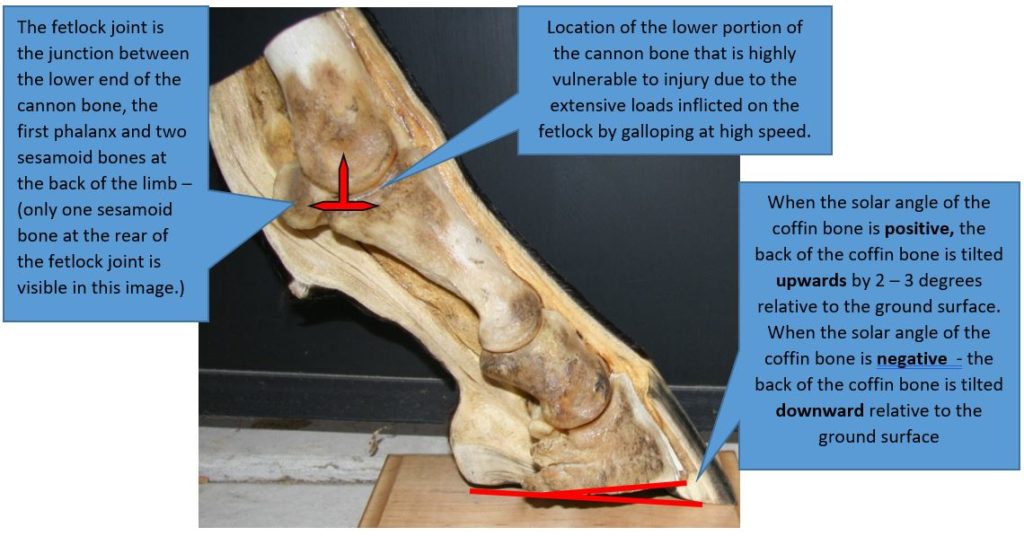
Bone fatigue is a process that results in chronic damage accumulation in a joint due to repeated high-speed work that can result in a catastrophic fracture and the death of a horse.  Bone is a complex tissue that is able to adapt to loads and repair itself naturally (termed bone remodelling) however, in general racehorses in training have lower rates of remodelling compared with horses at rest. In other words, bone repair is suppressed in horses in race training compared with horses resting from training.   The highest joint loads occur in the fetlock which is also the most common site of subchondral bone (bone underlying the cartilage) injury in Thoroughbred racehorses.  The degree of damage to the fetlocks of racehorses that has been documented by scientists is horrifying.

“Up to 70% of Thoroughbred racehorses have bone bruising, or joint surface collapse of the cannon bone and condylar fractures which propagate from this joint surface are the most common cause of fatal breakdown injuries. These injuries are due to bone fatigue, damage that accumulates due to repeated high loading produced by high-speed galloping.” 

Read the study here.

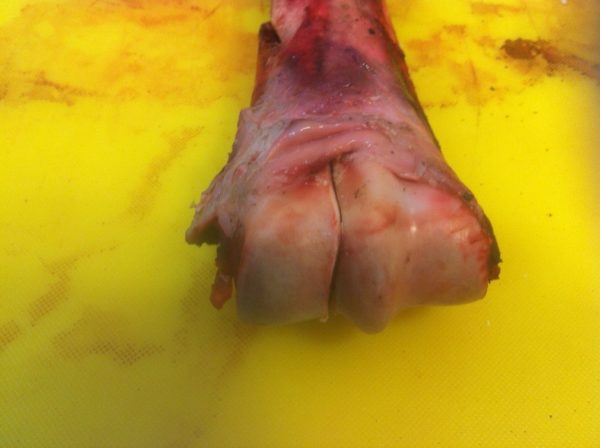
A common catastrophic fracture to the end of the cannon-bone (the condyle) of the forelimb of a racehorse – most likely the result of gradual accumulation of damage to the fetlock joint as a result of chronic bone fatigue.

Scientists have recently found that the solar angle of the coffin bone in the foot of the horse is associated with scintigraphic evidence of subchondral bone injury in the distal cannon-bones of Thoroughbred racehorses that forms part of the fetlock joint.  This is commonly due to incorrect hoof conformation that causes chronic hoof imbalance such as long toes/low, underrun heels that are often associated with poor integrity/development of the soft tissues of the back of the foot.

In a radio interview, Assoc. Professor Chris Whitton, head of research studies into bone fatigue at Melbourne University Equine Centre stated: 

  • There’s always variation between individuals but there are some characteristic sites where we see injury.   The fetlock being a really common one where we get a lot of serious injuries. 
  • Low heels are associated with fetlock injuries.    The balance of the foot affects the loads in the lower joints.  Typically sites that have the highest loads suffer injury.  
  • Balancing a training programme to rest periods is crucial. 
  • Maintain foot balance and avoid giving horses medication to mask pain.  

Another important study ‘Bone fatigue and its implications for injuries in racehorses’ can be read here.

Racing NSW pays lucrative prizemoney back to 10th place to its participants.  E.g. At a mid-week meeting at Hawkesbury, horses who finished 10th received $1,000 prizemoney – see here. There is no doubt that this prizemoney provides a strong incentive for trainers and owners to race horses more often. 

It is clear that Racing NSW did not base its new rule in regard to Frequency of Starts on Australian scientific research into racehorses, and that the welfare of the racehorse is not paramount to Racing NSW:

(1) No horse shall be permitted to start in a race on more than five (5) occasions during any thirty (30) day period.

(2) In any thirty (30) day period, a horse is only permitted on one (1) occasion, to start in a race that results in the horse starting in two races that are two (2) Clear Days or less than apart.

(3) A two-year-old shall not be permitted to start in a race on consecutive days.

The local rule can be read here.

No matter where you look in horse racing, there is suffering being inflicted onto horses. From the very track conditions on which they are forced to race, through to the slaughterhouses that kill them and the abundance of horrors in between.

News

South Australian’s Tax Dollars Used to Prop Up a Cruel and Dying Industry

June 25, 2019 by admincpr 3 Comments

In December 2018, Thoroughbred Racing SA (TRSA) announced a $2.25 million cut in infrastructure funding.  The reason for this was the introduction of a Point of Consumption (POC) tax levied on all bets placed.  The tax was introduced by most states however, unlike Victoria and NSW where tax was set at eight and ten percent respectively, the SA Government set their tax at 15%.  This resulted in bookmakers promoting interstate races and badly impacting Racing SA revenue and prize money.

The SA Government has been heavily lobbied by TRSA since the tax was introduced.  The main arguments are the impact on racing industry jobs and the inability to attract participants because of the lower prize money.

Fast forward to June 2019 and the announcement by the SA Government to inject a very serious $24 million into the racing industry.  The stimulus package will be spread across four years.  This is in addition to the $4.85 million awarded to the industry in 2017/18.

Despite the award being reliant on TRSA demonstrating that job creation and economic benefits are a quantifiable result of the injection, the POC tax will remain at its current level and is still an unattractive proposition for bookmakers.

The pressure put upon the State Government by the horse racing industry has clearly paid off for TRSA but is this an effective use of taxpayers’ money?

Instead of supporting a failing and cruel industry such as horseracing, why would the SA Government not consider more deserving recipients for this massive amount of cash?

In 2017, Racing NSW committed millions of dollars to its racehorse welfare program.  This was in response to increasing consumer awareness about cruelty issues so prevalent in the horse racing industry.  It is the only state that is attempting to tackle wastage and obliging owners and trainers to seek and specify a final destination for their racehorses. 

It has purchased a historic property with 1,050 acres in Capertree, NSW.  Racing NSW claims the unwanted racehorses that end up there are being re-trained for a future as police horses, companion animals and show jumpers.  The facility also claims to assist returned war veterans with training and there are plans to include a Bed & Breakfast in the near future.  Although we are yet to see any proof that the program is actually underway and saving lives, and there is certainly much room for improvement in its objectives, we acknowledge this is a step in the right direction and an attempt at creating employment in a kinder way.

Why are the racing industries across the board not establishing programs that ensure the wellbeing of horses both before, during and after racing?  Would an improved version of a facility like this not be a worthwhile project for government funding?  TRSA says in its 2018 Annual Report that the industry and its culture is “all about the horse” and maintains that it continues to “take significant steps in focussing on welfare matters” but it does not detail how it is going about that.  If they are making notable improvements, why not name them?

There are many other projects and industries actually completely devoid of cruelty to animals where the SA Government could have invested this $24 million.

Manufacturing environmentally friendly products for the building industry is a big thing in South Australia right now.  Engineering and construction are two of the top growth industries.  Surely these industries are more deserving of a financial boost from public coffers!

Source: Renew Economy

South Australia is also ahead of all the other states and territories when it comes to renewable energy.  Despite having only 7.14 % of the continent’s population, SA captures 30% of the nation’s solar power, 56% of wind power that is connected to the grid and a whopping 90% of geothermal energy. 

A privately-funded geothermal project in the north of the state was closed down and deemed not financially viable because the cost of implementing the technology (which was proven to have worked) and delivering the electricity to market outweighed the potential revenue the company could generate.  There was no injection of public funding in this project.  Why not?

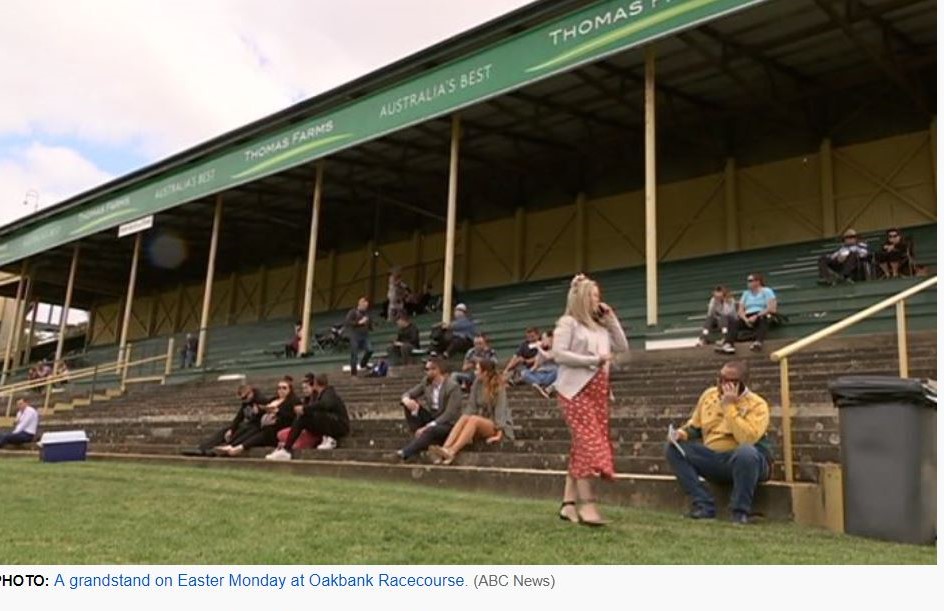
Compare this to the racing industry in the state.  The Oakbank Easter Racing Carnival in 2019 had only a quarter of the racegoers that it had around ten years ago.  The crowds used to number over 100,000 and nowadays they are lucky to get 20,000.

Perhaps decreasing race day attendance numbers across the state are an indication South Australian’s are becoming all too aware of the inherent cruelty of horse racing. So, why should their tax dollars be used to continue to prop up an industry that is not only cruel but financially unviable?

News

Beating Horses for Gambling and Entertainment

June 20, 2019 by admincpr Leave a Comment

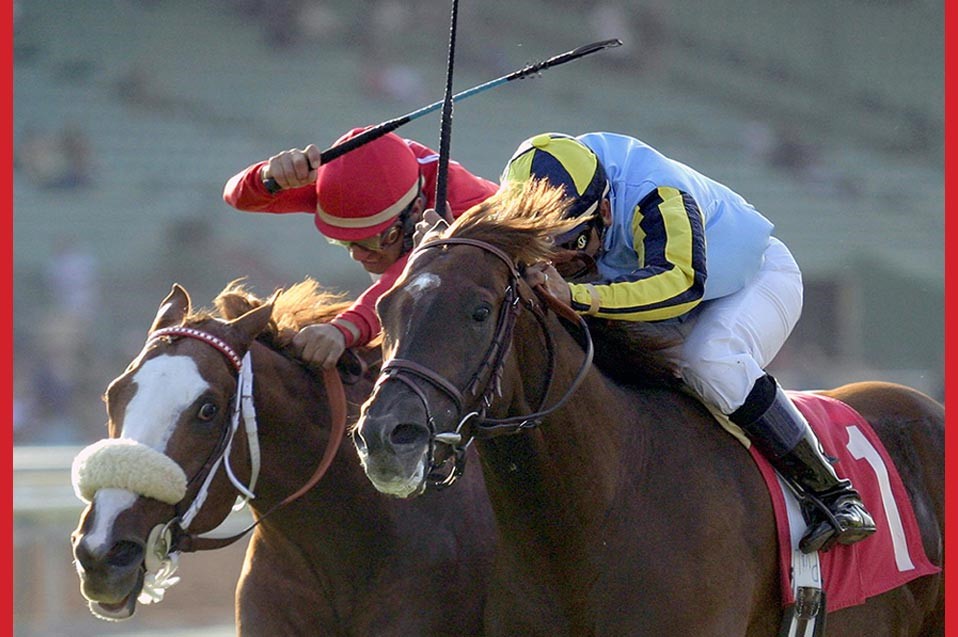
WHAT DO YOU SEE?

Two fierce competitors, in an exciting battle, giving it their all towards the finish line?

Or

Jockeys beating terrified horses with whips as they are pushed beyond their limits to the finish line?

Source: Thoroughbred News Daily

If this picture makes you feel disturbed more so than excited about horse racing, you’re not alone.  Numerous surveys have proven that what most people see in the picture above, is cruelty towards horses. Yet, globally the racing industry and media, continue to depict this very scene as thrilling, entertaining and entirely acceptable.

Let’s face it. Horse racing hasn’t been about horses for decades. Today, racing and gambling is about politics, money and maintaining old traditions – not what is fair or good for horses.  There is a long list of issues associated with using horses for racing.  In that list, is the use of whips. 

Ironically, striking a horse with a whip off the track is deemed as animal cruelty, punishable by law since 1979 (NSW).  If that alone doesn’t arrest the debate on the use of whips, we can continue with the following evidence that is well known:

  • Research proved whipping horses does not increase a horse’s performance.
  • Whipping in a race increases the physical dangers a horse is exposed to during racing.
  • Whipping distress horses, inflicts pain and does not improve safety for riders
  • Norway banned the use of whips in horse racing in 1982, without issue.
  • Limiting the number of strikes proved jockeys can’t count accurately to 5
  • Three quarters of Australians support a ban of the whipping of horses in the racing industry

With eroding public support, diminishing crowds, bad publicity, relentless scrutiny by welfare groups and corporate sponsors disengaging, you would expect Australia’s Racing Industry to be feeling the pressure. Ironically, the Racing Industry as a whole, remain ignorant and painstakingly slow to change.

Jockeys found guilty of breaching the whipping rule, are handed penalties that are minor in comparison to any prize monies and therefore fail to act as a deterrent.

How to help ban the whip –

In the history of humankind, it was never possible to communicate a message to the entire world at once. Today, social media makes this possible.  You have the power to share, inform and influence key stakeholders within the Racing industry on a grand scale via Face Book, Instagram, LinkedIn and Twitter.

CPR ask you to continue sharing important information about horse racing with your friends, their friends and corporate sponsors of racing. Whipping horses for thrills and excitement, is far from normal and Australians can and will, force change.

News

One Revered, The Other Forgotten.

June 18, 2019 by admincpr 1 Comment

“We love our horses”. How many times have we heard that phrase, from an industry that would like to promote itself as prestigious, civilised and compassionate towards the animals they depend on to make them millions of dollars.

Every year thousands of horses go ‘missing’ from the racing industry, but slowly, the dark veiled side of the horse racing industry is being exposed for the callous, greedy and heartless industry that is really is.

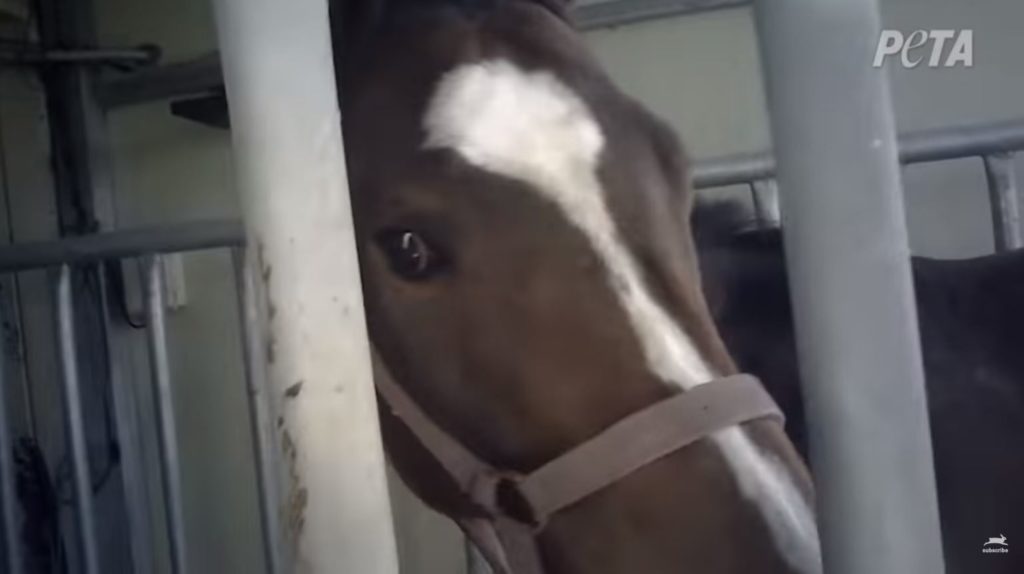
Terrified horse at a South Korean slaughterhouse
Credit: PETA

Just last month, it was revealed that Australian racehorses are being sold to South Korea, where many are ending up in slaughterhouses there. As reported recently by PETA Australia, one of the horses unfortunate enough to end up at one of these slaughterhouses was “Bareul Jeong”, half-brother of Winx, where he endured a horrific death.

But can we say that horses here in Australia are guaranteed a long and happy life? The answer is a resounding “no”. Horses are routinely sent to slaughter here in our own country and owners are coming up with more creative ways of making money from horses deemed to be ‘losers’.

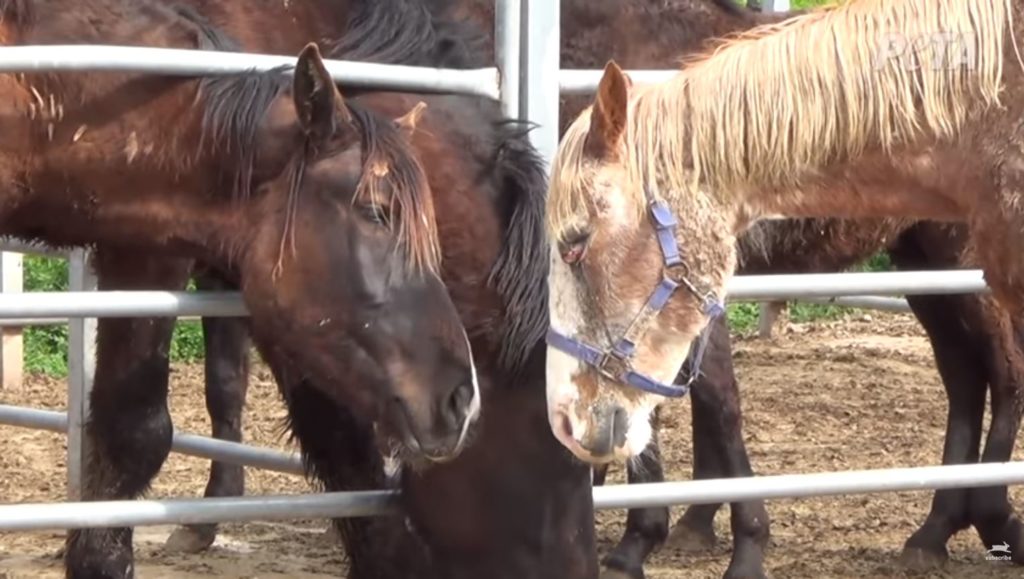
Discarded horses in South Korea
Credit: PETA

At the time of writing, an owner in Tasmania is being investigated for allegedly selling horses to a zoo, where they are fed to the resident big cats.

Ultimately a racehorses’ life is most likely to end either in a slaughterhouse, a knackery or in a paddock, as breeding stock.

In the case of Winx, she will continue to be exploited, forced to be perpetually pregnant, followed by forced separation from her foals. She will be used to keep making her owners millions of dollars, and perhaps some of her offspring will also end up in the same slaughterhouse as her brother. Read more about what Winx future holds here.

It is abundantly clear that these beings are no more than objects for profit, especially evident when horses from the same bloodlines suffer such drastically different fates.

The Australian government has distanced itself from the export trade, but unfortunately, without a government ban, exported horses will continue to meet their fate, in a violent and cruel manner that is unimaginable.

News

The Suffering Caused By Using Horses As Racing Objects Is Global.

May 23, 2019 by admincpr 1 Comment

A message from our friends at American based Horse Racing Wrongs.

Horseracing Wrongs is a non-profit dedicated to eradicating horseracing in the United States. Indeed, we are the only organization in the country that is clearly and consistently working toward that end.

For far too long, horseracing has been given cover under the banner of sport – “The Sport of Kings” – when, in fact, stripped to its core, horseracing is nothing but an archaic, largely nonviable gambling business that exploits, abuses, and kills sentient beings, inherently. In other words, it cannot be fixed or reformed; in other words, it is wrong from the start. To be more specific:

Horseracing is unremitting confinement and isolation: The typical racehorse is kept locked – alone – in a tiny 12×12 stall for over 23 hours a day, making a mockery of the industry claim that horses are born to run, love to run, and a cruelty all the worse for being inflicted upon naturally social, herd-oriented animals like horses.

Horseracing is absolute control and utter subjugation – lip tattoos, nose chains, tongue ties, eye blinkers, mouth bits, and, of course, whips.

Horseracing is commodification: In the eyes of the law, racehorses are literal chattel, things to be bought, sold, traded, and dumped whenever and however their people decide. To make matters worse, they are not even afforded the protections, woefully inadequate as most are, of animal-cruelty statutes, meaning a trainer or owner can grind his horse into the ground – yes, even to death – with virtual impunity. What’s more, the average racehorse will change hands several times over the course of his “career,” adding anxiety and stress to an already anxious and stressful existence.

Horseracing is negation: Most all the horse’s natural instincts and desires are thwarted, creating an emotional and mental suffering brought home with crystal clarity in the stereotypies or vices commonly seen in confined racehorses – cribbing, weaving, bobbing, pacing, kicking – even self-mutilation. Says world-renowned equine behaviorist Nick Dodman: “Racehorses, with long periods of confinement and isolation, exhibit an unusually high prevalence of stereotypies. The suffering can be described by referencing the suffering of people in solitary confinement. A recently released man who had spent years in solitary said he sometimes felt anxiety, paranoia, panic, hallucinations etc. The only way he could help suppress the dysphoria was to walk back and forth in his cell until the line he walked was soaked in his sweat.”

And, of course, horseracing is killing: Horseracing Wrongs, primarily through our unprecedented FOIA reporting, has documented over 5,000 confirmed kills on U.S. tracks since 2014 – names, dates, locations. We estimate that over 2,000 horses are killed racing or training across America every year. Over 2,000. Imagine that.

And just to be clear, death on the track is neither clean nor placid: It’s cardiovascular collapse, pulmonary hemorrhage, blunt-force head trauma; it’s broken necks, crushed spines, ruptured ligaments, and shattered legs, occasionally shattered so severely that the limb remains attached to the rest of the body by skin or tendons only.

But that number – 2,000 – staggering though it is, tells but a part of the story. Each year, hundreds more active, mostly-still-in-puberty racehorses die back in their stalls from things like colic, laminitis, infection, or are simply “found dead” in the morning.

Then, too, slaughter. While the industry desperately tries to downplay the extent of the problem, cunningly flashing its zero-tolerance policies and aftercare initiatives in defense, the prevailing wisdom – backed by two scientific studies – is that the vast majority of spent or simply no-longer-wanted racehorses are brutally and violently bled-out and butchered in Canadian and Mexican slaughterhouses – over 15,000 Thoroughbreds alone each year. In short, the American horseracing industry is engaged in wholesale carnage. Not hyperbole – carnage.

Truth is, Horseracing is already in decline, and has been for some time: Since 2000, the U.S. industry has suffered a net loss of 35 tracks; all other metrics – racedays, races, field sizes, “foal crop,” and, yes, attendance and handle – are also down. Moreover, a majority of tracks are being wholly propped up by subsidies – corporate welfare. It is unfair and horses continue to suffer (and die) for it.

But beyond the economic realities, sensibilities toward animal exploitation, most especially regarding entertainment, are rapidly changing. In just the past few years:

– SeaWorld, in the wake of outrage over the film Blackfish, has ended the captive-breeding of orcas and remains in a precipitous decline.

– Ringling Bros., after 146 years of animal abuse, has closed its doors for good.

– Both New York and Illinois have outlawed the use of elephants for entertainment.

– The National Aquarium will release all of its remaining captive-dolphins to a seaside sanctuary by 2020.

– Multiple cities, including Pittsburgh, San Francisco, Pasadena, Fort Wayne, and St. Petersburg, have banned the rodeo.

– And just this past November, Floridians voted overwhelmingly – by over 2:1 – to outlaw greyhound racing in that state by the end of next year, a monumental win for animals that will in one fell swoop shutter 11 of the nation’s final 17 tracks – leaving dogracing in America all but dead.

So the question becomes, why should horseracing be exempt? In a landscape that abounds with other gambling (and entertainment) options – casinos, lotteries, real sports involving autonomous human beings – hasn’t the time at long last arrived to stop wagering on the backs of suffering – and dying – animals?

End the cruelty. End the killing. End horseracing.

– Patrick Battuello

Cover Image Source: Sports Illustrated

News

The Carnage Continues For The Horseracing Industry

May 10, 2019 by admincpr Leave a Comment

There has been carnage on racetracks in Victoria and NSW during April 2019, that has resulted in immense suffering of both jockeys and horses. At least ten horses have been killed on the racetrack in these two states alone and many more have been injured.

There has been carnage on racetracks in Victoria and NSW during April 2019, that has resulted in immense suffering of both jockeys and horses. At least ten horses have been killed on the racetrack in these two states alone and many more have been injured.

Injuries in horse racing are extremely common. It is not unusual to witness a horse suffer a catastrophic musculo-skeletal injury or collapse and die due to cardio-vascular/respiratory failure (sudden death).

At Randwick fillies, Bye Bye Belle (aged 3 – 13 April) and Ocean’s Faith (aged 2 – 25 April) collapsed and died in the home straight.  We know that horses who are assessed after racing with evidence of cardiac arrhythmia, are ordered by stewards to undergo an ECG (electrocardiogram) and pass a veterinary check before being allowed to return to the races.  Considering the frequency of this condition, it should be mandatory for all horses to undergo an ECG to at least attempt to identify cardiovascular/respiratory problems before they result in catastrophic deaths. Furthermore,  trainers should undergo further education and be provided with heart-rate meters for the horses they train.

Also at Randwick in NSW on 13 April 2019, Persan and War Baron crashed to the turf in the concluding stages of the race.  While we understand that the jockeys involved were not seriously injured, we have no information on what injuries the horses may have suffered.  Stewards report here.

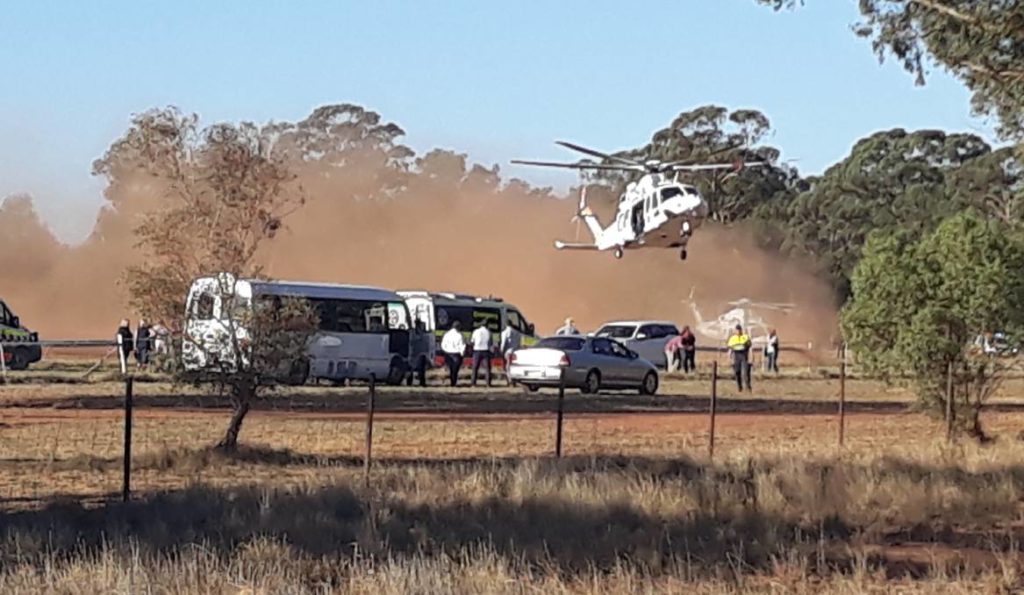
At Tomingley in NSW on 27 April 2019, three jockeys and three horses, Sikum, Another Plan and Run the Red, crashed to the ground, suffering serious injuries. Jockey M. Hackett (Another Plan) sustained severe head injuries and was airlifted to Liverpool in Sydney in a critical but stable condition. Another Plan was found to have sustained a small abrasion to the nasal area. R. Blewitt (Run the Red) was airlifted to Westmead Hospital in Sydney where he was found to have sustained a fracture to the scapula, a fractured rib and stable in-displaced thoracic spinal fractures. Run the Red was found to have a deep abrasion to the off-fore fetlock as well as a small abrasion to the off-hind. M. Gray (Sikum) was transported to Dubbo hospital where he was found to have sustained a fractured clavicle, a fractured wrist as well as a thoracic spinal fracture. Sikum was found to have a palpable fracture to the nasal bones.  Stewards report here.

Carnage at Tomingley
Source: Central Western Daily

We believe the deaths of all active racehorses should be recorded and made public. This includes all horses that die in training, trials, jump-outs, and races. The community is entitled to know.

Summary of the race day deaths in April in NSW and Victoria recorded

VIC 5.4.19Cranbourne/TrialsMonarch Chimes7yo gelding/no details
NSW 11.4.19
Rosehill/Trackwork
Categoric3yo gelding/collapsed and died
VIC 11.4.19Kyneton RacesSaracentinal8yo gelding/serious racing injury/euthanised
NSW 12.4.19Randwick/JumpoutMississippi Miss3yo  filly/collapsed and died
NSW 13.4.19Randwick RacesTarka3yo colt/acute cardiopulmonary failure/euthanised
NSW 13.4.19Randwick RacesBye Bye Belle3yo filly/collapsed and died
VIC 16.4.19Bendigo RacesEgotist4yo gelding/serious racing injury/euthanised
VIC 20.4.19Caulfield RacesMagnapal 4yo gelding/serious racing injury/euthanised
NSW 25.4.19Randwick RacesOcean’s Faith3yo filly/collapsed and died
VIC 27.4.19Caulfield RacesColumbus Circle 3yo gelding/serious racing injury/euthanised

There is no doubt there are many more deaths that are not recorded as horses who are euthanised off the racetrack do not need to be reported to stewards

Nearly 30 years ago, a Senate Select Committee of Inquiry handed down its recommendations to improve the welfare of racehorses in the racing industries. According to our investigations, none of these recommendations were enforced by State Governments who are responsible for regulating their racing industries and safeguarding the welfare of racehorses on behalf of the public.  With animal welfare now a serious political issue, all animal industries are under intense scrutiny and pressure to improve the welfare of animals they use. 

It is clear from the ongoing carnage on racetracks around the country, that the Federal Government needs to conduct another Inquiry into the horseracing industry in Australia.  

Cover Image Source: ABC News

News

WINX – what does her future hold?

April 29, 2019 by admincpr 13 Comments

Winx is no doubt an outstanding horse that has amassed over 26 million dollars in prize money alone. She will however not benefit from her winnings. Instead, she will be given what is considered to be ‘the very best care’- but what does that mean?

Winx will now be considered a brood mare. That is she will be used for breeding purposes so that she can make even more money for her owners. Her progeny would be expected to sell for well over $2M each. It is in the owners’ interests that she is cared for properly however the motivation may not necessarily be altruistic. It’s much more likely to be to protect their investment that could potentially earn them tens of millions of dollars more over the next ten years.

The Breeding Cycle

The official birthday of all thoroughbred horses is 1 August each year.   The gestation period or length of pregnancy is 11 months.   The breeding season in Australia therefore starts in early September which allows the foal to be born at the optimal time in early August.  Every year from now on, it is likely Winx will be made pregnant to capitalise on her pedigree -whether she likes it or not.

Note:

The rules of thoroughbred racing only allows for horses to be mated naturally whereas harness racing horses (standardbreds) are permitted to be artificially inseminated.

The “mating’ procedure is very much a controlled event aimed at protecting both the mare and stallion from injury.

Firstly, the mare will be inspected by a vet to determine when she will be coming into season. At times drugs will be may be used to assist this process.

On the day of the mating, she may be given a sedative to keep her calm.  A twitch may also be used to keep her still. A twitch is a device that is used to restrain horses for various stressful situations, such as veterinary treatment (or mating). Some believe that a twitch calms the horse by releasing endorphins as pressure is applied, thus reducing stress and pain. Others understand the use of a twitch device forces compliance through causing the horse pain. 

On the day of the scheduled mating, the mare will be taken into the mating barn or pen where she is to be served by the chosen stallion. If necessary, her legs may also be restrained so that she cannot kick and injure the stallion whose worth can be tens of millions of dollars and whose protection is therefore given the highest priority.

If the mare has a foal at foot, the foal is likely to be restrained nearby within view of the mare. Typically, the foal will be just 1 month old and separation from each other may cause great distress to both.

The mare will then be meticulously prepared. To prevent any damage to the stallion, every hair of the mare’s tail will then be careful tied up away from the mare’s vagina and the area sterilised to minimise risks of any infection.

A teaser stallion will then be brought out to gauge the mare’s reaction to the possibility of having sex. The teaser stallion is often a much smaller horse that can be more easily managed. It will be left up to him to get the mare ready for the sexual act and take the risk of being kicked by the mare. For the poor teaser stallion, he will never successfully mate with a thoroughbred and often suffers psychological issues as a result.  

The thoroughbred stallion will then be brought in and he will be expected to mate with the mare as soon as possible. The mare will have no option but to accept the stallion. 

When the current foal reaches 6 months of age, the foal and mother will be separated forever so that the mare can prepare herself for the birth of the foal she is carrying.

Anonymous thoroughbred stud manager,

“the mare and foal are brought into the barn together and left there for a while. The mare is then led out and taken away. They both whinge and carry on for a bit but they get used to it.  Sometimes the foal will cry for hours but they all get over it.  They know they’ve got a job to do”

Even for Winx, her life after racing will be far from retirement.  She will be repeatedly treated as a breeding machine and separated from her foals at a very young age. 

Though Winx’s fame will ensure she never ends up at the knackery or slaughterhouse, approx. 4000 thoroughbred mares are retired from breeding each year. The racing industry currently does not account for them.  It is therefore highly likely they are slaughtered or sold to a blood farm, after which they are slaughtered for human consumption or pet food. 

News, Uncategorized

2018 Melbourne Cup Carnival Attendance Hits New Record Low

November 11, 2018 by admincpr

Another Melbourne Cup gone, another dead horse … and another year where the carnival hit a record low in attendance.

If you’ve ever wondered if the efforts of animal protection advocates were having any impact, this definitely proves it.

The famous Melbourne Cup Carnival, which comprises of Derby Day, Melbourne Cup Day, Stakes Day and Oaks Day, has slowly but surely seen a decrease in attendance numbers in recent years.

Last year, it reached the lowest since 1999. Melbourne Cup Day itself hit the lowest attendance in 20 years.

And this year, the story was no different. The Melbourne Cup Carnival saw an attendance drop of 7,000 people – as did the Melbourne Cup.

The efforts to draw in new crowds to the Melbourne Cup made no impact. They spent a whopping $125 million on building a new stand to attract racegoers … arguably money which should have been spent on retirement initiatives for the horses they claim to care so much about.

This decline in attendance sits at around 27% since 2006. But you’ll probably work out that it’s no coincidence, since animal protection campaigns targeting the Melbourne Cup commenced just 2 years later in 2008.

Since then, the racing industry has been routinely exposed for its welfare issues: the lack of retirement plan, jumps racing, public floggings with the whip, deaths on track and in slaughterhouses.

Not to mention that horses have been consistently dying in the Melbourne Cup over the past few years, exposing a shocking statistic that this actually happens every 3 days year-round on Australian racetracks.

This year, the atmosphere certainly felt different, with more and more people turning their backs on the ‘sport’. But it wasn’t just a feeling, polling by Essential Media proved it, with 70% of people saying they have low or no interest in horse racing and one in three said they had never been interested in the Melbourne Cup, with 26% saying they had become less interested because of concerns about problem gambling and 29% reporting they had become less interested because of concerns about animal welfare.

With The Cliffsofmoher killed right on the track, a jockey banned for overwhipping, a horse bleeding in the lungs and another bleeding from the nose all at the same meet. – can you really blame the public for turning away in droves (and for keeping #NupToTheCup trending on Twitter for the entire Melbourne Cup Day)?

An industry that once operated without being held to public account, now struggles to maintain its social license. And as concern for animals only becomes more prominent, things will continue to get worse for the racing industry.

News, Uncategorized

9 Horses Have Been Killed On Track In October

October 31, 2018 by admincpr

As we come into the week before the Melbourne Cup, don’t fall for the glitz and the glamour of the racing industry. These horses are the real story of Australian horse racing … and most people would never have known about them.

In the month of October, when Spring Racing Carnival is already in full swing, 9 horses have been killed on Australian racetracks. Their deaths are traumatic – but they are only a drop in the ocean for an industry that has no retirement plan for its horses.

Rock With You – 5 October 2018
Track: Moonee Valley, Victoria
Age: 5

Ever since the release of our annual Racehorse Deathwatch report, Victorian racing stewards have no longer disclosed causes of deaths of racehorses, simply listing them as ‘serious racing injuries’. While we don’t know what caused Rock With You’s death on the track, we do know some of the most common serious injuries sustained by Australian racehorses are catastrophic front and hind limb injuries (ie broken and fractured legs), massive bleeds and cardiac arrests.

Knievel – 8 October 2018
Track: Tamworth, New South Wales
Age: 3

While the average horse lifespan is between 25 and 30 years, Knievel only made it to 3. The young bay gelding began his racing ‘career’ as a 2-year-old, predisposing himself to injury before his young and underdeveloped joints were fully formed. He died of a compound fracture of the cannon bone.

Hamada – 13 October 2018
Track: Werribee, Victoria
Age: 4

Hamada was tipped to be a star – set to run in the Melbourne Cup in November. But while training on the track for the big race, he ‘broke down’ in the near hind leg. His stablemate ‘Emotionless’ was also pulled after fracturing his pelvis.

Blinkin Impressive – 13 October 2018
Track: Gulargambone, New South Wales
Age: 5

Blinkin Impressive is a typical example of a horse who dies on the track that nobody ever hears about. She’d won just $1,300 – which like most, does not even cover the costs of having a racehorse. While racing in October, she suffered a carpal joint fracture of the near fore leg.

Deny – 14 October 2018
Track: Armidale, NSW
Age: 5

Following the death of 2 Australian racehorses just the day before, Deny also became a victim of October horse racing. He fractured his near fore knee while racing.

Gustavas Vassa – 17 October 2018
Track: Caulfield, Victoria
Age: 5

Just 3 days before thousands of people flocked to Caulfield Racecourse for the Caulfield Cup, Gustavas Vassa became the victim of a ‘serious racing injury’ on the very same track and was killed. Racegoers and supporters of the Caulfield Cup had no idea.

Not For Export – 22 October 2018
Track: Coonabarabran, New South Wales
Age: 8

Not For Export had won $168,335 for his owners and connections. He suffered a compound fracture to the off fore cannon bone while racing on a remote Australian racetrack and was killed.

Ain’tabay – 26 October 2018
Track: Scone, New South Wales
Age: 3

Ain’tabay was just a filly – that is, a young female horse. She began racing as a 2-year-old and had won just $500. The day she died, she didn’t want to race. The stewards report reads:

“…became cast in the barrier after being extremely fractious and when attempts were being made to free the filly, it lashed out several times and repeatedly struck the structure of the barriers, resulting in it sustaining an open comminuted transverse fracture of the mid cannon bone of the of the off hind leg.”

Ednablue – 26 October 2018
Track: Scone, New South Wales
Age: 5

Just two races after Ain’tabay was killed, Ednablue became the second victim of the same meet. She also made an attempt to break from the barriers, and the stewards report reads:

“…became very fractious in the barrier and when being removed from its stall, broke away from the handler and galloped through the fence at the rear of the 1100m chute and then through the perimeter fence of the adjoining rural property. After this Ednablue fell over an embankment and became cast in a dry creek bed on the property. Ednablue was immediately anaesthetized to enable its removal from its position. Ednablue was withdrawn at 6.06pm. During prolonged constant observation and treatment of Ednablue by the club’s veterinary officer, it became apparent that the mare had lost movement in its hindlegs.”

October isn’t any sort of one-off or month of ‘freak accidents’ like the racing industry would have you believe. Consistently, one Australian racehorse has died on the track every 3 days, or less, for the past 4 years.

If you’re thinking of attending the races, or even placing a bet, think of these horses. And choose kindness instead.

News, Uncategorized

7 Horse Racing Facts That Will Change How You Feel About Melbourne Cup Forever

October 7, 2018 by admincpr

Horse racing struggles to maintain relevance throughout the year. Some people don’t even realise it runs outside of Spring. If you enjoy a flutter and a drink or two at the races, these hidden facts will make you reconsider.

1. Thousands of failed racehorses are slaughtered each year
Nothing says “we love our horses” like sending thousands of them to slaughter every year, right? While you’ll be hard-pressed to find a Melbourne Cup winner at your local knackery or slaughterhouse, there are 13,000 racehorses exiting the racing industry every year… And the majority of them aren’t the winners you see on the TV or in the newspaper during Spring Carnival.

In Australia there are dozens of knackeries that process failed and former racehorses for pet food, as well as two abattoirs that kill horses for human consumption in South Australia and Queensland. Some of their ‘horse steaks’ are served in a select few Melbourne restaurants, but the majority are exported to European countries like Belgium and France.

2. Racehorses die on the track … regularly
Unless you live ~under a rock~ you will have heard about the four Melbourne Cup deaths in recent years. The industry would have you believe these are ‘freak accidents’ and ‘rarely occur’, right? Wrong.

One racehorse dies every 3 days in Australia. And 119 racehorses have died in the last racing year alone. They most commonly suffer catastrophic limb injuries, cardiac arrests and massive bleeds causing them to collapse and die. We compile them all in our deathwatch report, which you can read here.

3. Studies have shown whips hurt
Whipping = one of the most public displays of animal cruelty.

While the RSPCA would be quick to charge you for whipping your dog, cat or rabbit – whipping in horse racing is exempt from this rule, even normalised and celebrated, despite the fact studies have shown whips hurt racehorses.

4. Jumps racing is 20 times more dangerous than flat racing
Jumping. While. Racing. It’s as ridiculous as it sounds.

While there are no jumps races at official Spring Carnival events anymore, they do run throughout the season. Jumps racing is 20 times more dangerous than flat racing and kills multiple horses every single year when they fall on their heads and necks, or break their limbs.

Paying for a ticket to the races supports this.

5. Less ‘valuable’ foals are discarded
‘Nanny’ mares are kept in foal in order to have a milk supply, and when a prized broodmare dies giving birth to a thoroughbred foal, the nanny mare will step in to raise the thoroughbred ‘foster’ foal, and their own biological foal is discarded.

They are the bobby calves of the racing industry. And it’s a practice barely spoken about, but you can read the story of one lucky survivor here.

6. Some participants use drugs
With so much money at stake in horse racing, it’s no wonder that some owners and trainers resort to using drugs on their racehorses.

The cobalt saga involving numerous high profile trainers is just one example of using stimulants to push horses beyond their physical capabilities.

7. Horses are raced before their bodies are mature enough
A famous trainer once said “Two year olds, as we know, can be here today and gone tomorrow.”

It’s the perfect way to sum up 2-year-old racing. What good can come of racing young horses well before they are skeletally mature? And who would want to support that?

Instead of going to the races, on Melbourne Cup Day take part in something to help racehorses. Find out how here.

News, Uncategorized

  • « Previous Page
  • 1
  • …
  • 21
  • 22
  • 23
  • 24
  • 25
  • Next Page »

Contact Us

The Coalition For The Protection Of Racehorses
P.O Box 163, South Melbourne
Victoria 3205

Phone: 0412 039 788
Email Us

Join Our Mailing List

Sign-up to our mailing list to keep up to date. Text alerts are available for breaking news and urgent actions if you are in Australia.

Sign-up now

Find us on Social Media

© Copyright 2016 - 2026 All Rights Reserved by Coalititon for the Protection of Racehorses.

Privacy Policy