• Home
  • About
    • About
    • Achievements
    • International Partners
    • Frequently asked questions
    • Media Enquiries
    • Contact
  • Campaigns
    • Petition: End Overbreeding of Racehorses
    • Nup to the Cup
    • Deathwatch
    • Jumps Racing
    • The Whip
    • Wastage
    • 1 % To Stop The Slaughter (Retirement Plan)
    • New Zealand Campaign
    • Two-year-old Racing
    • Racing in Extreme Heat
  • Issues
    • Racehorses Killed for Human Consumption
    • Racing NSW on horse slaughter
    • Bits
    • JIGGERS
    • Undercover Knackery Investigation
    • Tongue Ties
    • Drug Use
    • Industry Funded Studies
    • Confinement
    • Racing in the Heat
    • Other Health Issues
    • Life of a Racehorse
    • Greyhound Racing
  • Take Action
    • The National Horse Traceability Register has lost its way
    • End Jumps Racing in Victoria
    • Make Reporting of Racing Deaths Mandatory
    • Donate
    • Bequests
    • #ditchthewhip
    • Take The Pledge To Never Bet On Or Attend A Horse Race
    • Volunteer
    • Businesses That Sponsor Horse Abuse
    • Outreach Toolkit
    • Register Your Own Nup To The Cup!
    • Nup to the Cup at your Workplace
    • Your Nup to the Cup Support Kit
    • Stencil Your Car
    • Equinileaks
    • Subscribe to our mailing list
  • Resources
    • Videos
    • Music
    • Reports & submissions
    • Outreach Toolkit
    • Download a banner
    • Download a poster
    • Your Nup to the Cup Support Kit
    • Nup to the Cup at your Workplace
    • A guide to rescuing race horses
  • Store
    • Store
    • Basket
    • My Account
    • Checkout
  • News
    • CPR Media Releases: AU
    • CPR Media Releases: NZ
  • Events

Horse Racing Kills

Horse Racing Kills

Advocating for race horses

  • Home
  • About
    • About
    • Achievements
    • International Partners
    • Frequently asked questions
    • Media Enquiries
    • Contact
  • Campaigns
    • Petition: End Overbreeding of Racehorses
    • Nup to the Cup
    • Deathwatch
    • Jumps Racing
    • The Whip
    • Wastage
    • 1 % To Stop The Slaughter (Retirement Plan)
    • New Zealand Campaign
    • Two-year-old Racing
    • Racing in Extreme Heat
  • Issues
    • Racehorses Killed for Human Consumption
    • Racing NSW on horse slaughter
    • Bits
    • JIGGERS
    • Undercover Knackery Investigation
    • Tongue Ties
    • Drug Use
    • Industry Funded Studies
    • Confinement
    • Racing in the Heat
    • Other Health Issues
    • Life of a Racehorse
    • Greyhound Racing
  • Take Action
    • The National Horse Traceability Register has lost its way
    • End Jumps Racing in Victoria
    • Make Reporting of Racing Deaths Mandatory
    • Donate
    • Bequests
    • #ditchthewhip
    • Take The Pledge To Never Bet On Or Attend A Horse Race
    • Volunteer
    • Businesses That Sponsor Horse Abuse
    • Outreach Toolkit
    • Register Your Own Nup To The Cup!
    • Nup to the Cup at your Workplace
    • Your Nup to the Cup Support Kit
    • Stencil Your Car
    • Equinileaks
    • Subscribe to our mailing list
  • Resources
    • Videos
    • Music
    • Reports & submissions
    • Outreach Toolkit
    • Download a banner
    • Download a poster
    • Your Nup to the Cup Support Kit
    • Nup to the Cup at your Workplace
    • A guide to rescuing race horses
  • Store
    • Store
    • Basket
    • My Account
    • Checkout
  • News
    • CPR Media Releases: AU
    • CPR Media Releases: NZ
  • Events

Animal Activists Challenge Whip Use in Tasmanian Court

October 11, 2021 by admincpr 5 Comments

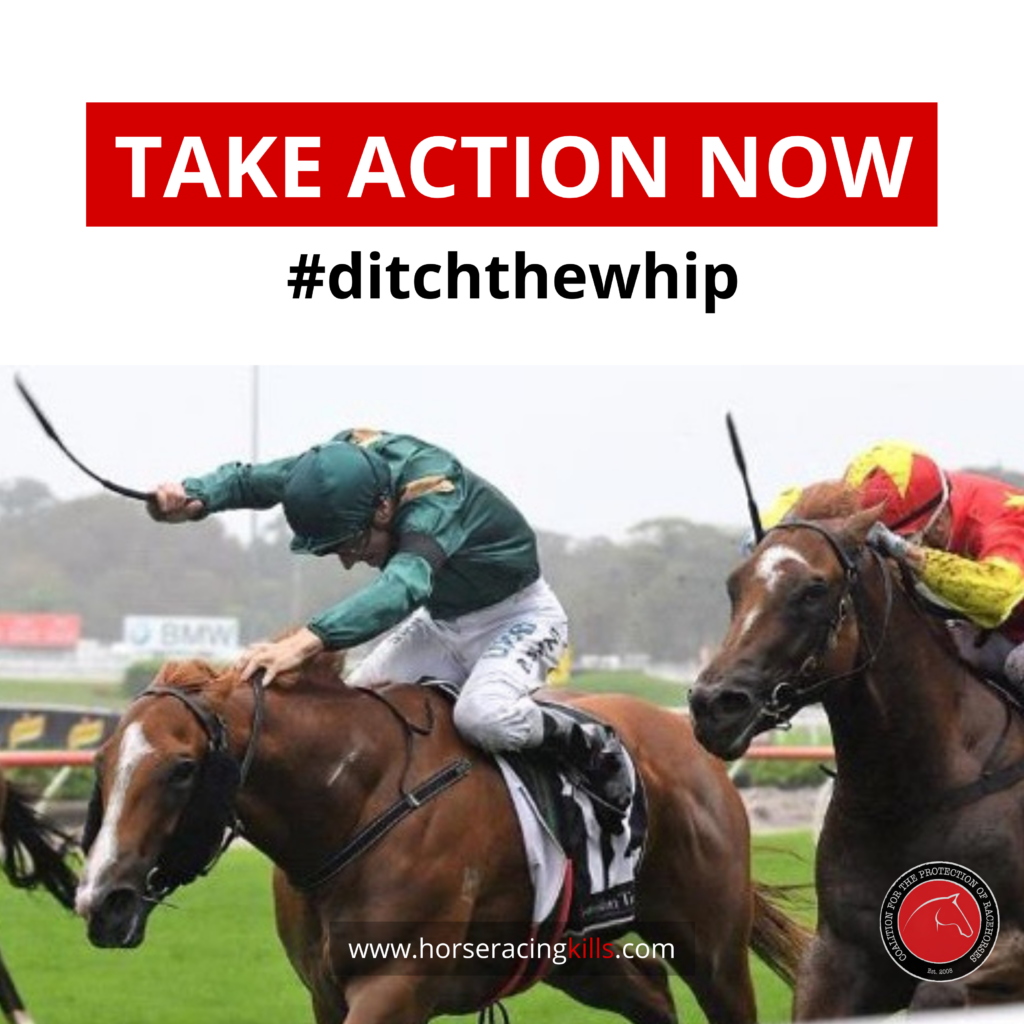
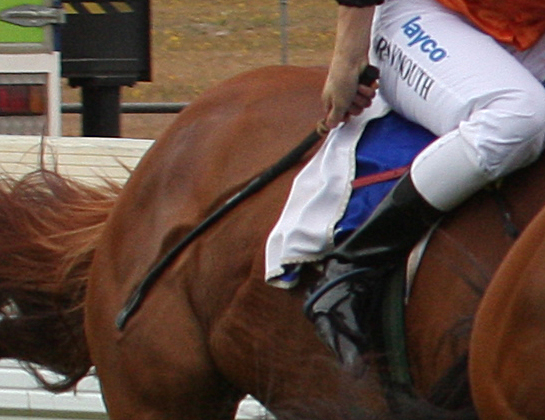
With support from the Coalition for the Protection of Racehorses (CPR), People for Ethical Treatment of Animals (PETA) have filed a case that will challenge the legitimacy of whips in horse racing. Court documents were filed on Friday 8th October in the Magistrate’s Court in Hobart.

PETA Australia and the Coalition for the Protection of Racehorses (CPR) met with the animal welfare manager for Tasracing, Tasmania’s racing authority, several years ago, to express concern over the use of whips, point out that whipping violates the state’s anti-cruelty statute, and offer support to help implement changes.

Both groups then co-signed a letter with animal protection groups World Animal Protection and Animal Liberation, to Tasracing, requesting a meeting to discuss the issues and see if there was a way forward. In the subsequent meeting with PETA Australia’s lawyer and Tasracing CEO Paul Eriksson, Eriksson refused to engage further and informed PETA Australia that Tasracing had no plans to explore banning or restricting whips.

Because of the unusual status of the racing rules under the Tasmanian Animal Welfare Act 1993 and most other state’s animal protection Acts, whipping horses during racing has long been given an unofficial free pass. The court case will challenge this anomaly that means horses are whipped on racetracks despite it being a clear breach of animal welfare laws.

If you did exactly the same thing to any other animal, you would be charged with animal cruelty. This case highlights whipping a horse is a crime both on and off the racetrack.


The purpose of the whip is to keep a horse running when they are really wanting to slow down because of fatigue. This is when horses are running out of fear and on adrenalin, in circumstances that can lead to serious injury or even catastrophic breakdown.

The racing industry for years has claimed that the whip doesn’t hurt. If it doesn’t hurt and cause fear and distress, it begs the question, why use it?

A peer-reviewed study published on November 11, 2020 found ‘Humans and horses have the equivalent basic anatomic structures to detect pain in the skin’ (available here), something the racing industry continues to deny.

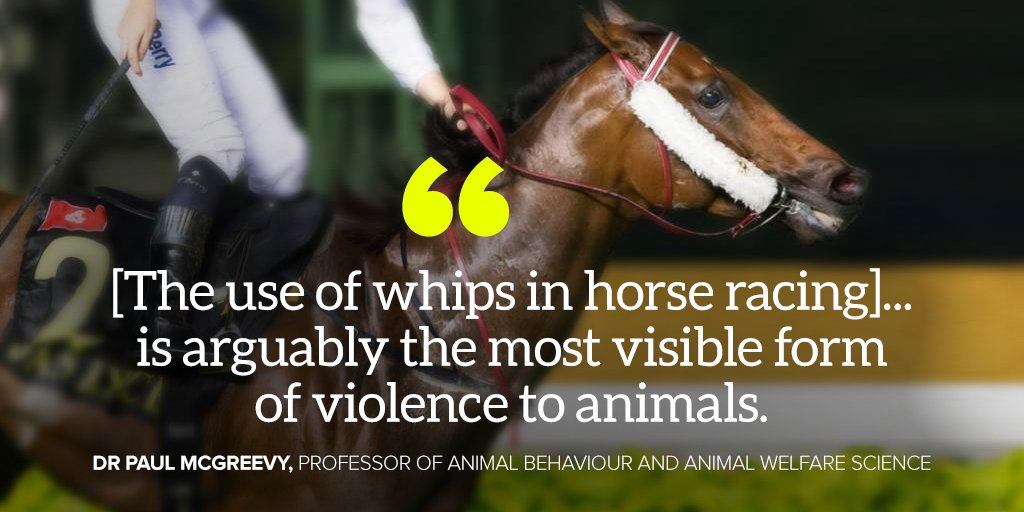
The report’s author, Professor Paul McGreevy, stated “We’re saying that although horse skin is thicker overall than human skin, the part of the skin that is thicker does not insulate horses from pain that is generated during a whip strike”.

CPR has put the challenge to any jockey to be whipped like a racehorse and then maintain the whip doesn’t hurt.

If it‘s not already abundantly obvious that whips hurt and cause unnecessary pain and suffering, then there is a mountain of evidence that confirms this.

This case is asking a magistrate to confirm that whipping racehorses causes unreasonable and unjustifiable pain. If such a conviction is handed down, it will be even more ludicrous for the industry to continue to deny this.

Beating horses with a whip is just the tip of the iceberg in this cruel and ruthless industry. Successful convictions will have serious ramifications not only for horse racing in Australia, but the entire world.

News

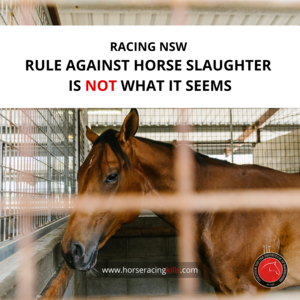
Racing NSW rule against horse slaughter is not what it seems

October 4, 2021 by admincpr Leave a Comment

The recent case of a high-profile trainer, Trevor Sutherland, winning his appeal against a three-year disqualification from racing for sending horses to slaughter, brought to light two deeply concerning loopholes in the NSW rules of racing – the rule Racing NSW repeatedly claim sets them apart from all other states. We have officially asked Racing NSW four times if, when drafting the rule, this was intentional or an oversight and also whether the rule will be amended to ensure NSW horses are indeed protected from slaughter as they claim, but they refuse to respond. A copy of the letter is at the bottom of this email.

In short – what the Sutherland case exposed was that, according to the appeals panel:

1. Racing NSW’s local rule 114, which they claim is designed to prevent horses being killed when no longer wanted, does not capture circumstances of intent if it is decided it was not the “primary intent” of the person sending them to be killed (something we have reported on previously)
and

2. the words “similarly disposed of” used in LR114(5)(e) which states a horse is not to be, directly or indirectly, sent to an abattoir, knackery or similarly disposed of should be interpreted to mean “a horse is disposed of (killed) for the purpose of its meat being used as food.”

Therefore, if a racing participant kills a thoroughbred horse on their own property and buries them in a pit, for example, they would presumably not be in breach of the rule.

The continued refusal by Racing NSW to answer our simple questions regarding both of these loopholes and also our question as to whether mares used for breeding are protected under the rule, indicates that they either intentionally created this loophole, or, at best, are now aware of it, but are refusing to make the required amendments that will do as they claim and protect all horses under their jurisdiction from being killed when no longer wanted.

When the Racing NSW retirement plan and local rule 114 was first announced, CEO Peter V’landys stated “The youth of today care more about animal welfare than any other generation and we need to keep up with their expectations… Every horse in NSW will be re-homed, whether it has raced or not.”

Sadly, it has become clear this statement was nothing but a smoke screen, designed to dupe the public into believing that the horse racing industry was finally taking responsibility for the lives of the horses they could not exist without.

For background on the Trevor Sutherland case click here.


Below is the final letter we sent to Racing NSW regarding this issue, directed to their general counsel.

Dear Mr Sweney,

We are resending this request for urgent action regarding this very concerning loophole. This is the fourth time we have contacted you regarding this matter. We’re sure you will agree action is crucial if LR114 is to serve its intended purpose. 

The email originally directed at Mr V’landys on February 26, 2021 below….

In reviewing the decision of appeal of licensed trainer Mr Trevor Sutherland, 24 February 2021,  we’d like to draw your attention to two very concerning points.

1. When explaining the process of their decision, the appeals panel considered ‘Proper construction of LR114(5)(e)’. They concluded that they preferred the construction of the rule contended by the stewards, in that ‘similarly disposed of’  should be interpreted to mean “a horse is disposed of (killed) for the purpose of its meat being used as food.”  (Point 42)

Can you please clarify if this is the intention of the rule – to only impact on responsible persons whose horses are killed for the purpose of their meat being used as food? If so, does this mean it is acceptable to Racing NSW that horses continue to be killed where their meat is not utilised eg. their body is buried in a pit? If this is not the intention of the rule, does this mean Racing NSW will amend LR114 to ensure this loophole is addressed. 

2. In points 44 and 45 it was determined that LR114(5)(e) does not incorporate a circumstance in which the “primary intent” is not to have the horses killed, even if the person giving the horses away is aware there is a sufficient risk this could eventuate.

Will the rule be amended to mitigate the likely risk of the floodgates now being open to other responsible persons taking advantage of such a loophole. 

Relevant points referred to above as stated by the appeals panel: 

42. In construing this rule, the Panel’s task is to give the words used by the drafter the meaning that they are taken to have intended. “Taken to have intended” of course does not relate to the subjective intention of whoever drafted LR114. That is not known. All the Panel has to go on is the text of LR114, its stated purpose, and the application of common sense given that we are asked to interpret rules relating to the regulation, and protection, of the horse racing industry. Bearing all that in mind, at least in relation to the words “similarly disposed of”, we prefer the construction of the rule contended for by the Stewards. We hold this view even though we consider there is force in the argument put forward on the Appellant’s behalf. An approach using a somewhat economical use of words has been taken to the drafting of LR114(5)(e). However, we do not consider the words “similarly disposed of” need to have the elements or similar elements outlined in the Appellant’s submissions at [175]. In our view, the words “similarly disposed of” relate more to an end result – that is, a horse is disposed of (killed) for the purpose of its meat being used as food.  

44. In the circumstances here, we have found that the primary intent of the Appellant in giving the horses Redfu and Rozzi to Mr Brown was for them to be used by Mr Brown to jump and hunt. While we have also found that the Appellant knew that there was a risk, once Mr Brown had possession of the horses, that they may not work out as suitable for hunting and jumping, and hence could be killed for meat for Mr Brown’s dogs, that was not the intent (destruction for dog food) with which the Appellant gave Mr Brown the horses. It was a risk that he knew could eventuate, rather than the intent that he had when giving the horses to Mr Brown.

45. Turning back to the words used in LR114(5)(e), the facts as found by us mean that what has occurred here is not caught by the rule. For the Appellant to be in breach of the rule, we consider that his intent must have been, in giving the horses to Mr Brown, that they would then be killed, and their meat used as food. That was not the Appellant’s intention. While knowing there was a risk that the horses could be destroyed for food, his intent was that they be used by Mr Brown for jumping and hunting. The fact that there was a risk that this would not work out, and the horses could subsequently be killed (as they were) is not a factual scenario that is caught by the rule. If the drafter wanted such a scenario to be caught by LR114(5)(e), then the rule should have, in our view, been drafted to incorporate such circumstances. 


Many thanks for your time. We look forward to hearing from you.

News

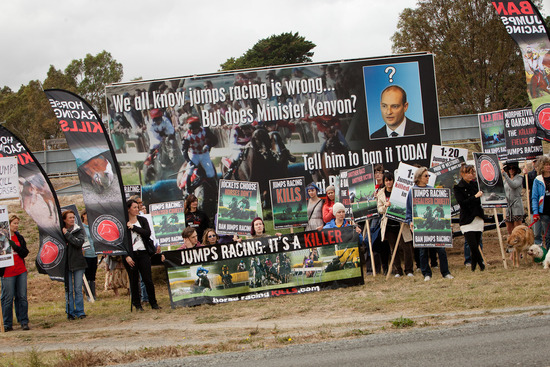
E-News Update: Amazing News! South Australia Ends Jumps Racing

October 4, 2021 by admincpr Leave a Comment

Dear Supporter,
 
We are so excited to inform you that last Friday, Racing South Australia announced that moving forward, there will be no more jumps races held across the state.

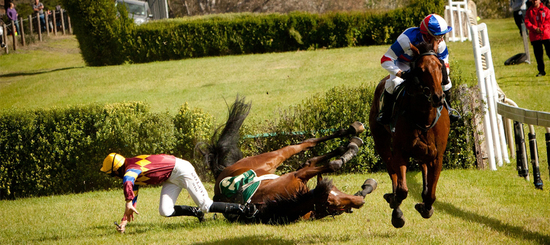
This is a HUGE win for the horses, who will no longer be forced to jump obstacles at high speeds with a whip wielding jockey on their back – often leading to the most excruciating injuries and death. 

Racing SA are putting the decision down to a lack of jumps horses and jockeys, making the industry financially unsustainable. There is absolutely no doubt that an increasing lack of public support has led to this final decision.

Dwindling support for South Australia’s most prominent jumps racing event, the Oakbank Carnival, has long indicated this was only a matter of time. CPR have been demonstrating alongside Animal Liberation South Australia (ALSA) outside the carnival since joining forces against SA jumps racing in 2008. At this time, the carnival was the centrepiece of Easter celebrations, attracting in excess of 120,000 people across Easter Saturday and Monday. It was the place to be seen and have fun, and many even camped on the surrounding grounds for the entire long weekend. This year, the event was lucky to attract 5,000 attendees. Through effective campaigning by CPR and ALSA, South Australians have been made aware of the shocking cruelty and blatant animal abuse that is jumps racing and have voted with their feet and their dollars. 

ALSA have been campaigning against jumps racing in South Australia for twenty years now, as have many other individuals. We are so grateful to them all for their ongoing dedication to this cause and for working so effectively alongside us, to ultimately achieve this fantastic outcome. 


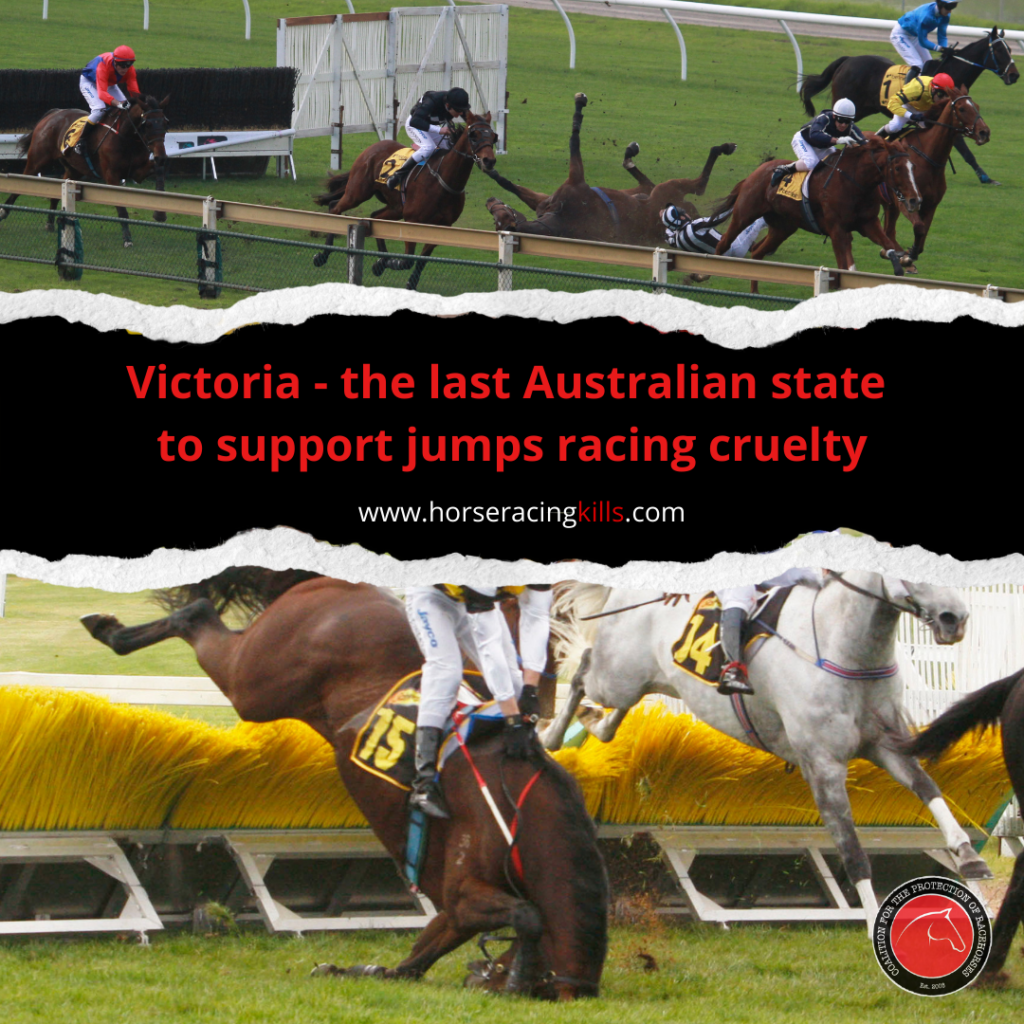
Whilst we celebrate this fantastic news, we must also remember the many individual horses who have suffered horrific injuries and lost their lives due to this brutal and archaic so-called “sport”. We must also consider the victims to come, as jumps races continue in Victoria – now the last bastion of jumps racing. Racing Victoria must take their heads out of the sand and join the rest of Australia in ending jumps racing for good! 

You can help make this happen by emailing the Vic Minister for Racing, Martin Pakula, and cc’ing Racing Victoria CEO Giles Thompson, and politely demand they follow SA’s lead and end jumps racing once and for all!

[email protected]
[email protected]


NUP TO THE CUP    

With Racing Victoria’s other horror show, the Melbourne Cup, just around the corner, we need as many people as possible to stand up and say #NuptotheCup. Please consider arranging an event, whether it be private or public. This is such a powerful way to change our culture away from Australian’s celebrating animal cruelty and towards us instead making the first Tuesday of November a party FOR the animals.

Register your event here. Check out other events as they register here.

Working that day? Why not arrange a #NuptotheCup in your workplace! Check out our ideas on ways to make this fun, effective and workplace appropriate here. 


Thank you for reading and remember… speak up, always!  

 
DONATE TO HELP

News

Your E-News Update: Toxic horse meat, racehorses neglected and starved and much more…

August 27, 2021 by admincpr Leave a Comment

Dear Supporter,

Whilst we are arguably in the midst of the most challenging time we have yet experienced throughout the COVID-19 pandemic, horse racing continues just as it has throughout this entire crisis. This means so does the cruelty, the injuries, the deaths, the lies and the cover ups.  

In this newsletter:

Toxic horse meat kills Australian dogs
Thousands of unwanted UK racehorses slaughtered
Three horses killed in one day on Australian racetracks
Horses neglected and starved
Insufficient penalities for severe abuse
My Cousin James has part of his tongue removed
Industry forum reveals we are having a real impact
Video exposes the horrors of New Zealand jumps racing
Darwin Turf Club in disarray
Spring carnival plans and #NupToTheCup
Merchandise
and more…

TOXIC HORSE MEAT KILLS AUSTRALIAN DOGS 

Earlier this month, CPR once again called on the EU Commission to urgently end their import of horse flesh for human consumption from Australia. The calls came after devastating news broke that over twenty dogs had died and over sixty were sick, many with what would be lifelong illnesses, after consuming toxic horse flesh and claims were made that those horses were originally destined for the human consumption export market.

In our open letter to the EU Commissioner for Heath and Food Safety, Stella Kyriakides, we explained the horses are believed to have been grazing on a plant native to northern Australia, Indigofera linnaei, before being collected for transport to the Meramist slaughterhouse. Due to Covid-19 regulations they are claimed to have then been rerouted to a knackery in Victoria – their flesh therefore ending up in local pet food products instead. This plant contains indospicine, a toxin that causes severe liver damage. While dogs are particularly susceptible to this toxin, it is unclear as to whether humans may also be negatively impacted, however, studies demonstrate that the meat of any horse from northern Australia slaughtered for human consumption has the potential to cause harm to consumers. Read our open letter in full here. 

This all occurred just weeks after we joined Animal Welfare Foundation, Eurogroup for Animals, and Animals’ Angels USA to present evidence to the EU Commission of systemic breaches to horse meat export regulations from Australia, Uruquay, Canada and Argentina – available here. At this meeting the EU officials stated that they were “touched” by the images we presented and that this should not happen. Yet they refused to make any formal acknowledgement of the ongoing breaches, or commit to any kind of appropriate action.

This subsequent incident of toxic horse meat is further evidence that the safety of Australian horse meat for human or other animal consumption cannot be guaranteed.

We have also continued to place pressure on the National Horse Traceability Register Working Group who are dragging their feet on producing an adequate register and therefore further placing horses, humans and other animals lives at risk.

You can help by:

1. Joining the cause to end horse meat exports now here.
2. Writing to the chair of the traceability working group, Stuart McLean, and politely demanding they live up to their responsibility and produce an adequate register as a matter of urgency here.
Our hearts go out to all the horses and dogs who lost their lives in this tragic event. 

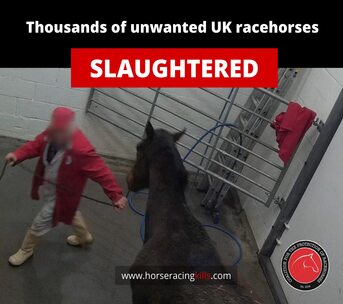
THOUSANDS OF UNWANTED UK RACEHORSES SLAUGHTERED 
Last month, our international partners at Animal Aid UK released their investigation into the routine slaughter of former racehorses. Like Australia, the numbers are shockingly high, with at least 4,000 former racehorses sent to slaughterhouses in Britain and Ireland since the beginning of 2019.

Harrowing video evidence shows terrified and often exhausted horses come face to face with their executioner, some of whom are just two years old.

The full UK investigation cannot be seen in Australia at this time, however excerpts can be viewed in the the below articles.

BBC News

Daily Mail

 UK residents can sign the petition to limit horse breeding here.

Everyone can take the pledge to never bet on or attend a horse race again here.

THREE HORSES KILLED IN ONE DAY ON AUSTRALIAN RACETRACKS
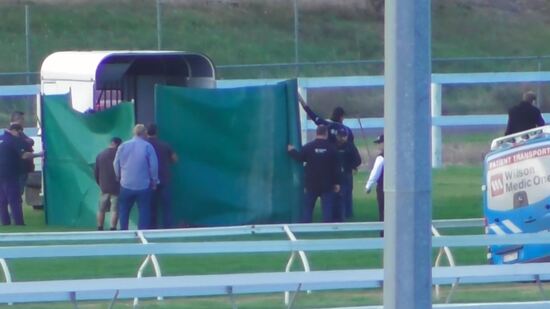
Last Saturday, at least three horses lost their lives whilst being raced – two at Royal Randwick, NSW and one at The Valley, Vic. 

Three-year-old filly Xtremetime fell, suffered an upper near forearm fracture and was killed. Four-year-old gelding Brandenburg sustained biaxial sesamoid fractures and catastrophic suspensory failure to the near foreleg before being killed. Three-year-old filly Widaad, collapsed after the finish line of a suspected heart attack. 

Our soon to be published Deathwatch 2021 Report, reveals things have not gotten better for horses on Australian racetracks. Indeed they are much worse, but the public outrage to such carnage is most certainly growing. Stay tuned!

Rest in peace Xtremetime (left), Brandenburg (centre) and Widaad. All so young. All deserved so much better broken heart


ANOTHER SLAP ON THE WRIST!  

Source: Rehome a Racehorse


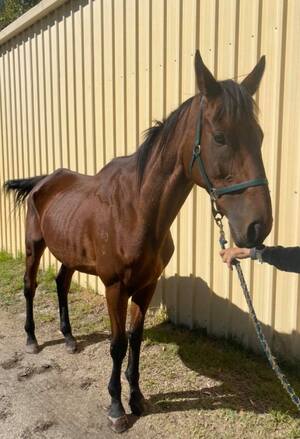
This is Chancery. He was used to race sixty-four times before being starved by his trainer Des Waldock.

Racing and Wagering Western Australia found Waldock to be guilty of failing to provide the ten-year-old gelding with proper and sufficient nutrition and suspended his trainers license for three months. 

In deciding his penalty the stewards took into account (among other things), that Waldock had eventually rehomed the gelding and that his condition had therefore since improved. Meaning, Waldock suffered a lesser penalty because members of the public and other industry participants have paid for and put in the time, care and energy to ensure Chancery is nursed back to health.

It should never be the job of others to put their hands in their pockets whilst this multi-million-dollar industry and their apparent ‘Off The Track’ programs continually fail these horses. Nor should penalties for such neglect be reduced due to the work of others.

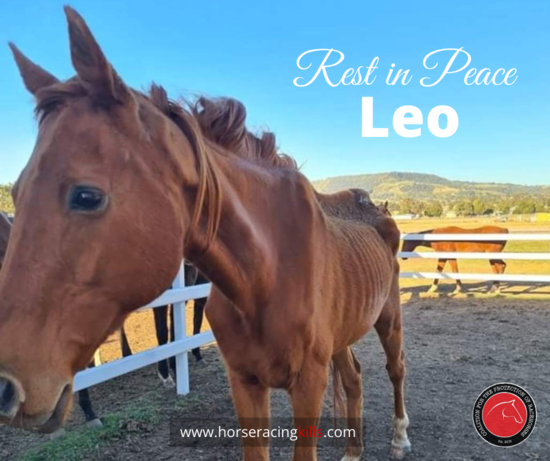
LEO WAS NOT SO LUCKY 
Twelve-year-old Leo (Leonardo Lion) was bred into the racing industry in 2008. He never actually made it to the racetrack in all that time, yet when he was rescued just a few weeks ago, the authority still had him registered as an ACTIVE racehorse.

There could not be a more pertinent example of how this industry has no idea or concern for where so many of the horses they bring into the world are, and how they are being treated.

Despite all attempts over ten long days, Leo’s rescuers at Bella Vita Horse Sanctuary were unable to bring him back to health. Leo tried so hard but his body shut down and he passed away on August 8 2021.

He remains listed as an ACTIVE racehorse by the authority. 

MORE INSUFFICIENT PENALTIES FOR SEVERE ABUSE 
There is no shortage of evidence to demonstrate both trainers and jockeys repeatedly get let off with little to no repercussions for severe abuse to horses in racing. 

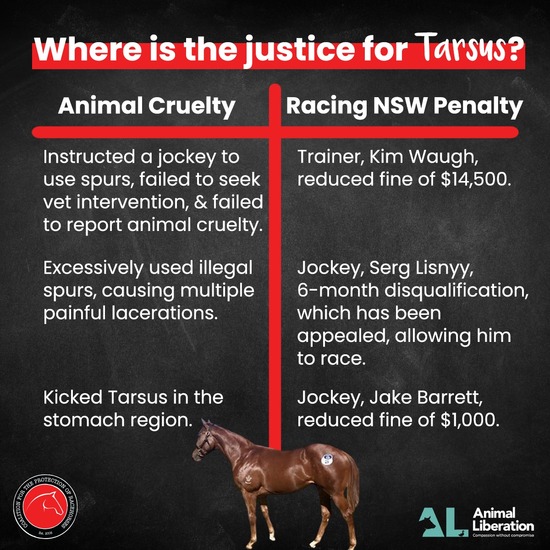
NSW trainer, Kim Waugh, and jockey, Serg Lisnyy, are no exception. Earlier this year they were charged with six separate counts of serious cruelty involving the registered racehorse ‘Tarsus’. The three-year-old suffered deep lacerations down his flank after Waugh ordered Lisnyy to use the spurs in trackwork. Another jockey at the Waugh stable was found to have kicked Tarsus in the stomach. All continue to be registered industry participants. A breakdown of the charges and penalties can be found here.

On appeal, jockey Serg Lisnyy had his six-month disqualification for an act of animal cruelty through the excessive use of spurs and the use of unapproved spurs reduced to a five-month suspension, meaning he could still take part in trackwork, trials and jump-outs. 

In allowing Lisnyy back for trackwork whilst serving his suspension from racing, appeals panel chairman Richard Beasley stated: “He has a mortgage, other debts, and a young family to support. He will suffer financial hardship from a suspension, but a disqualification will deprive him of any capacity of earning an income from the racing industry.” 

PART OF HIS TONGUE REMOVED  
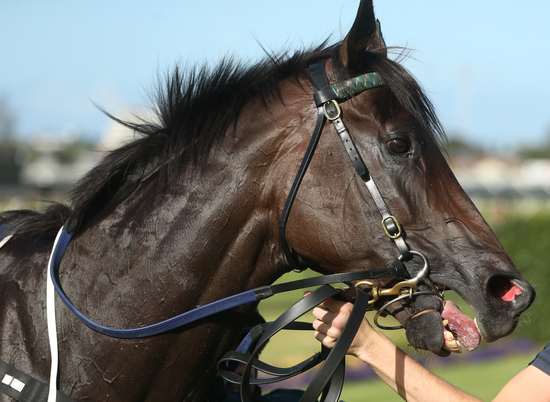
Four-year-old gelding, My Cousin James, had his tongue tied for so long that part of it became necrotic and had to be surgically removed.

Ballina trainer Steven Phelps is currently serving a four-month disqualification. More here.
 
A survey of Australian trainers analysed 535 responses and found:23% reported complications after the use of ties, including lacerations, swelling, bruising and head shyness. Other studies have also observed difficulty swallowing, anxiety, ‘blue tongue’ and permanent tissue damage. Learn more here.

A horses tongue should never be tied for any amount of time, yet in horse racing, it is standard practice. Sign here to support a NSW ban on tongue ties and other instruments of cruelty here.

Pictured: Lanciato 

INDUSTRY FORUM REVEALS WE ARE HAVING A REAL IMPACT
Although the suffering of horses used by the racing industry continues, their own International Forum for the Aftercare of Racehorses (IFAR) 2021 gave many hopeful indications that our work continues to be a clear threat. Although the speakers made it abundantly clear that public perception is their main motivation, not concern for the horses, there is absolutely no doubt that slowly but surely we are having an impact. Take a watch – and let’s keep up the good work! 

The recording here is the final of four. Highlights are listed below for the time poor and those for little tolerance for rhetoric.
9:00
17:30
29:45
40:00 – informative section on bone fatigue

For the record – the graph presented at 59:20 is entirely inaccurate.

All four recordings available are here.

VIDEO EXPOSES THE HORRORS OF NEW ZEALAND JUMPS RACING  
On the eve of New Zealand’s jumps racing season, CPR released a damning video, exposing the horrors of the so-called ‘sport’. 

A compilation of New Zealand’s brutal 2020 jumps racing season was circulated across the country showing the inherent cruelty that comes with forcing horses over obstacles at high speeds, whilst in fear of the jockey on their back.  

Many New Zealanders were not even aware that jumps racing occurs in their country. Like Australia, support and attendance is dismal, but the cruelty is the same. Watch the powerful compilation here. 

Sadly, at the same time that this footage was making its way around NZ, Fulmineus became the first reported victim of the 2021 jumps racing season in Australia. See his devastating death here. Five-year-old Mighty Jim has since joined the list. See his horror fall here.

Of course, COVID-19 regulations have made it near impossible for us to be at the racetrack to protest the past two jumps seasons, however we did manage to take advantage of eased restrictions and gather outside the Warrnambool track for Grand Annual Day of the May jumps carnival. Huge thanks to all who made the trip. Our voices were heard loud and clear from both outside and within the course, where we spoke out for Fulmineus and all the other horses who have lost their lives in the name of gambling profits and entertainment. Protest video snippet here.

DARWIN TURF CLUB IN DISARRAY 
Dead and injured horses, hospitalised jockeys and a $12 million dollar scandal has placed the Darwin Turf Club in the headlines plenty of late.  

On July 28, three jockeys came crashing down on the racetrack in Race 3 and all were rushed to hospital. More here. There was no word on the wellbeing of impacted horses Somervell, Supreme Times and Jomera, in the days that followed, until it was finally confirmed four-year-old Jomera had lost her life in the incident. 

The track is also the focus of a recently released ICAC report finding their $12 million grandstand grant to be shrouded in “corruption, misconduct, breaches of public trust and mismanagement of public resources”, implicating senior public servants, local businessmen and Darwin Turf Club members. At the centre of the scandal is the turf club chairman Brett Dixon, whose construction company, Jaytex, was awarded the grant. More here.

Just a few weeks prior to Jomera’s death, four horses at the track bled from the nostrils in one race day – three in the same race.

And just last month the track had another multiple-horse fall with three jockeys again rushed to hospital, one in an induced coma. Three-year-old gelding, The Unknown was killed. More here.

Video footage from the July 28 incident, which a track staff member described as “brutal”, has been withheld (as is footage of the race where The Unknown lost his life). Racing NT CEO Andrew O’Toole ignored our repeated calls regarding the Jomera  incident however he did however make this very telling comment to the media “This is something we didn’t need in Cup Week.”

SPRING CARNIVAL PLANS & NUP TO THE CUP
With horse racing guaranteed to be allowed to continue right through the Spring Racing Carnival, we must also prepare to be present outside the various racetracks as much as we can. Whilst it is currently looking as though our usual #NupToTheCup party outside the Flemington course will have a limited capacity or may not even be possible, things may look a little different in your neck of the woods. 

If you are able, please do consider running your own #NupToTheCup event or attending one near you. CPR support kits are available and registrations can be made here. One 2021 #NupToTheCup has already been organised for Fortitude Valley, QLD which looks like it will be a blast! Details and tickets available here.

Join the rapidly growing movement to make the first Tuesday of November a party for the animals! Say #NupToTheCup.

For your private or public #NupToTheCup support kit click here.

Stay tuned for our soon to be launched #NupToTheCup in the Workplace support kit.

MERCHANDISE

With lockdowns impacting our opportunities to speak out for racehorses in real life, now more than ever we can use CPR’s official merchandise to help spread the message about ending horse racing cruelty. Take a look here!

❤️Collectors Item t-shirts designed by  Melbourne artist Sebastian Berto 
❤️Stickers
❤️Caps & Beanies                               
❤️Hoodies & more…  Purchase here 

Thank you for reading and remember… speak up, always!

DONATE TO HELP

CPR relies 100% on donations to fund our investigations and campaigns. Without the generosity of our supporters we would not exist.

Thank you to all of our supporters who have donated recently. It is much appreciated and allows us to continue working toward justice for horses.
Click here to donate

News

End the export of third country horse meat into the EU – video evidence and reports

August 6, 2021 by admincpr Leave a Comment

Short films about animal welfare violations at slaughterhouses:

Bouvry, Canada: https://youtu.be/u4fDbzg_2BU

Land L, Argentina: https://youtu.be/6DbWFwJO7FU

Lamar, Argentina: https://youtu.be/CA9hscR_d7A

Clay, Uruguay: https://youtu.be/f7cCu3rP9NA

Sarel, Uruguay: https://youtu.be/2ADR29ckuL8

Meramist, Australia: https://youtu.be/U00UI8wMXwY

Documentary films about horsemeat production overseas:

Argentina, 2020: https://youtu.be/kiVuZnvSI8g

Australia, 2020: https://youtu.be/5Ih9RHiDOho

South America (Uruguay & Argentina), 2019: https://youtu.be/lQwBVAicpvQ

North America (USA & Canada), 2019: https://youtu.be/4tSwUmmqmfg

South America, 2017/18: https://youtu.be/A6yCukrTx9E

North America, 2016/17: https://youtu.be/1P2Vz4SD8FA

South America, 2016/17: https://youtu.be/uX7trEy9ctE

Horsemeat from overseas, 2013/14: https://youtu.be/38QHUir4yA0

Horsemeat from stolen horses in Argentina, 2013: https://youtu.be/zg_ItiC4lIo

Horsemeat from overseas, 2012/13: https://youtu.be/C1SwLeMxeko

Uncategorized

Deadly Toxins in Horse Meat – an open letter to the EU Commissioner

August 6, 2021 by admincpr Leave a Comment

6 August 2021

Stella Kyriakides

European Commissioner for Health and Food Safety

By email: [email protected]

Re: A new potential consumer health risk from the consumption of Australian horse meat


Dear Stella Kyriakides,

The reason for writing to you is it has come to our attention that it has been claimed that a consignment of horses from the Northern Territory, Australia were destined to be slaughtered for human consumption, but due to COVID restrictions were instead redirected to a knackery in Victoria and slaughtered there for pet food.

These horses had been grazing on a plant native to northern Australia, Indigofera linnaei. This plant contains indospicine, a toxin that causes severe liver damage, and while dogs are particularly susceptible to this toxin, it is unclear as to whether humans may also be negatively impacted. At this stage over sixty dogs have been affected by eating meat which Australian authorities appear to have traced back to these horses. To date, over twenty dogs have died, and many others will be left with lifelong health problems.

We know that many horses from northern Australia are slaughtered at the EU approved Meramist Abattoir in Caboolture, Queensland and their meat is exported to Switzerland and the EU for human consumption. There is the possibility that the meat of any horse from northern Australia slaughtered for human consumption has the potential to cause harm to consumers.

In this instance, the horses that appeared to have carried the toxin were slaughtered at the Maffra Knackery in Victoria. On July 29th 2021 the knackery made this comment on their Facebook page “we provided details of station bred horses we purchased from Northern Victoria which we now understand might have contained the toxin because they had crossed the Victorian border from interstate.”

Agriculture Victoria and PrimeSafe released this media statement on July 30th 2021 which may be of benefit to you:

Primesafe and Agriculture Victoria statement Indospicine in pet meat – warning to dog owners

Also of benefit is a link to a study on the meat of slaughtered camels that had consumed the same plant and as such, the same toxin. The results of this study demonstrate a concern for human safety if the affected meat were to be consumed.

Release of Indospicine from Contaminated Camel Meat following Cooking and Simulated Gastrointestinal Digestion: Implications for Human Consumption

We believe that despite any regulations and testing that our export abattoir, Meramist, may have in place, the health of Europeans consuming Australian horse meat cannot be guaranteed. This is not only because of the ongoing issue of drugs in the systems of horses but also because of naturally occurring toxins in their meat. For this reason, and the already thoroughly documented breaches to EU animal welfare regulations at the abattoir, we again ask that you immediately cease importing horse meat from Australia.

Regards,
Elio Celotto
Campaign Director
Coalition for the Protection of Racehorses

For a full list of documented evidence proving the EU must end the import of horse flesh from third countries including Australia click here.

Feature image source : ABC article Pet food crisis deepens with spotlight on NT horse meat, questions over recalls

News

May 28, 2021 by admincpr Leave a Comment

For Immediate Release, Friday 21 May 2021
Weekend of Action Against Cruel Horse Racing
 
Palmerston North Event
What: Palmerston North Animal Save team up with Coalition For The Protection Of Racehorses to stand against animal cruelty at the Rangitikei Gold Cup.
When: Saturday 22nd May 2021 – 11:30am
Where: Awapuni Racecourse Entry, Racecourse road
 
Hawera Event
What: Taranaki Animal Save team up with Coalition For The Protection Of Racehorses to stand against animal cruelty at Legends Day
When: Sunday 23rd May 2021 – 11:30am
Where: Egmont Racing Club
 
 
New Zealand racetracks will be hit this Saturday and Sunday by both Palmerston North and Taranaki Animal Save as they gather with the Coalition for the Protection of Racehorses (CPR), as a show of force against cruel horse racing.

“There is a growing movement against horse racing in New Zealand, as more people become aware of the inherent cruelty and abuse that is inflicted on horses” said Taranaki Animal Save spokesperson Elin Arbez.

“Horses are beaten with a whip, have their tongues tied and spurs dug into their flanks. They are completely dominated, running out of fear for gambling profits and entertainment” she said.

“Approximately 3,000 New Zealand thoroughbred horses are unaccounted for on a yearly basis” Ms Arbez said. (Report available here). “At this point the racing authorities wipe their hands of any responsibility to the horses and have no idea where they go”.

“Thousands of thoroughbreds in Aotearoa are going missing on a yearly basis – and all these deaths are for the revenue of gambling and entertainment.”
Spokesperson for Palmerston North Animal Save, Campbell Arnott said the groups would also be highlighting the high number of race day injuries and deaths.

“This year alone there have already been at least 9 on-track deaths of horses, as well as 127 injuries –  65 of them serious” he said. “One of those deaths occurred right here in Palmerston North where this Saturday’s protest is taking place. Her name was Falco Three. She was 4-years old.”

“New Zealand thoroughbred racing is shamefully killing, on average, 2 horses per month, with many more sustaining on-track injuries that deem them liabilities” he said
 
This particular Palmerston North event is a pink ribbon sponsored day, meaning it raises funds for breast cancer.

“While that in itself is a noble and worthy cause, it remains unacceptable to use blatant animal abuse to raise such funds. These could be seen as clever tactics used by the industry to look charitable at face value and mask the cruel reality behind these events.” Mr Arnott said

“We are opposed to horse racing. While people are enjoying bubbles and fashion, there are horses bubbling from their mouth, bleeding in their lungs and being raced to death. While people are betting, horses are going through Russian roulette on their life” he said.

“You bet, they die. Your support of this event is support of animal cruelty”

Read about CPR’s New Zealand campaign here.
Watch CPR’s latest documentary here.
Follow Palmerston North Animal Save here
Follow Taranaki Animal Save here.
 
ENDS

Additional racing facts:
Horses are fed concentrated diets leading to stomach ulcers.They display unnatural stereotypical behaviours because they are kept up to 22 hours a day in stables.
They are forced to run for their lives, put in harms way whilst being whipped by a human on their back, leading to heart attacks, lameness and fractures.
Studies show that approx 90% of horses are bleeding deep in the lungs (exercise induced pulmonary haemmorhage) from being pushed too hard.

https://horseracingkills.com/2021/05/28/8319/

Uncategorized

May 28, 2021 by admincpr Leave a Comment

For Immediate Release, Thursday 6 May 2021
Brutal video released on the eve of New Zealand’s 2021 jumps racing season
 
On the eve of New Zealand’s 2021 jumps racing season, a shocking compilation video exposing the brutal reality of jumps racing in NZ was published by the Coalition for the Protection of Racehorses (CPR) – available here.

“Many New Zealanders are completely unaware that cruel jumps racing persists in this country” said a spokesperson for CPR NZ, Frances Baker. 

“From May to August 2021, 23 cruel jumps events will be held across New Zealand racetracks, forcing 500kg horses to jump hurdles whilst travelling at high speeds and being flogged by the jockey on their back” she said. “Many in the racing industry are even against this barbaric practice”. 

“Four horses were reported to have been killed in the 2020 NZ jumps racing season. Many more suffered painful injuries and have not been seen on the racetrack since – their status unknown” she said. 

The group is calling on New Zealanders to join them in their protests outside racetracks throughout the jumps racing season – initial list with more to come here. 

“We need people to join us in calling out this brutal animal abuse in the name of gambling profits and entertainment” she said. “It is completely unacceptable that this poor excuse for a sport continues.”

2021 Ban Jumps Racing Demonstration dates…
Whanganui Racecourse, Whanganui – May 13
Trentham Racecourse, Wellington – June 12
Awapuni Racecourse, Palmerston North – June 19
Waverley Racecourse, Waverley – July 9
More dates and full details coming soon!

Supporters can also plan their own protests at their local tracks. CPR will provide support. 

Also on the eve of New Zealand’s jumps season, a horse was killed in jumps races in Warrnambool Australia. Media release including video footage available here.

“Jumps racing is 21st century legalised animal abuse that MUST come to an end!” Ms Baker said. 
 ENDS
 
For More information:
https://horseracingkills.com/campaigns/nz
 

https://horseracingkills.com/2021/05/28/8317/

Uncategorized

May 28, 2021 by admincpr Leave a Comment

For Immediate Release, Friday 23 April 2021
Activists Spend Anzac Day Protesting Against Animal Exploitation and Commemorate The Death of Falco Three
 
What: Palmerston North Animal Save team up with Coalition For The Protection Of Racehorses to stand against animal cruelty on Anzac Day
When: Sunday 25th April 2021 – 12pm
Where: Intersection of Maxwells Line and Racecourse Road, Awapuni


“Palmerston Norths Anzac Day event is cruel and unnecessary. On a day when we should be paying our thoughts to the lives sacrificed by our fallen soldiers, race goers celebrate the forced sacrifice of animal lives through the racing industry” says Palmerston North Animal Save coordinator Campbell Arnott.

This year we have seen seven on track deaths, one of which occurred right here in Palmerston North just last month.
 
Falco Three was “euthanized” on the 6th of March in Palmerston North after sustaining a devastating fracture to the sesamoid bone because the nature of the horse racing industry is to push these animals to their absolute limit, all for the sake of money and entertainment.
 
This year, on average, two horses per month are dying on New Zealand racetracks after sustaining injuries that deem them liabilities, like Falco Three.
 
“Injuries and death of horses in the racing industry are common practice because the horses are treated as a commodity for profit. The harm occurs both on the racetrack and behind the scenes.”
 
“As one example, it is common practice that when racehorses are no longer profitable, many are sent to the knackery. Thousands of thoroughbreds in Aotearoa are going missing on a yearly basis – and all these deaths are for the revenue of gambling and entertainment.”
 
“We are opposed to horse racing. While people are enjoying bubbles and fashion, there are horses bubbling from their mouth, bleeding in their lungs and being raced to death. While people are betting, horses are going through Russian roulette on their life.”
 
“Glam up events don’t justify supporting animal cruelty. We want people to think twice about attending and supporting racing events. There are cruelty-free events that you can still enjoy with family and friends. It is not a party for the horses.”
 
“You bet, they die. Your support of this event is support of animal cruelty”

Read about our New Zealand campaign here.
Watch CPR’s latest documentary here.
Follow Palmerston North Animal Save here
 
ENDS


Additional racing facts:
Horses are fed concentrated diets leading to stomach ulcers.
They display unnatural stereotypical behaviours because they are kept up to 22 hours a day in stables.
They are forced to run for their lives, put in harms way whilst being whipped by a human on their back, leading to heart attacks, lameness and fractures.
Studies show that approx 90% of horses are bleeding deep in the lungs (exercise induced pulmonary haemmorhage) from being pushed too hard.Horses are being uncessarily killed on and off the track. 

For More information:
horseracingkills.com
horseracingkills.com/2020/05/19/new-zealand-wastage-estimates/
 

https://horseracingkills.com/2021/05/28/8315/

Uncategorized

May 28, 2021 by admincpr Leave a Comment

For Immediate Release, Wednesday 10 March 2021
Protest at Wellington Student Day at the Races – At least six horses killed on track already this year  

What: Protest – Student Races 
When: Saturday 13th March 2021 11:30 – 13:30 
Where: Cnr Sutherland Drive and Fergusson Drive, Heretaunga, Upper Hut (outside Children First Early Childhood Centre)  Coalition for the Protection of Racehorses (CPR) will have a strong presence outside the Wellington Racing Club this Saturday protesting Student Day at the Races. 

“People, particularly the younger generation, are increasingly turning their backs on horse racing due to the suffering and deaths inflicted on the horses it uses. The industry knows this, so intentionally markets days to students, to lure them into supporting animal abuse and developing gambling habits” said CPR spokesperson Frances Baker. 

This Saturday, the Wellington Racing Club is offering live music and free transport to the races whilst also using the facade of glamour in the hope that students will turn a blind eye to the fact that it is a day of misery for these sentient beings.

“Students are naturally enticed to the idea of a party, which would normally be great, but not when it is in support of an industry that abuses animals for entertainment and profit. A train ride and dance floor cannot make up for the fact that horses are suffering from injuries and being killed behind the scenes. It’s not a party for the animals”.

Baker said, “If we really take a hard and honest look at what these horses have to endure, and reflect on how they are being controlled by humans to run for their lives – literally, would students really want to support this dying sport? Horse racing is a blood sport and it’s 21st century legalised cruelty.”

“The regulatory impact statement released by The Treasury admits that generational change is behind the demise of the racing industry as we are continuing to see a big shift in consciousness towards using animals for entertainment.”

“University’s including Victoria and Massey and their associations VUWSA and MAWSA , as well as Whitireia and Weltec have an opportunity to encourage students to re-think their choices. There is no excuse in this day and age to support this so-called ‘sport’ that harms animals whilst causing problem gambling, ruining the lives of individuals and their families. Our tertiary education providers need to be setting an example and leading the way when it comes to practices that belong in the history books.”

“There are plenty of places to go and have a good time in Wellington. Don’t attend the races on Saturday because we all know it’s not OK for society to hurt animals” Baker said. 

ENDS
 

Editor’s notes
The real truth about horse racing – what the industry will not tell you:

*Horses are fed concentrated diets leading to stomach ulcers.
*They display unnatural stereotypical behaviours because they are kept up to 22 hours a day in stables.
*They are forced to run for their lives, putting them in danger whilst being whipped by a human on their back, leading to heart attacks, lameness and fractures.
*Science shows us that whips hurt horses.
*Studies show that approx 90% of horses bleed deep in the lungs due to exercise induced pulmonary haemorrhage.
*Horses are being unnecessarily killed on and off the track.
*Approx 3,000 horses are disappearing from the NZ horse racing industry on a yearly basis.

In 2020 we saw:
12 Deaths
473 Occassions of excessive whip use
147 horses were fractious
263 total injuries
149 serious injuries
41 horses were found bleeding from the nostril because of being raced too hard 
 
For More information:
horseracingkills.com
horseracingkills.com/2020/05/19/new-zealand-wastage-estimates/


https://horseracingkills.com/2021/05/28/8312/

Uncategorized

May 28, 2021 by admincpr Leave a Comment

For Immediate Release, Thursday 11 March, 2021
Animal Rights Activists Target Auckland Cup Day – Six horse deaths on track already this year! 
 
What: Protest against Barfoot & Thompson Auckland Cup Day
When: Saturday 13 March 2021, 11am onwards
Where: Ellerslie Racecourse, 100 Ascot Ave, Remuera, Auckland

 
Six horses have already been killed on New Zealand racetracks this year, with thousands more suffering from systemic animal abuse. The Auckland Cup Day is what we call FuCup Day.
 
Every year on Auckland Cup Day, people dress up at this racing event at Ellerslie Racecourse. “This race day offers people a day to party, including events for children – while innocent animals are facing a high risk of injury and death. By glamourising animal cruelty, this event is desensitising people, including young children, from a terrifying truth.” said Aya Oba, spokesperson for the Coalition for the Protection of Racehorses (CPR) NZ. 

A number of activists will be at Ellerslie Racecourse to stand against the mistreatment of horses and be dressed up to prove that fashion and entertainment don’t need to cause harm to animals.
 
“This year, we have already recorded 6 horses killed, and a total of 71 injuries including 37 serious injuries (as at 9/03/2021) on New Zealand racetracks.”

“These deaths were publically justified as being in the name of so-called entertainment.” 

Plenty more horses vanish behind the scenes from racing related injures or for simply not being fast enough.

“More shockingly, approximately 3,000 New Zealand thoroughbred horses are ‘unaccounted’ for on a yearly basis”  Ms Oba said. More here. 
 
“The industry authority offers no information on where these thousands of horses go each year and refuse to take any responsibility.” 
 
“While people are enjoying bubbles and fashion, there are horses bubbling from their mouth, and sometimes being raced to death. While people are betting, horses are going through Russian roulette for their life.”
 
“We are opposed to horse racing. We believe many kiwis are kind-hearted and love animals but not many are aware that there is animal cruelty in the horse racing industry. We are against animal abuse and exploitation. Who isn’t? That’s why we will be protesting to raise awareness – so people can make a conscious choice about what they want to support. ”
 
“If you want to have ‘fun’, you don’t need to be part of animal abuse. There are other opportunities that don’t involve animal cruelty that are still fun. It is not a party for the horses. If you love horses, you should never support horse racing”
 
ENDS
 
For More information:
Coalition For The Protection Of Racehorses (CPR) – horseracingkills.com
CPR NZ Campaigns – horseracingkills.com/campaigns/new-zealand-campaign
Documentary ‘The Final Race’ – https://www.abc.net.au/7.30/the-dark-side-of-the-horse-racing-industry/11614022
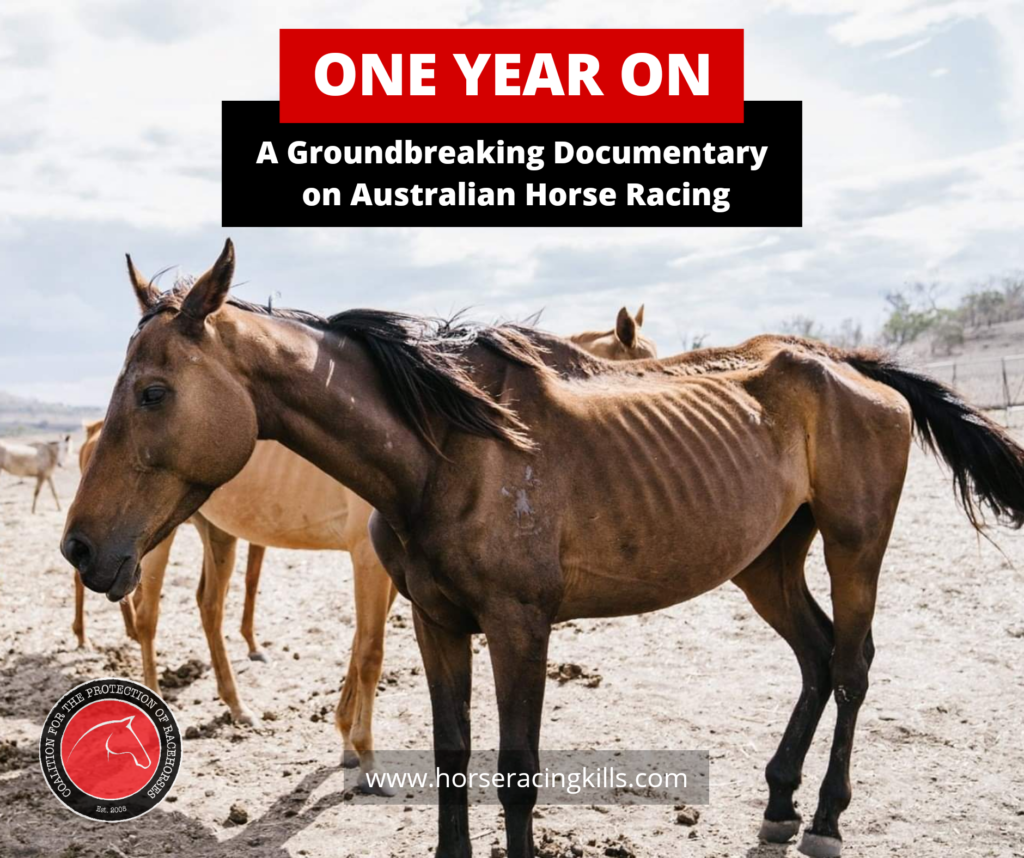
‘One Year On’ – https://www.youtube.com/watch?v=a499zfQh7Lc&feature=youtu.be
 

https://horseracingkills.com/2021/05/28/8310/

Uncategorized

May 28, 2021 by admincpr Leave a Comment

For Immediate Release, Monday 15 February 2021
Horses left dead on beach whilst races continue on – the plight of horses used and abused for entertainment  

Coalition for the Protection of Racehorses (CPR) are saddened but not surprised to learn of two horses who were killed and dumped on the beach on December 28 whilst the Tolaga Bay Races continued. 


More distressing photos available here.

Spokesperson, Frances Baker said, “Right in front of the crowds eyes at this family event was the shocking and devastating reality of using horses to race, one whom broke both their legs and the other who had a heart attack. This happened whilst families cheered and betted on their lives.”

“This is no different to the horses suffering on a regular basis on the racetrack, except that the beach races were not as prepared to hide the bodies with green screens and quickly drag them away. Heart attacks and fractures are common in racing.”

She said, “After being shot in the head, those horses were not given the dignity they deserve and were left dumped on the beach without cover very close to the shore.”


“NZTR had issued the betting licence for this event. Again, NZTR have blood on their hands. Deaths on and off track are common when using animals for entertainment.”

“This is what happens when you bet on animals. If these were two puppies there would be public outrage.”

Baker said, “one day we will look back on this so called ‘entertainment’ as cruel, barbaric and outdated. There are so many cruelty free events to attend.”
 
ENDS
 
For More information:
horseracingkills.com
horseracingkills.com/2020/05/19/new-zealand-wastage-estimates/

https://horseracingkills.com/2021/05/28/8304/

Uncategorized

  • « Previous Page
  • 1
  • …
  • 10
  • 11
  • 12
  • 13
  • 14
  • …
  • 25
  • Next Page »

Contact Us

The Coalition For The Protection Of Racehorses
P.O Box 163, South Melbourne
Victoria 3205

Phone: 0412 039 788
Email Us

Join Our Mailing List

Sign-up to our mailing list to keep up to date. Text alerts are available for breaking news and urgent actions if you are in Australia.

Sign-up now

Find us on Social Media

© Copyright 2016 - 2026 All Rights Reserved by Coalititon for the Protection of Racehorses.

Privacy Policy